02.07.2008: listening to soundspaces

Tuned City day 2 / block 1 / 11 am / Technische Universität Berlin, HL001, Marchstr. 4

moderation
Prof. Ulrich Winko

lecture
Dr. Stefan Koelsch (University of Sussex)
from the eardrum to the heart: how noise, sounds and music are processed in the brain

lecture
Dr. Julia Kursell (Max-Planck-Institut für Wissenschaftsgeschichte Berlin)
miniature space of the ear: on the auditory physiology of Hermann v. Helmholtz

presentation
Thomas Ankersmit
spatial perception and directional sound

guided tour
Dipl. Ing. Joachim Feldmann (TU Berlin)
scientific echo chamber and anechoic chamber

presentation
Bernhard Leitner
presentation of his sound space in the TU main building

nix

listening to sound spaces introduces the basics of acoustic-spacial perception from the physical and physiological perspective.

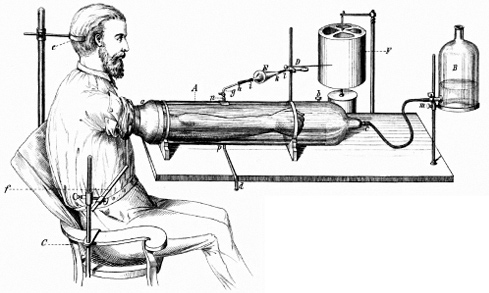
Hermann von Helmholtz rediscovered hearing in the middle of the 19th century: He conceived the ear as a small room which – equipped with highly specified material objects – provides transformation, transfer and decoding of acoustic signals. Anatomy, oscillation mechanics, mathematics and music could inform about what was going on in this small room and, above all, how it is that the vibration, that hits the ear, finally is received by the nervous system as sound or noise. The musicologist Julia Kursell attempts to trace the audio-physiological construction of this small room and to place it in the history of aural physiology. On this basis, the neurologist Stefan Koelsch speaks about the perception of acoustic information and the underlying complex brain functions as well as the effects on emotions, the autonomic nervous system and the hormone and immune system.

Coming from a background of music and sound art, Thomas Ankersmti will present recent work, particularly installation pieces where sound is used to articulate and distort ideas about spatial perception and communication as well as site-specific experiences and recent experiments with directional sound. Several of these experiments took place in the 1850 cubic meter anechoic chamber at the Institute of Technical Acoustics of the TU Berlin that, together with the echo chamber, will be introduced by Joachim Feldmann.The architect and sound art pioneer Bernhard Leitner has worked with sound as building material and sound-space-concepts since 1968. He will introduce his first commissioned work from 1984 – the sound space in the staircase of the main building of the TU Berlin.

Yau, Randy H.Y. (US)

yau

Randy H.Y. Yau is a curator, sound artist and designer who has been active in the sonic arts since 1993. He has produced multiple solo and collaborative audio works which have been distributed internationally. He has also performed extensively throughout the United States, Europe, Japan, and has recently performed China, Peru, and Australia. Yau founded and continues to co-curate Activating the Medium, an annual sonic arts festival which travels through Universities, museums and alternative art spaces across California including The San Francisco Museum of Modern Art. He also founded Auscultare Research, a record label releasing sound works from artists all over the world. He has conducted radio programs focused on sound art for over 11 years and continues to broadcast on KPFA’s “No Other Radio Network.” Since 1999, Yau has served as the Curatorial Director of 23five Incorporated, a non-profit sonic arts advocacy group based in San Francisco. He currently serves as the organization’s Executive Director. Yau holds a Bachelor of Science in Applied Art and Design from California Polytechnic State University.

http://www.23five.org

appearance at Tuned City
opening / 01.07.08

Watson, Chris (UK)

watson

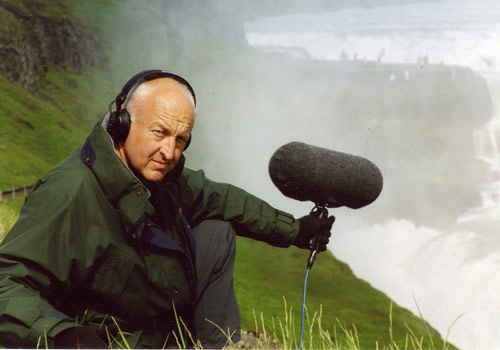
Christopher Richard Watson was born in Sheffield where he attended Rowlinson School and Stannington College (now part of Sheffield College). In 1971 he was a founding member of the influential Sheffield-based experimental music group Cabaret Voltaire. His sound recording career began in 1981 when he joined Tyne Tees Television. Watson is a sound recordist with a particular and passionate interest in recording the wildlife sounds of animals, habitats and atmospheres from around the world. As a freelance recordist for film, tv & radio, Chris Watson specialises in natural history and documentary location sound together with track assembly and sound design in post production.

http://www.chriswatson.net/

appearance at Tuned City
design of acoustic environments / 04.07.08
and
Storm / 05.07.08
and
Hearing Berlin: 12 Approaches

Hybrid Space Lab (D/NL)

hybridspacelab

Hybrid Space Lab is an interdisciplinary studio where architects, urbanists, landscape architects, designers and media artists collaborate with soft- and hardware engineers in the development of projects for combined analog and digital, urban, architectural, design and media spaces. The scope of the research and development projects ranges from those on urban games to architectural interiors and 1:1 industrial design applications and wearables.

Prof. Elizabeth Sikiaridi and Prof. Frans Vogelaar are founders of Hybrid Space Lab and partners of invOFFICE for architecture, urbanism and design.

http://www.hybridspacelab.net

Vogelaar, Frans (NL/D)

Vogelaar, Frans (NL/D)

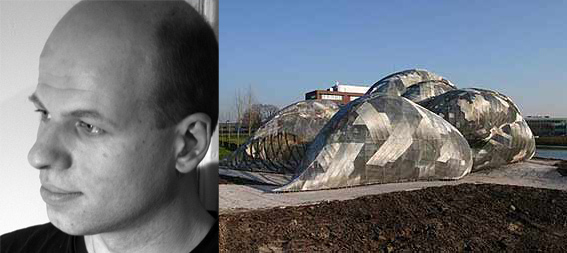
Prof. Frans Vogelaar was born in Holland and grew up in Zimbabwe and Holland. He studied industrial design at the Akademie voor Industriële Vormgeving Eindhoven and architecture and urbanism at the Architectural Association School of Architecture (AA) in London. He worked at the architectural and design office Studio Alchymia (Allessandro Mendini) in Milan and at the Office for Metropolitan Architecture (OMA/Koolhaas) in Rotterdam.

Elizabeth Sikiaridi and Frans Vogelaar run together the Hybrid Space Lab in Amsterdam. Professor Elisabeth Sikiaridi lectures on design in the urban landscape at University of Duisburg-Essen in Germany and Professor Frans Vogelaar is Head of the Department of Hybrid Space at the Academy of Media Arts, Cologne in Germany. Elizabeth Sikiaridi and Frans Vogelaar have worked as consultants to the Dutch government on “the use of space in the information/communication age”.

http://www.hybridspacelab.net/

appearance at Tuned City
sound and social communication / 03.07.08

van der Heide, Edwin (NL)

edwin

Edwin van der Heide studied Sonology at the Royal Conservatory, where he graduated in 1992. He is working as autonomous artist in the field of sound, space and interaction. His current work is hard to define in the traditional terms of music, sound art or media art because he is often working on the edge and the characteristics of the used medium. In this sense the medium does not just mediate but is being explored and redefined. Although qualities of musical language are being used in the development of the work it does not mean that the presentation form of the work is necessarily related to the concert form known in music. The result can either be an installation, a performance or an environment. In 1995 he was invited to become a teacher at the interfaculty Image and Sound / ArtScience of the Royal Conservatory and the Royal Arts Academy in The Hague, The Netherlands. Since 2002 he also teaches for the students of the Master of Media Technology program at Leiden University.

In 1989 Edwin van der Heide started giving performances with custom build sensor based instruments. This let to a from of music with a strong physical approach and an emphasis on sound itself. The formation of Sensorband in 1993/1994 was a continuation in this direction. While performing he developed more and more an interest in space/spaces. He realised that it would be possible to approach a space as an instrument and, even one step further, to approach the human senses and the perception of the audience as an instrument for which you could compose. Over the years the focus of his work has shifted to sound installations, interactive installations and environments. The performance aspect is still present in part of the work but the emphasis has shifted to the content of the environment and less focus on the performer.

http://www.evdh.net/

appearance at Tuned City
radio space / 05.07.08

tx – büro für temporäre architektur (D)

tx

tx – büro für temporäre architektur. As an office for temporary architecture tx investigats the mutual relations between space, usage and time and develops integrated solutions for combining places with the actions taking place within these spaces. tx plans strategies that determine the particular relation of space and its use within a temporary structure.

tx is part of an interdisciplinary network of different people, initiatives and companies. For each project special working groups and cooperations are set up – depending on the amount and demand of the task. By that dynamic working structures are created which can react to the different demands.

tx is convinced that architecture and urban development emerge within the context of social processes and ask for a responsible handling of economic, social and ecoogical resources. Their main interest herein lies in the importance of temporal processes for the construction, the design and the adoption of spatial situations.

The projects of tx express growth and activation strategies they call programmatic urban development. tx-architects are Ines-Ulrike Rudolph and Gabor Stark.

http://www.tx-architekten.de/

appearance at Tuned City
design of acoustic environments / 04.07.08
and
Composed City

Steinke, Gerhard (D)

Gerhard Steinke, born in Dresden, 1927, has been active for more than 60 years in the audio technology area. He began his career as sound engineer at Radio Dresden in 1947. He studied acoustics/electro-acoustic at the Dresden University and moved in 1953 to Berlin’s Radio and Television Research Centre (RFZ) where he established a laboratory for Acoustical-Musical Boundary Problems in Broadcasting and set up the first subjective listening test group to assess sound recordings, studios and impairments in the broadcasting chain. This concept and the study results are included in various international standards (OIRT, ITU-R, and EBU) on listening tests and test rooms. He was also responsible for the introduction of stereophonic broadcasting in East Germany and established an experimental electronic music studio with the new Subharchord synthesizer, 1962.

In 1971 he became the director of the Research and Development Department of Sound and Video System Technology of RFZ and in 1973 especially for Sound System Technology. Under his chairmanship the first multichannel recording system Stereo-Ambiophony and the automation of sound studio equipment were developed. With co-inventors he developed the sound reinforcement system “Delta Stereophony” and a home processor for enlarging the listening zone in multichannel sound. In 1987 he served several months for the United Nations as ITU-Expert and Consultant at the Indian All-Union Broadcasting and Television Organization to give recommendations and proposals for the planned conversion to digital broadcasting in India.

He and his team moved to Deutsche Telekom in 1990 where he set up the research and development group for new sound transmission systems. He taught sound technology and electronic music at Berlin’s High School of Music in the Tonmeister discipline for 27 years, and since his retirement has made recommendations on the practices in the Surround Sound Forum of the Tonmeister Society (VDT) and in AES Technical Documents on Multichannel Surround Sound.

Since 1955 Steinke has been active in international standardising organizations: more than 12 years he was Chairman of Study Group 2 (Sound technology/Recording) with the OIRT as well as 18 years Chairman of Working Party 10-C (Audio/Digital) of the CCIR/ITU-R up to 1992. In the multichannel field he initiated the project group which created the first international 5.1.-surround sound standard ITU-R BS 775.

He published numerous contributions and patents in the field of audio and is now audio consultant, freelance journalist and author as well as lecturer at audio conventions and universities in Germany and abroad.

For his work in the field of standards he received the Honorary Medal of the OIRT and was awarded the Bèkesy Medal for his contributions to audio by the Hungarian Acoustical Society and the AES Hungarian Section. Gerhard Steinke is a life member and fellow of the AES, served as papers chairman of the AES 86th Convention in Hamburg, and as vice president, Europe Region of the AES, from 1991 -1993 where he initiated the inauguration of new AES sections in the Eastern European countries. During the AES 122nd Convention in Vienna, 2007, he was awarded the Golden Honorary Medal of the AES for his contributions to the field of audio. He is also a member of the VDT and was awarded in 2007 the Honorary Medal of the VDT for his activities of long standing in the planning group of the VDT as well as the Surround Sound Forum as its co-founder.

appearance at Tuned City
radio space / 05.07.08

Sikiaridi, Elisabeth (D/UK/GR)

sikiaridi

Prof. Elizabeth Sikiaridi was born in London and grew up in Athens. She studied architecture and urbanism at the École d’Architecture de Belleville in Paris and at the Technical University of Darmstadt. She worked at the architectural office Behnisch & Partner in Stuttgart on the Extension of the German Federal Bank in Frankfurt and on the German Federal Parliament in Bonn.

Elizabeth Sikiaridi and Frans Vogelaar run together the Hybrid Space Lab in Amsterdam and Berlin. Elizabeth Sikiaridi lectures on design in the urban landscape at University of Duisburg-Essen in Germany and Professor Frans Vogelaar is Head of the Department of Hybrid Space at the Academy of Media Arts, Cologne in Germany. Elizabeth Sikiaridi and Frans Vogelaar have worked as consultants to the Dutch government on “the use of space in the information/communication age”.

http://www.hybridspacelab.net/

appearance at Tuned City
talking sound and building space / 05.07.08

Schulze, Holger (D)

schulze

Prof. Holger Schulze (D) is the visiting professor for sound anthropology and sound ecology at the University of the Arts Berlin and head of the Sound Studies programme. He studied comparative literature, dramatics, media sciences, and philosophy. Since 2000, he has collaborated on the development of the Sound Studies Program – Acoustic Communication. Between 2002-2003, he was the business manager of the Berliner Gesellschaft für Neue Musik and since 2003 member of the Society for Historical Anthropology.

http://www.udk-berlin.de/sites/soundstudies/
http://www.soundstudies.info/

appearance at Tuned City
sound – space – architecture / 02.07.08

Papenburg, Jens Gerrit (D)

papenburg

Born in 1976, Jens Gerrit Papenburg studied musicology, communication studies and economics in Berlin. Since 2006 he has been Scientific Assistant to the Chair for Popular Music & Theory (Professor Peter Wicke) at Humbolt-Universität zu Berlin. He is Executive Editor of the online platform PopScriptum – Beiträge zur populären Musik (PopScriptum – Essays on Popular Music). Publications include: Der Synthesizer als Apriori. Körper und Maschinen in der Popmusik (The Synthesizer as Apriori. Bodies and Machines in Popular Music), in: Wulf, Christoph et al. (Hrsg.): Paragrana, Internationale Zeitschrift für Historische Anthropologie (14, 2), Berlin: Akademic Verlag 2005; Hörgeräte. Zur Psychomathematik des akroamatischen Leibniz (Hearing Devices. On the Psychomathematics of the acroamatic Leibniz), in: Volmar, Axel (Hrsg.): Zeitkritische Medienprozesse, Berlin: Kadmos 2008.

http://www2.hu-berlin.de/fpm/staff/papenburgbio.htm

appearance at Tuned City
public and private soundscapes / 03.07.08

Moss, David (US)

moss

David Moss is considered one of the most innovative singers and percussionists in contemporary music. In 1991 he received a Guggenheim Fellowship; in 1992, a DAAD Fellowship (Berlin). Moss is the co-founder and artistic director of the Institute for Living Voice. In 2004, Moss re-joined Hans Peter Kuhn and Stefan Kurt to create the theater piece “Sunset Scientists”. In 2003, Moss performed as soloist with the Berlin Philharmonic under the direction of Sir Simon Rattle. He appeared as soloist in the premiere of Olga Neuwirth’s opera, “Lost Highway” as part of Steierischer Herbst Festival. Moss made his Carnegie Hall debut in 2003 with the American Composers Orchestra, under Steven Sloane. Moss returned to the Salzburg Festival in summer 2001 as “Prince Orlovsky” in the new Hans Neuenfels production of “Die Fledermaus”. In 1999, Moss was a featured soloist in Luciano Berios’ “Cronaca del Luogo” at its premiere in Salzburg. Moss sang at the Edinburgh Festival, Spoleto Festival, USA, and the Meistersinger Festival in Nürnberg in Heiner Goebbels’ orchestra work “Surrogate Cities” , and is a vocal soloist in Goebbels’ “Prometheus”. He performed as guest with the Ensemble Modern in their “Frank Zappa Project”. In 2005/06 he was featured in two new projects: first, the premiere of Sam Auinger’s multi-media opera, “The Man Made of Rain”, and second, the premiere of “Pierrot LunaiRE: REmix 05/06”, a collaboration with the Alter Ego ensemble.

http://www.davidmossmusic.com

appearance at Tuned City
sound – space – architecture / 02.07.08

Moser, Michael (A)

Michael Moser, born 1959 in Graz, Austria, studied cello in Graz and Vienna. He is intensively engaged with different forms of contemporary music: improvisation, performances, music for theatre and film, experiments with live-electronics. Numerous pieces for cello solo have been composed at his suggestion. He has collaborated with distinguished artists such as Peter Ablinger, Bernhard Lang, Isabel Mundry, Helmut Lachenmann, Alvin Lucier, Klaus Lang, Otomo Yoshihide, Pauline Olivieros,
Elliott Sharp, Nick Collins, Michael Maierhof, Phill Niblock, Tony Oxley, Zeitkratzer, Polwechsel, Klangforum Wien. Michael Moser played at numerous festivals for contemporary and improvised music. In 2008, he is a guest of the Berlin artists’ programme DAAD.

appearance at Tuned City
sound – space – architecture / 02.07.08

magma architecture (D/UK)

magma

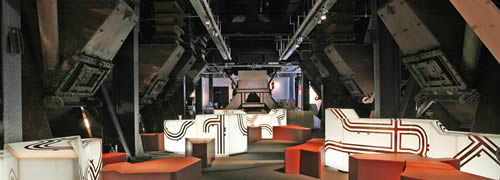
The Berlin based architectural practice magma architecture works on the boundary between architecture, design and communication. Founded in 2003 by Martin Ostermann and Lena Kleinheinz the collaboration focuses on creative and experimental approaches to architectural and related commissions. Amongst their repertoire are exhibitions and event-centred architecture. So far proposed and realised projects are a. o. the current revitalisation of the former GDR Radio Centre (Berlin, Nalepastrasse, 2007),  the exhibition Trial & Error in London (2003) or the exhibition Head in / Im Kopf in Berlin (2007) (see image)

http://www.magmaarchitecture.com/

appearance at Tuned City
building with sound / 02.07.08
and
sound – space – architecture / 02.07.08
and
Auditory Corridors

Leitner, Bernhard (A)

leitner

Prof. Bernhard Leitner studied from 1956-1963 architecture at the Technische Hochschule Vienna. In 1964 he continued his studies in Paris. In 1968 he moved to New York, where he became urban designer at the Department of City Planning and head of the programme “Urban Design Studies: Humanistic Perspectives” at the New York University. In 1987 he returned to Vienna, where he has been ever since Professor at the Hochschule für angewandte Kunst. Since 1968 Leitner has designed spaces with the material sound and explores specific sound-space conceptions.

http://www.bernhardleitner.at

appearance at Tuned City
listening to soundspaces / 02.07.08
and
sound – space – architecture / 02.07.08

Kursell, Julia (D)

kursell

Dr. Julia Kursell studie music, Slavic philology and comparative literature in Munich and completed her PhD in 2000. 1998-2001 and 2002-2004 she was research fellow at the Institute for Slavic Philology in Munich, 2001-2002 research fellow in the project “Russische Erinnerungsliteratur und die Zivilisationsbrüche des 20. Jahrhunderts” at the Zentrum für Literaturforschung in Berlin. Since April 2004 she has been research fellow at the Max Planck Institute for the History of Science. Since November 2006 Julia Kursell has been Dilthey Fellow at the Max Planck Institute for the History of Science with the project ” Historical Epistemology of Hearing (1850 – 2000)”.

http://vlp.mpiwg-berlin.mpg.de/exp/kursell/index.html

appearance at Tuned City
listening to soundspaces / 02.07.08

Kuentz, Martin (D)

Kuentz, Martin

Martin Kuentz, born 1975, is a Berlin based freelance artist. In 2002, he founded the Salon Bruit, a concert series on improvised, electroacoustic and noise music. He organized the DIENSTbar event on M.S. Stubnitz (Rotterdam) in 2001, and took part in the “White Ears” exhibition of Expo 3000 (Lagos Art Festival). Music related projects include radio transmitting performances as Transmitting Object Behaviour (T.O.B.), Berlin free radio campaign, Blind Operators, Unkuentz vs. Trodza. Co-founded ‘apostrov recordings. Various concerts in Germany, Denmark, England, Romania. Martin Kuentz does several workshops for DIY mikro-fm-circuits and DIY sound-modules in Europe.

http://www.superfactory.biz

http://www.piradio.de/

appearance at Tuned City
kinetic (architectural) modelbuilding

Koelsch, Stefan (D)

koelsch

Dr. Stefan Koelsch, born 1968 in Texas (USA), studied at the University of Music and Arts Bremen music (violine, piano and composition) and at the University of Leipzig psychology and sociology. 2000 he received a PhD in psychology at the Max Planck Institute for Human Cognitive and Brain Science Leipzig and habilitated 2004 at the University of Leipzig. 2001/02 he was post-doctoral research fellow at the Harvard Medical School (Boston, USA). 2003-07 Stefan Koelsch was leader of the Independent Junior Research Group “Neurocognition of Music” at the Max Planck Institute for Human Cognitive and Brain Science Leipzig. At the moment he is Senior Research Fellow at the University of Sussex. The main focus of his research lies on neurocognition of music and language; music and emotion; developmental aspects of language and music cognition; emotion and its effects on autonomic, hormonal, and immune function.

http://www.stefan-koelsch.de

appearance at Tuned City
listening to soundspaces / 02.07.08

Kirkegaard, Jacob (DK/D)

kirkegaard

Jacob Kirkegaard is a sound artist born in 1975 in Denmark, living in Berlin, Germany. In early 2006 he graduated at the Academy of Arts and the Media in Cologne Germany. Jacob is exploring sound in art with a scientific approach. Parallel to his studies, he has been giving lectures on sound and space at the Royal Architect Academy and at the Art Academy in Copenhagen. Aside from academics, Jacob Kirkegaard collaborates with various artists on installations and resonances and has performed in Asia, America and Europe. Jacob Kirkegaard’s sound works focus on investigations into the potential musicality in hidden sound layers in the environment. In this context he has been capturing and exploring sounds from, for example, volcanic earth, ice, atmospheric phenomena, nuclear power plants and deserted places. Recording tools used include accelometers, hydrophones and home-built electromagnetic receivers.

http://fonik.dk/

appearance at Tuned City
sonic derive / 05.07.08