the book

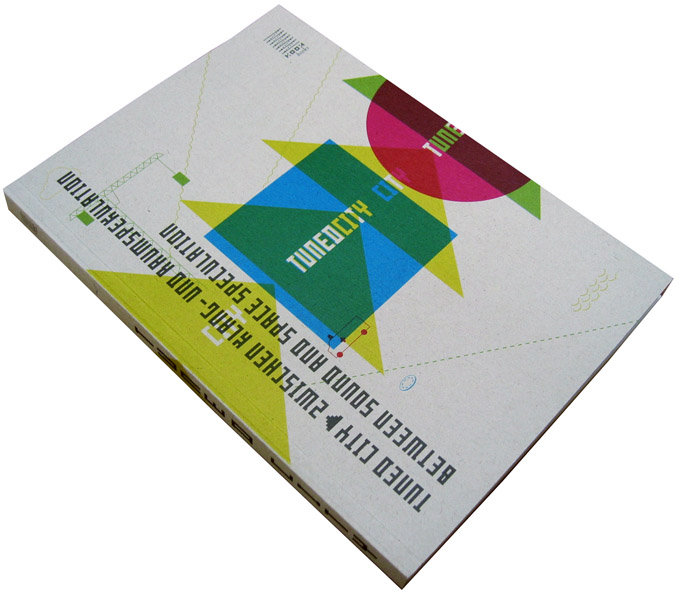
tuned city reader tcbuch1

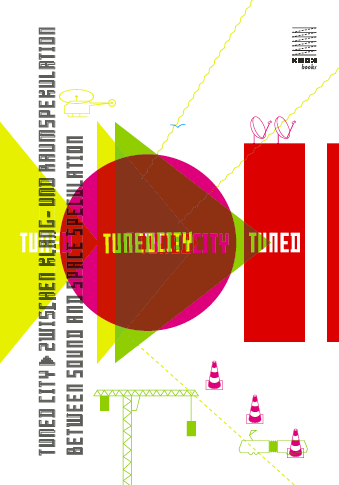
Sounds belong to the City. They determine spaces and identities. For years, artists have been using city noises as a material to stage or to question urban space – new
territory, however, for most architects and planners within the routines of functional planning procedures. Tuned City – Between Sound- and Space Speculation searches for a new evaluation of architectural spaces from the perspective of acoustics. This volume
presents various positions of architects, artists and theorists to expand the architectural discourse with the dimension of listening.

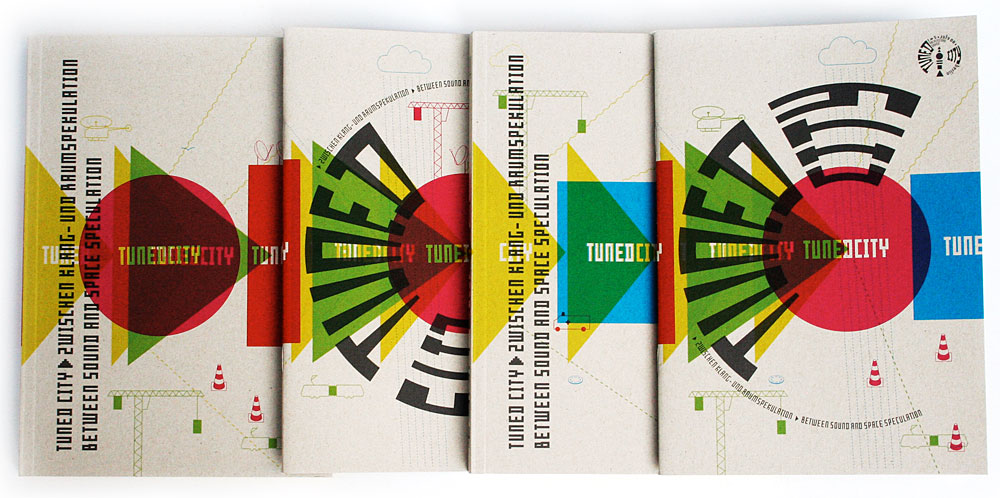
tc_buch_2 tc_buch-03
tc-buch-5 tc_buch-5

With contributions by: Anne Kockelkorn und Doris Kleilein, Barry Blesser und Linda-Ruth Salter, Gisela Herzog und Gerhard Steinke, Susanne Hauser, Thomas Ankersmit, Pascal Amphoux und Grégoire Chelkoff, Raviv Ganchrow, Mark Bain, Arno Brandlhuber und Markus Emde, Michael Bull, Stefan Kölsch, Jacob Kirkegaard

Tuned City – between sound- and space speculation
Edited by Anne Kockelkorn, Doris Kleilein, Gesine Pagels und Carsten Stabenow
200 Seiten, german/english, with Illustrations by Andreas Töpfer

EUR(D) 25,00 / EUR(A) 25,70
ISBN 978-3-937445-36-6
KOOK BOOKS 2008

Buy now – select shipment


reviews >>>

projects

tuned city publication

tuned city reader

Sounds belong to the City. They determine spaces and identities. For years, artists have been using city noises as a material to stage or to question urban space – new
territory, however, for most architects and planners within the routines of functional planning procedures. Tuned City – Between Sound- and Space Speculation searches for a new evaluation of architectural spaces from the perspective of acoustics. This volume
presents various positions of architects, artists and theorists to expand the architectural discourse with the dimension of listening.

With contributions by: Anne Kockelkorn und Doris Kleilein, Barry Blesser und Linda-Ruth Salter, Gisela Herzog und Gerhard Steinke, Susanne Hauser, Thomas Ankersmit, Pascal Amphoux und Grégoire Chelkoff, Raviv Ganchrow, Mark Bain, Arno Brandlhuber und Markus Emde, Michael Bull, Stefan Kölsch, Jacob Kirkegaard

Tuned City – between sound- and space speculation
Edited by Anne Kockelkorn, Doris Kleilein, Gesine Pagels und Carsten Stabenow
200 Seiten, german/english, with Illustrations by Andreas Töpfer

EUR(D) 25,00 / EUR(A) 25,70
ISBN 978-3-937445-36-6
KOOK BOOKS 2008


Herzog, Gisela (D)

Gisela Herzog (*1926), acoustical engineer, Berlin. From 1948 sound engineer at the Broadcasting Center, Potsdam, from 1951 research assistant for space and architectural acoustics at the Broadcasting Research Center (RFZ), Berlin. Consultant for important studio and cultural buildings in the former GDR (a.o. Broadcasting and TV Studios Berlin, city halls Chemnitz and Suhl, Lukas church Dresden, Produktionsstätten VEB Deutsche Schallplatten).

appearance at Tuned City
radio space / 05.07.2008

Duque, Alejandro (CO/CH)

Take the “politics of friendship” as a rough guideline to the mindset behind smuggling goods and ideas. Aka filesharing. Since year 2004 Alejandro Duque is a Ph.D candidate at EGS (www.egs.edu). His free/libre time is spent on striving to interface place, location and trajectory across all networks in a south to east axis and using his body as a test ground. In S.O.U.P they do it using audiovisual representations…a “real-time” mapping endeavour.

http://soup.znerol.ch/
http://co.lab.cohete.net/

appearance at Tuned City
sound and social communication / 03.07.08

Sinclair, Peter (UK/F)

Peter Sinclair is a digital media and sound artist. He is a tenured professor at Ecole Supérieure d’Art d’Aix-en-Provence where he has been responsible for the sound department since 1996. He is also currently a member of the scientific council for research and studies at the DAP (fine arts departement of the Ministry for Culture) and director of the research project “Territoires électronique de la création plastique sonore” (the electronic territories of sound art) which is a collaboration between Ecole Supérieure d’Art d’Aix-en-Provence/Locus Sonus and Université de Provence – Aix/Marseilles LAMES/CNRS-MMSH.

Peter Sinclair is known for his sound installations and othe cross-disciplinary works which use sound as their principal medium. Excited by technology but handling it with critical irony, his work has moved from burlesque mechanics, through the misuse of computers to performance that parodises modern media language in transatlantic streamed-collaborations.

Aside from his personal artistic productions Peter Sinclair participates in various collectives such as “PacLap” and “Daisy Chain” and he has been working with New York based artist GH Hovagimyan since 1996. Their collaborative works, which include Excercises in talking, a soapopera for laptops, heartbreak hotel, shooter and Rant rant back back rant, have been shown frequently in Europe and the US.

http://nujus.net/~petesinc/

appearance at Tuned City
sound and social communication / 03.07.08

tamtam (A)

tamtam
Sam AuingerHannes Strobl

tamtam refer to their work with the sentence “the sound environment is becoming the instrument, the instrument is becoming the sound environment.” Their instrument is, for all intensive purposes, not only a sounding object that we are well familiar with. It is also the space itself where sound lives – the acoustic and psychoacoustic fields that enable us to extend our accepted senses to hear the habitual and the everyday as something extraordinary.

Cage always discussed the space between the notes – the place that is neither sound nor silence but in suspension and waiting. In their search for a new sonic language – a language where sound no longer evolves on the horizontal, left to right plane of musical history but from foreground to background, outside to inside, sounding always on the threshold of disappearance – tamtam are also creating a new language of listening: one where the space between is filled with the listener’s own experience.

http://www.netzradio.de/tamtam

appearance at Tuned City
sound – space – architecture / 02.07.08

Stadtmatratze

stadtmatratze

installation by raumlaborberlin
Am Fernsehturm (03.07. 08) Wriezener Bahnhof (04.07. 08)

The city mattress is an installation for the public space. It has an equilateral-triangle pneumatic structure of 15 m length on each side. As a catalytic object it provides the platform for Tuned City on Alexanderplatz and a space where specialists, expert public and passers-by can meet.
As an oversized lying surface it questions the conventions of our behaviour in public space as well as the physical action of the conference participants. The individual participant can listen to the sound of the lecture via headphone in his own language. This situation triggers a stress ratio between individual and temporary collective. The city mattress thus becomes an experimental condensation surface for behaviour patterns in public space.

team Stadtmatratze:
Markus Bader (raumlabor berlin)
Assistenz: Katrin Murbach

BuckyMedia

performance by Farmers Manual

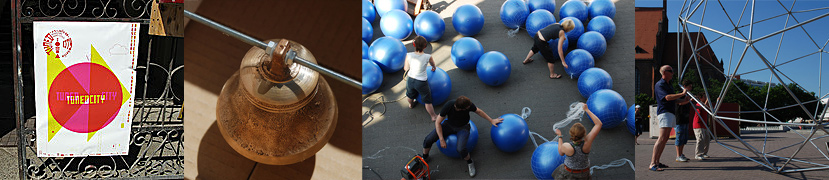
Buckymedia is a work conceived by Farmers Manual as 80-sided, 5m diameter “bucky balls”, in reference to the architect and visionary Richard Buckminster Fuller. By moving these structures, the viewers can navigate through different interpretations of real and virtual spaces and time. Metaphorically speaking the big balls represent the globe, the net, and the circular communication of the web. As physical object they are a space within a space, it is an offer of a different type of architecture, one that is circular, expendable and infinite. Their meaning is created in the moment when a viewer is interacting with them – walking into and through them, standing within them, watching or even touching them. The installation is about making oneself available to a continual barrage of meanings and themes, so that one is transformed into a being spread, distributed a different configuration of the self.

http://web.fm/twiki-bin/view/Hiaz/BuckyMediaConceptYosi

Inwound

installation by Raviv Ganchrow

Inwound plumbs the reciprocal exchanges between sound, location, and listeners at Postdamer Platz. In the first week of July, public access will be granted to a provisional listening chamber set up within the subterranean mechanical spaces of the Postdamer Platz station. The surrounding environmental vibrations at the site of the station will be reconfigured into an intensified relational field of sound. The project utilizes transducers that are literally plugged into the urban clutter. By attaching the transducers, the host structures become quasi-microphones listening outwards as well as in on themselves.

A selection of zones in and around the station will transmit their live signals to the chamber where they then get collected and emitted via a phased-array of suspended loudspeakers. Within the listening chamber, the various signals are brought into critical play as amplified material vibrations are interlaced with defamiliarized ambient sounds to form an immersive tapestry of sonic-spatial configurations.

By approaching the environment as sonically continuous and the site as materially unstable, Inwound empirically taps into the fluctuating undercurrents of everyday experience in order to render palpable the oscillations from which both ‘listener’ and ‘place’ emerge inherently interwound.

Punktierte Allee

installation by Roswitha von den Driesch and Jens-Uwe Dyffort

With their “Punktierte Allee” (Dotted Alley) sound installation, Dyffort & Driesch are continuing a series of outdoor works that delves into the subject of landscapes that change over time, in this case that of the Große Tiergarten (the large Tiergarten park) in Berlin. They work with quiet loudspeaker-specific clicking sounds that behave like echo sounders in the immediate surroundings. Twenty button-sized Piezo loudspeakers, installed along the tree-lined “Kleinen Querallee”, are made to click through electric impulses. The reverberations of the clicking sounds and their horizontal, temporal diversification amplify the perception for the surrounding space within the landscaped architectonic configuration. It is acoustically “traced” and reshaped and expanded through motion. While developing the idea, Dyffort&Driesch had an image of a garden in mind that starts to ramble as soon as it is no longer landscaped.

Auditory Corridors

architectural prototype for acoustic design by magma architecture and Sam Auinger (consultant)

Acoustics in architecture is a long lasting history of prevention strategies. How does a space become more soundless? How can I protect myself from hearing my colleague speaking on the phone? How do I keep the noise from the street outside? Apart from very few high profile and expensive construction tasks like concert halls everything audible seems to indicate annoyance.

magma architecture investigates how to integrate sounds in a positive, active and interactive way into the architectural design process and the experience of space. The goal is to allow acoustic and sound aspects into spaces of everyday life. It resulted in a number of design proposals for private flats for people with special hearing habits. The various clients’ needs and wishes generated concrete, poetic and ironic architectural-artistic projects, in which sound and architecture form an inseparable unit. Sounds and tones are utilised to generate spaces, experience complex facts, simulate nature and conciliate conflicts.

Alexa

performance by agf

The interplay of this exhibit helps flesh out the contours of performance in contemporary art. AGF works with performance strategies that articulate a distinct relationship between artist and community. By placing this show into a shopping mood, the expression into a public consumer environment comes off stage.

It is all about nature of future. About the audible site of development, speed energy, compositions with technical noise, sound that wants you make to hear the building of your own heart. How the volume of the speaker systems changes if your skin would be the membrane. And how it brings protest strategies into an architectural sound context.

AGF won’t mention social change: she will sow and catalyze it in order to comment from a personal perspective on the systemic problems that prevent human progress. This self-imposed task suggests an allegorical confrontation with psychological barriers more than a way to address specific injustices (although these barriers are connected to societal inequities).

Sinclair, Peter + Duque, Alejandoro + Clauss, Julien / locus sonus

presentation by Peter Sinclair, Alejandro Duque und Julien Clauss

Since it was launched in 2004, the research group Locus Sonus has been working on artistic possibilities arising from the intersection of networked and acoustic or local audio spaces. The first projects, Locustream & Wimicam, were developed from experimentation using audio streaming techniques, and engage with problematic related to the use of flux for artistic purposes (flux understood here as a continually updating medium) in local and networked environments. Today our research is grouped under two main headings Field Spatialization and Networked sonic spaces. Our research is fundamentally practice based aiming to create a corpus of artistic experimentation around a common problematic. The forms emanating from this activity are “verified” essentially through their presentation in public contexts. The choice of implementing this research within the art education environment is prompted by the current renewal of techniques and art-forms which are at the intersection of the visual arts and music.

http://www.locusonus.org

appearance at Tuned City
sound and social communication / 02.07.08

Talking Drums

installation by Ulrich Eller

Forty identically constructed snare drums hang individually at face level on thin steel cords propped on circular wall positions along the architecture’s rhythmic pillars. All of the drums resonate the sound of short chalk strokes via inbuilt loudspeakers, similar to a quick writing process. The interaction results in a staccato-like, coincidental dialogue form, a “conversation” among the drums in different moods, wherein the sound backdrop permanently alters between the original sound of the recording and the typical resonating sound of the snare drum.

Talking Drums is a project of singuhr – hoergalerie

Eller, Ulrich (D)

Ulrich Eller, born in 1953, studied at the HDK, Berlin. Since 1981, Eller has been working in the border-crossing genre of installative sound art. His artistic works have been shown in numerous national and international exhibitions. Since 2004, he has been a professor of sound sculpture/sound installation at the HBK Braunschweig. He lives in Norderheistedt.

appearance at Tuned City
building with sound / 02.07.08
und
Talking Drums

Voogelar, Frans / beyond you-topia

hybridspacelab

presentation by Frans Voogelar

The lecture presents urban projects dealing with hybrid space, with combined urban and media space. Within the framework of the urban discourse and practice, the new interdisciplinary field of Soft Urbanism explores the dynamic interaction between urbanism and the space of mass media and communication networks. Soft Urbanism deals with communication processes, the soft aspects, overlying and modifying the urban sprawl.

appearance at Tuned City
sound and social communication / 03.07.08

Schäfer, Olaf + Walter, Urs / drafting with sound

lecture by Olaf Schäfer und Urs Walter

Drafting with sound

The architectural discipline is the only one – with some restrictions this also applies to music and dance – where the design process is not taking place on the level of the final opus but in a medial one. In architecture this is graphics, drawings and visualizations and the efforts on a three-dimensional model. If you want to open up this discipline for a genuine Aural Architecture, you need to provide an auditory medium for drafting and planning.
– an example with a short view in history.

“Sound Compository Aspects of Architecture” deals with the sonic side of space. It is a way to describe space by its sonic expression and to explore sound spheres by different levels of listening. Here we imagine sound sphere as a dynamic stream of sending and receiving, which changes any moment. In the process we search for structures within this fluid system to become the tectonics of a sonic space.
With these tools we can actually compose new sound spheres, which are build on spatial bases – and can therefore be transferred to a spatial expression of sound.

appearance at Tuned City
talking sound and building space / 05.07.08