lectures / presentations

Sonority of Place
08.-10.07. 2011, daily 11:00-15:00

This series aims at drawing correspondences between ‚architecture‘ and ‚sound‘ to a more primary  relation between notions of ‚place‘ and ‚practices of listening‘. In other words to underscore an  interplay between the sense of being ‚situated‘ and the intentionality of what is being ‚heard‘. It is from within this primary level of interactions that a sense of ‚sound‘ as well as a notion of ‚site‘, and by extension ‚architecture‘, are derived in the first place. For the current constellation of talks and presentations a particular emphasis is placed on an understanding of listening, not as a biological  constant, but rather a ‚practice‘ that both shapes and is shaped by various contexts. In this sense every mode of hearing is understood to be distributed across a diversity of practices and disciplines.

Talks and presentations as well as pertinent artist projects and presentations included in this tuned city event draw upon recent developments in such diverse fields as urbanism, art and architecture history and theory, philosophy, sensory history, sensory ethnography, archaeoacoustics and musicology, getting closer to what may be at stake in auditory models of ‚situated-ness‘. One common approach, shared by the various practitioners, understands the ‚sonic imagination‘ to be an operative mode of thinking. It is this mode of thinking that potentially engages the social, aesthetic and even ethical, political implications of an attentiveness to the sonority of place.

The program will take place each day in different locations, undertaking a architecture-historic journey, starting from the 14th Century Old Town with the opening performance, going over the remains of the industrial developments in the beginning of the last century, the Soviet-era architectural utopies of the 70s and 80s and ending in the Now of contemporary Tallinn.

For further information on the conference settings please see places >>>

July 08th 2011
beginning 11:00 @Kultuurikatel
Põhja puiestee 27, Tallinn – map >>>

Block A: Sounding the Local
Does Tallinn resound and if so, in what manner? Is there such a thing as a Baltic auditory trait? Do sonic ambiences assist in urban navigation or do they introduce another spatiality  altogether? Can sounds instill a sense of identity, cause alienation or leave room to inscribe oneself into one’s surroundings? Is the city audibly territorialized and if so, who administers the rights to sonic borders? When tuning into audible urban ambiences, certain themes tend to arise. Carlo A. Cubero gauges relations between inhabitants and an auditory locale in his case study  ‘Sonic Potentials of Tallinn’ by applying ethnographic phonography methods in order to grasp the various spaces and sounds of Tallinn. John Grzinich will discuss the process of creating an auditory guide to Tallinn with the ‘Sound Map of Tallinn’ project. Local musical traditions also provide indications of underlying auditory understandings and Urve Lippus seeks relations between practices and broader social-political themes of the Baltic context. For Louise K. Wilson, the audibility of site operates through immediate experience as well as within collective histories, projected memories and implied narratives embedded in locales. In a series of works, Wilson explores relations between the tactility of audio technology and lost traces from former Cold War sites.

Sonic Potentials of Tallinn: a case study
lecture by Carlo A. Cubero (EE)
Associate Professor of Social & Cultural Anthropology at Tallinn University

Sound Map of Tallinn
John Grzinich (US/EE)
sound artist, MoKS, Mooste

Constructing Finno-Ugric identity through music
lecture by Urve Lippus (EE)
Professor of Musicology, Estonian Academy of Music, head of the Department of Musicology

On the Plasticity of Echoes: Cold War sites and ruined temples
lecture by Louise K Wilson (UK)
artist and researcher

Block B: Subjective Soundscapes
Recent attention in architecture and urbanism to flows and non-localized relational networks within the city as well as a recognition of the importance of subjective geographies and mapping not only as inert tools but rather producers of space casts doubt on the usefulness of the term ‘the soundscape’ (in its initial formulation) as an effective agent for comprehending the relational, fragmented, acoustemologies of the contemporary urban setting. Marta García Quiñones extends this concern by focusing on the enactive qualities of hearing, portraying spontaneous urban listening as a form of operative action in public space. Justin Bennett addresses the publicness of public space itself in his ‘Shotgun Architecture’ project of Zuidas Amsterdam, utilizing pistol shot recordings of semi-public spaces to derive subjective measurements and mappings in various formats. Peter Cusack’s ongoing ‘Favourite Sounds’ project understands the ‘locale’ to be an agglomeration of acoustic psychogeographies where the aural site of a city emerges at intersections between locations and attentive listeners. Ann Goossens recognizes transformations in listening habits opened up through the availability and portability of field-recording devices and has set out to create a pan-European platform titled ‘Sounds of Europe’ for developing the cultures of phonography.

Listening as action.
Movements and gestures to sound and music in the everyday life of the city.

lecture by Marta García Quiñones (ES)
researcher and PhD candidate at the Universitat de Barcelona

Shotgun Architecture
presentation by Justin Bennett (UK/NL)
artist and lecturer at the Sonology Institute – Royal Conservatory (The Hague)

Favourite Sounds and Sonic Migration
presentation by Peter Cusack (UK)
sound artist, musician and environmental recordist

Sounds of Europe
project presentation by Ann Goossens / Q-O2 (BE) and Jaume Ferrete(E)
researcher and cultural worker, Brussels

July 09th 2011
beginning 11:00 @Väike-Õismäe

the space is to be annouced soon!map >>>

Block A: Social Acoustemologies: Hearing Contexts
Hearing nuances of our surroundings in terms of explicit meanings is a practice that notably indicates an intention to discern ‘places’ within an eventfulness of sounds. The prominence of such capacities, within any given social setting, are a function of the collective practices, techniques as well as beliefs and customs that enforce and perpetuate such habits. Ernst Karel’s fieldwork in south India emphasizes sound’s role in the social production of space, and place and explores the prospects of phonography as a means of evoking lived experience through his dual practices of sound ethnography and music-making. Mark Smith addresses the challenges of listening to the past by recognizing contextualization as a paramount strategy in accessing meanings of past sounds and proposes future areas of historical inquiry. The emerging field of Archaeoacoustics attempts to uncover sonic narratives from physical remnants of the past, at times from cultures that have vanished from existence. Aaron Watson’s acoustic research into the megalithic sites of the British Isles has shown that their architecture produces dynamic spatial orchestrations of echoes and resonant frequencies.

With reference to the anthropology of sound
lecture by Ernst Karel (US)
artist and lecturer in the Sensory Ethnography Lab, Harvard University

Listening through history
lecture by Mark Smith (US)
Carolina Distinguished Professor of History at the University of South Carolina

The Sound of Megalithic Monuments: from Skara Brae to Stonehenge
lecture by Aaron Watson (UK)
artist and archaeologist

Block B: Social Acoustemologies: Listening
To hear a place is as much a sensing of a location as it is a constitution of one´s own presence and posture within relational events. To significantly hear a space is also to subtly inhabit situations by potentially recognizing the measure of oneself in relation to other capacities within an auditory continuum. David Kleinberg-Levin examines listening itself as a critical social praxis and a practice of the ‘self’, in terms of developing skilled hearing that has the capacity to open into the ontological dimension of the auditory field. Awareness of the dynamic relations between bodies, spaces and vibrations is the theme of Pierre-Laurent Cassière’s architecture related sound works, whose performances and installations often deal with perceptual limits and reorientations of listening. The body is not only the receiver but also a producer of sounds as Eduardo Abrantes points out in his phenomenological approach towards uttered sound in every-day situations, an approach that indicates resounding vocality itself as a root of identity, consciousness and presence.

Listening as Critical Social Praxis and as a Practice of the Self
lecture by David Kleinberg-Levin (US)
Professor Emeritus, Department of Philosophy at Northwestern University in Evanston, Illinois

presentation of architecture related soundworks
by Pierre-Laurent Cassière (F)
sound artist, Paris

Wandering with Voices – a phenomenological inquiry on the vocal experience of everydayness
lecture by Eduardo Abrantes (PT)
PhD candidate at the Center for Subjectivity Research at the University of Copenhagen

July 10th 20011
beginning 11:00 @Kumu
Weizenbergi 34, Valge 1, Tallinn
map >>>

Block A: Transduced Spatiality
The importance of the transducer in modern notions of sound includes not only in its technical capacity to transform transient vibrations into retrievable objects and data as well as its historical role in the standardization of loudness, but also in the influence such methods exert upon the organization of spatial relations within architectural and civic domains. Sabine von Fischer gauges historical relations between the acoustic laboratory (the site of scientific experimentation) and the home and workplace (the site of prosaic life) in terms of common concerns for containment, ideas of linkage and controlled sonic environments. Carlotta Darò investigates relations between domestic space and transductive communication networks by focusing on the way in which early developments in telecommunication networks shaped a common imagery of the modern American home. Udo Noll’s Radio Aporee projects underline the extent to which communication technologies disrupt a commonsense status of place but at the same time open up other potentially fertile modes of located-ness through disjunctive simultaneities and telepresence. Unsworn Indistries deals with idiosyncratic telecommunication needs.

Resonant Chambers, Broadcast Spheres
lecture by Sabine von Fischer (CH)
architect and writer, Ph.D. candidate in architectural history and theory at ETH Zurich

Plugging the Modern Home
lecture by Carlotta Darò (CA)
Mellon Postdoctoral Fellow at McGill University, in the department of Art History and Communication Studies

radio aporee ::: maps & mobile listening – introduction of a spatial radio
presentation by Udo Noll (D)
media artist and scientist for media technology

Metaphones
presentation by Unsworn Industries (SE)
interaction design and innovation studio based in Malmo, Sweden

Block B: Applied Sound: Case studies
The urban surrounding provides an immensely complex acoustic terrain of interrelated eventfulness, bridging the intimate with the social and tectonic. To listen carefully in such conditions means literally to enact the city, emphasizing space as ‘lived’ as well as denoting acoustic territories as domains of exchange. To hear a city is also to subtly transform that ‘location’ by opening into its latent potentialities. The discipline of urbanism has recently began to recognize notions of sound beyond the bias of ‘noise abatement’, and Max Dixon surveys some examples, themes and implications from the municipal perspective on this emerging field of activities. At the same time, existing city conditions can be reevaluated simply by approaching situations from an auditory frame of mind. It is with this attitude that Sam Auinger and Carsten Seiffarth discuss their auditory findings of Bonn in their ‘bonn hoeren’ project, as well as longer term observations stemming from Auringer’s two decades of city-sound explorations and art practice. Anatol Bogendorfer and Florian Sedmak, founding members of ‘Hörstadt’, discuss a diverse set of strategies and programs engaging public perceptions of the auditory dimensions of the city developed for various of the project´s manifestations.

Imagine a Tuned Future
lecture by Max Dixon (UK)
independent consultant in town planning, London

bonn hoeren – »a hearing perspective«
presentation by Sam Auinger + Carsten Seiffarth (D)
‘city sound artist’ respectively curator of bonn hoeren, a sound art project of the »Beethovenstiftung für Kunst und Kultur der Bundesstadt Bonn«

Hörstadt Linz
central project in the music section of Linz 09 European Capital of Culture

presentation by Anatol Bogendorfer + Florian Sedmak (A)
artists, researchers, cultural workers, Linz
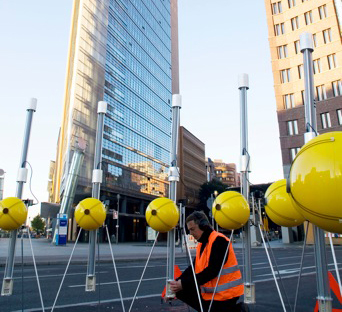
Urban Audio ECoC1

installation and site specific-performance by Florian Tuercke
public space

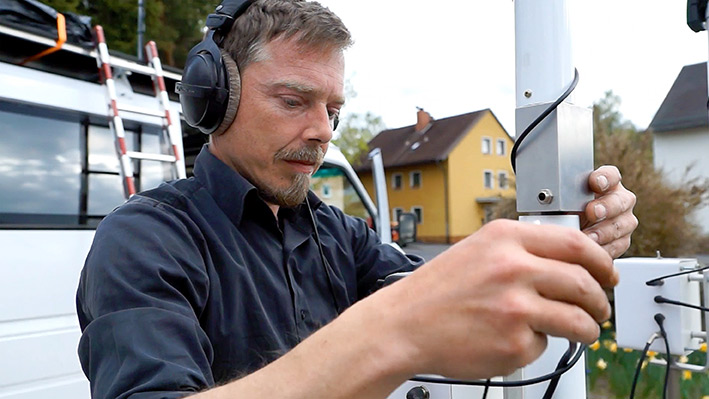
The intention of the concept Urban Audio ECoC1 is to examine public space in terms of its musical and compositional potential. For this purpose special instruments are designed that transform ambient sounds to musical tunes. The Urban Audio instruments are temporally put into public places, e.g. at traffic intersections, to record music. When a car passed by one of the instruments, the contained strings resonated. The string-vibrations were picked up and transfered to the recording studio via radio-transmission.

The Urban Audio music is created and played by all participants of the underlying noise situation. These music pieces are collateral compositions, which means compositions that are created as by-products of situations whose purpose and origin has no musical substructure. Collateral composition are created unknowingly and unintentionally and embody the textural conditions of the underlying situations. In this regard, seemingly chaotic or unpredictable situations are as interesting as self-organizing, or controlled situations. The musical composition lies within the constitution of the situation.

www.stadt-akustik.de

www.urban-audio.org

appearance at Tuned City[lang_ee]appearance at Tuned City[/lang_ee]
Tuned City Tallinn / installations
Urban Audio ECoC1 – performance / 05.07.11

Tuercke, Florian (D)

Florian Tuercke is a sound artist working mainly in the public sphere, creates works which are interactive and participatory involving the audience in the production process whilst inviting them to listen rather than hear. Florian Tuercke’s artistic work is preoccupied with the examination of acoustics in public space. Since 2005 he has been working on the long term project URBAN AUDIO, researching compositional phenomena in the acoustic structure of urban space. To this purpose Tuercke installs tailor-made string instruments at public sites, e.g. at intersections, subsequently transforming the recorded ambient sounds into music. He is also involved in different interdisciplinary urban projects together with architects, musicians, choreographers and sociologists. Tuercke’s latest projects have existed in Spain, Estonia, Finland, Poland, USA and Germany.

http://floriantuercke.net


appearance at Tuned City
Urban Audio / 05.07.11
12-tone Filter / 08.-10.07.11
Tuned City Messene 2018 – Listening Politics

12-tone filter

multifunctional sonic filter by Florian Tuercke
und Jürgen Lehmeier & René Rissland (eyland 07)
public space

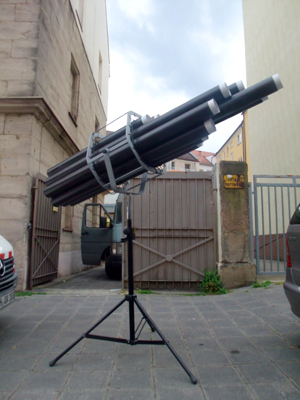
12-tone filter is a mobile sonic object that transforms urban noises into tuned sounds. The object is made of 12 PVC drain pipes connected by elastic adhesive agent. Each pipe has a diameter of 100 mm. The resonance of a tube of air is related to the length of the tube. Pipes of twelve different lengths convert the incoming noises by resonance to different harmonic tonalities. The scale reaches from e to es´ and includes odd- and even-numbered harmonics. Through these tubes, the listener receives a new quality of hearing street traffic, aircraft noises and other strong everyday sounds. In addition, one can play the object like an instrument, fading several tubes in and out. 12-tone filter is an effective transformer of ‘bad noise’ into ‘good noise’. Thanks to its reduced weight, the object is mobile. One person can handle it, focusing on interesting sources. It has the metaphoric appearance of a big anti-noise weapon, a kind of sound-bazooka.

appearance at Tuned City[lang_ee]appearance at Tuned City[/lang_ee]
Tuned City Tallinn / installations
12-tone filter — performance / 08.-10.07.11

Ford, Felicity (UK)

Felicity Ford works across a wide variety of platforms to engage the public in new ways of hearing. Celebrating everyday life through a playful and imaginative focus on sounds and listening, she has particular interests in linking sounds with material culture, documentary sound-recording processes, and listening as a way of exploring social contexts. In her practice a recipe or shopping list become an instruction score; wallpaper becomes the basis for an imaginative sound-recording and composing project; and hand-knitting a sound-system becomes a way of connecting voices and sounds to specific landscapes and communities.

Since completing her PhD in 2011 on The Domestic Soundscape and beyond… Presenting Everyday Sounds to Audiences, she has completed several commissions includingSonic Wallpapers for the Museum of Domestic Design and Architecture, a film soundtrack for the Wellcome Library and the BFI for a 1930s antenatal care film entitled Bathing & Dressing, Parts 1 & 2, and a knitted soundsystem with accompanying composition entitled Hûrd – A KNITSONIK™ PRODUKTION for the Wool Marketing Board and Rheged gallery. She maintains her connections with the Sonic Art Research Unit at Oxford Brookes University, the work of which she documents and archives, and she co-runs the Sound Diaries website with Prof. Paul Whitty. Her interest in documentary radio processes led her to working with Valeria Merlini in 2011 and 2012, co-running documentation workshops at the Tuned City Festival in Tallinn, Estonia, and the Audiograft Festival in Oxford, UK.

www.thedomesticsoundscape.com

appearance at Tuned City
Brussels / Performance: Listening Back and Forth in Brussels / 27. June 2013
Brussels / Shorts: Listening to Tuned City from within and without / 28-30. June 2013
Brussels / Workshop: Listening to Tuned City from within and without / 26–30. June 2013
Talinn / framework radio – documentation and production / 07–10. July 2011
Tuned City at Artefact

Cusack, Peter (UK)

Peter Cusack is a London based sound artist, musician and environmental recordist with a special interest in acoustic ecology. His work ranges from community arts to research into the role of sound in our sense of place. Cusack initiated a wide range of projects. While the “Favourite Sounds Project” has the aim to discover what people find positive about their everyday sound environment, his project ‘Sounds From Dangerous Places’ examines the soundscapes of sites of major environmental damage. Cusack also produced ‘Vermilion Sounds’ – the environmental sound program – for ResonanceFM Radio, London. He lectures on ‘Sound Arts & Design’ at the London College of Communication and was for 3 years a Research Fellow on the multidisciplinary multi-university ‘Positive Soundscapes Project’. His CD releases include ‘Your Favourite London Sounds’ (Resonance), ‘Baikal Ice’ (ReR), ’Favourite Sounds of Beijing’ (Subjam).

appearance at Tuned City
Favourite Sounds and Sonic Migration / 08.07.11
Tuned City at Artefact, 2013

Curtis, Charles (US)

Charles Curtis is an internationally acknowledged cellist of new and experimental music and is closely associated with the legendary avant-garde composer La Monte Young. He directed Young’s Theatre of Eternal Music String Ensemble and for a number of years was a central figure in the downtown New York free music scene. Curtis has expanded his oeuvre into the creative arts straddling the boundaries between art rock, sound art and minimalist composition. He has toured as a soloist and has led large ensembles in concerts mixing his own works and the works of other avant-garde composers (La Monte Young, Terry Jennings, Richard Maxfield, Morton Feldman). Curtis has also enjoyed an extensive and distinguished chamber music career. At the age of seventeen he won first prize in the Coleman International Chamber Music Competition and at 19 he made his Carnegie Hall debut playing the Tchaikovsky Trio with Oscar Shumsky and Earl Wild. He has been the first solo cellist of the NDR Symphony Orchestra in Hamburg for eleven years and – ?a former faculty member at Princeton University – Curtis is now Professor of Contemporary Music Performance at the University of California, San Diego.

[lang_ee]Charles Curtis on nüüdis- ja eksperimentaalmuusikat esitav rahvusvaheliselt tunnustatud tšellist, kes on tihedalt seotud legendaarse avangardhelilooja La Monte Youngiga. Curtis juhatas Youngi Theatre of Eternal Music String Ensemble’it ja oli mitu aastat New Yorgi vabamuusika vallas keskne tegelane. Curtis on laiendanud oma loomingut eri kunstivaldkondadesse, segades art rock’i, helikunsti ja minimalistliku kompositsiooni piire. Ta on teinud ringreise nii sooloesinejana kui ka juhendanud suuri ansambleid, miksinud omaenese töid teiste avangardheliloojate (La Monte Youngi, Terry Jenningsi, Richard Maxfieldi, Morton Feldmani) omadega.
Samuti on Curtis nautinud laiaulatuslikku ja tunnustatud kammermuusiku karjääri. 17-aastaselt võitis ta Coleman International Chamber Musicu võistlusel esikoha ja 19-aastaselt debüteeris Carnegie Hallis, mängides Tchaikovsky Triot Oscar Schumsky ja Earl Wildiga. Ta on olnud 11 aastat NDR Sümfoonia Orkestri esitšellist Hamburgis. Praegu on Charles Curtis nüüdismuusika professor California Ülikoolis San Diegos.[/lang_ee]

appearance at Tuned City[lang_ee]Tuned City programmis[/lang_ee]
Speaking with Spaces / 07.07.11

[lang_ee]Kõnelused ruumiga / 07.07.11[/lang_ee]


Palestine, Charlemagne (BE)


image by Jens Keiner

[lang_ee]Foto: Jens Keiner[/lang_ee]

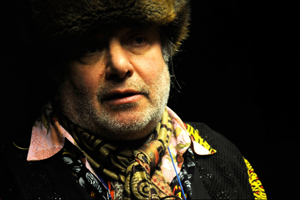
Charlemagne Palestine is a highly influential experimental musician, composer, performer and visual artist. Born in New York in 1945 he studied at New York University, Columbia University, Mannes College of Music and at the California Institute of the Arts. He is a contemporary of Philip Glass, Terry Riley, Phill Niblock, and Steve Reich. Originally trained as a cantor, he was a bell ringer at St. Thomas church in the 1960s and his earlier composition work often focussed on bells. Today Palestine is probably best known for his piano and organ works. As a soloist he has developed a highly individual aesthetic, centered around layered overtones and electronic drones that build and change gradually in gentle harmony. His performances are ritualistic, overtly spiritual in nature and often appear shamanistic. During performances the artist and his piano are surrounded by stuffed animals. He smokes large numbers of Indonesian clove cigarettes and drinks cognac. Palestine has performed internationally and collaborated with artists as diverse as Pan Sonic, Tony Conrad, David Coulter and Michael Gira. To date he has released over twenty solo records and exhibited visual artworks at various venues, including the documenta 8.

[lang_ee]Charlemagne Palestine on mõjukas eksperimentaalmuusik, helilooja, esitaja ja visuaalkunstnik. Sündinud 1945. aastal New Yorgis, on ta õppinud New Yorgi ja Columbia Ülikoolides, Mannes College of Musicus ja California Institute for the Artsis. Ta on Philip Glassi, Terry Riley, Phil Niblocki ja Steve Reichi kaasaegne. Koolitatud kantorina oli ta 1960ndail St. Thomase kiriku kellamees ja nii ongi tema varasemad kompositsioonid keskendunud peamiselt kelladele. Tänapäeval on Palestine arvatavasti kõige rohkem tuntud oma klaveri ja oreliteostega. Solistina on ta arendanud välja väga iseäraliku stiilikäsituse, mis on koondunud kihistunud ülemtoonide ja elektrooniliste drone‘ide ümber, mida ehitatakse üles ja muudetakse järk-järgult, õrnas harmoonias. Tema performance‘id on rituaalsed, loomult varjamatult spirituaalsed ning mõjuvad sageli šamanistlikult. Esinemise ajal on kunstnik ja tema instrument ümbritsetud pehmete mänguloomadega. Ta suitsetab suurel hulgal Indoneesia nelgisigarette ja joob konjakit. Palestine on esinenud mitmel pool maailmas ja teinud koostööd väga paljude kunstnikega, nagu Pan Sonic, Tony Conrad, David Coulter ja Michael Gira. Siiani on ta välja andnud üle kahekümne sooloplaadi ja näidanud oma visuaalkunsti teoseid eri paikades, sealhulgas näiteks Documenta 8-l.[/lang_ee]

www.charlemagnepalestine.org

appearance at Tuned City[lang_ee]Tuned City programmis[/lang_ee]

Speaking with Spaces / 08.07.11[lang_ee]Kõnelused ruumiga / 08.07.11[/lang_ee]


Performances

Speaking with Spaces

07.07.2011 20:00
Charles Curtis (US)Naldjorlak (by Eliane Radigue)
Hobuveski (Horse Mill Theater), Lai 23,  Tallinn map >>>

08.07.2011 21:00
Charlemagne Palestine (BE)Schlingen Blängen (organ performance)
Niguliste Church, Niguliste 3, Tallinn map >>>

09.07.2011 21:00
Thomas Ankersmit (NL/D)Saxophone and Synthesizer Improvisation
Kultuurikatel, Põhja puiestee 27, Tallinn map >>>

10.07.2011 21:00
Maja S.K. Ratkje (NO)Electro-acoustic Vocals
Rotermann warehouse / Nisu-Rukkijahu veski, Rotermanni 6, Tallinn map >>>

Tickets at the venue 8,-/10,- EURO
Buy Tickets online beforehand >>>

Traditional and classical music often treat the performance hall as a tabula rasa to be inscribed with sound, and even improvised music can overlook the site it is performed within as an important factor. So what happens when a musician decides to play a duo with space as the partner?

Tuned City has invited four vibrant, innovative and influential contemporary performers to address the topic of sound and space through four individual music performances. Each artist has developed a special relationship over their career with their chosen instrument–the cello, the organ, the saxophone and the voice–which becomes like a spoken idiom to them. Using this unique language, the performers will engage in dialog with a variety of spaces, from the warm, wooden intimacy of a 14th Century horse mill to the cold, concrete depth of Soviet-era industrial structures.

“Naldjorlak” was born of a collaboration between American cellist Charles Curtis and French electroacoustic composer Eliane Radigue. The core of the work is a series of tunings Curtis developed which set the individual elements of the cello such as the tailpiece, endpin and endpin wire in resonance with the body, exposing the so-called wolf tones of the instrument. This results in almost any bowing action made with the cello ringing it like a bell. From the palette which Curtis presented, Radigue selected and arranged the sounds into the final composition presented this evening.

The monumental “Schlingen Blängen” organ performances of world renown American minimalist Charlemagne Palestine, on the other hand, depend upon a particular playing style which can be adapted to the organ and location at hand. By utilizing sustained tone clusters played “out of tune” with his typical trance-like, ritualistic delivery, Palestine succeeds in creating seemingly millions of simultaneous melodies, harmonies and rhythms which will sweep through the space of the Niguliste church. “You hear it as if someone else is playing the organ,” he says, “but they’re not! It’s the organ playing itself!”

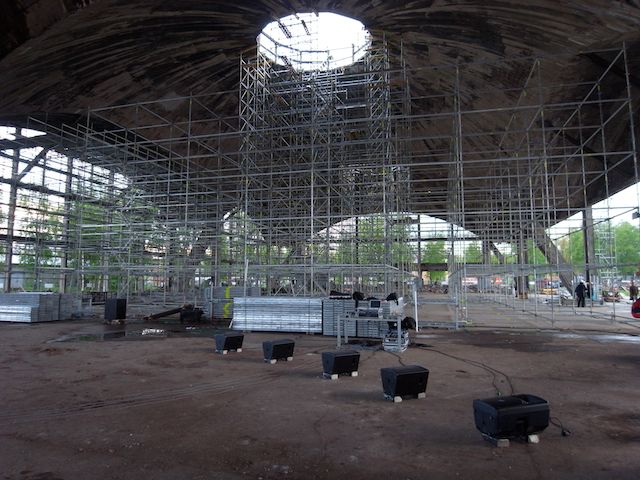
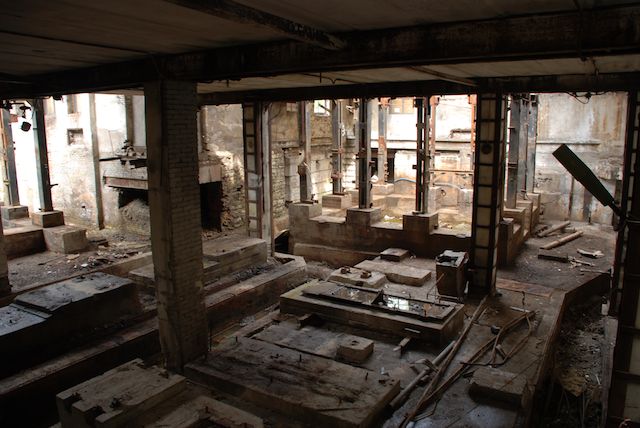
For Dutch saxophone and synthesizer improvisor Thomas Ankersmit, sound must not become merely the decoration for a space. It should rather speak on a formal level with the volumes, masses, resonances and reflections found there. Employing the hyper-directional and microtonal capabilities of the saxophone alongside the textures and drones of the Serge Modular Synthesizer, Ankersmit sets out to explore the archi-sonic features of the half finished Kultuurikatel wich still breathes the ghost of the ›Zone‹ of Tarkowski’s »Stalker« wich was partly shot in this location.

Perhaps the most intuitive instrument of all, the human voice extends directly from the body and exists in feedback with the body. But how little we notice the sound of our own voices, returning to us from the room to describe to us where in fact we are! Using electronics and a four-channel sound system to extend her own voice from a whisper to a roar, Norwegian experimental vocalist Maja S.K. Ratkje seeks a sense of place within the empty expanse of an abandoned storage building and fills it anew with her unique sonic identity.

[lang_ee]Kõnelused ruumiga

07.07.2011 20:00
Charles Curtis (US)Naldjorlak (autor: Eliane Radigue)
Hobuveski (Horse Mill Theater), Lai 23, Tallinn map >>>

08.07.2011 21:00
Charlemagne Palestine (BE)Schlingen Blängen (orelikontsert/performance)
Niguliste kirik, Niguliste 3, Tallinn map >>>

09.07.2011 21:00
Thomas Ankersmit (NL/D)Improvisatsioon saksofonil ja süntesaatoril
Kultuurikatel, Põhja puiestee 27, Tallinn map >>>

10.07.2011 21:00
Maja S.K. Ratkje (NO)Elektro-akustiline vokaal
Rotermann / Nisu-Rukkijahu veski, Rotermanni 6, Tallinn map >>>

Tickets at the venue 8,-/10,- EURO
Buy Tickets online beforehand >>>

Traditional and classical music often treat the performance hall as a tabula rasa to be inscribed with sound, and even improvised music can overlook the site it is performed within as an important factor. So what happens when a musician decides to play a duo with space as the partner?

Tuned City has invited four vibrant, innovative and influential contemporary performers to address the topic of sound and space through four individual music performances. Each artist has developed a special relationship over their career with their chosen instrument–the cello, the organ, the saxophone and the voice–which becomes like a spoken idiom to them. Using this unique language, the performers will engage in dialog with a variety of spaces, from the warm, wooden intimacy of a 14th Century horse mill to the cold, concrete depth of Soviet-era industrial structures.

“Naldjorlak” was born of a collaboration between American cellist Charles Curtis and French electroacoustic composer Eliane Radigue. The core of the work is a series of tunings Curtis developed which set the individual elements of the cello such as the tailpiece, endpin and endpin wire in resonance with the body, exposing the so-called wolf tones of the instrument. This results in almost any bowing action made with the cello ringing it like a bell. From the palette which Curtis presented, Radigue selected and arranged the sounds into the final composition presented this evening.

The monumental “Schlingen Blängen” organ performances of world renown American minimalist Charlemagne Palestine, on the other hand, depend upon a particular playing style which can be adapted to the organ and location at hand. By utilizing sustained tone clusters played “out of tune” with his typical trance-like, ritualistic delivery, Palestine succeeds in creating seemingly millions of simultaneous melodies, harmonies and rhythms which will sweep through the space of the Niguliste church. “You hear it as if someone else is playing the organ,” he says, “but they’re not! It’s the organ playing itself!”

For Dutch saxophone and synthesizer improvisor Thomas Ankersmit, sound must not become merely the decoration for a space. It should rather speak on a formal level with the volumes, masses, resonances and reflections found there. Employing the hyper-directional and microtonal capabilities of the saxophone alongside the textures and drones of the Serge Modular Synthesizer, Ankersmit sets out to explore the archi-sonic features of the half finished Kultuurikatel wich still breathes the gost of the ›Zone‹ of Tarkowski’s »Stalker« wich was partly shot in this location.

Perhaps the most intuitive instrument of all, the human voice extends directly from the body and exists in feedback with the body. But how little we notice the sound of our own voices, returning to us from the room to describe to us where in fact we are! Using electronics and a four-channel sound system to extend her own voice from a whisper to a roar, Norwegian experimental vocalist Maja S.K. Ratkje seeks a sense of place within the empty expanse of an abandoned storage building and fills it anew with her unique sonic identity.[/lang_ee]

Abrantes, Eduardo (PT)

Eduardo Abrantes is currently a visiting PhD student at the Center for Subjectivity Research at the University of Copenhagen. He is a member of the Nordic Society for Phenomenology. His fields of research include phenomenology of sound and voice, aesthetics, ethics, performance and film studies. He is also a documentary filmmaker dealing with issues of artistic research and embodiment, having in 2007 concluded the Gulbenkian_Deutsche Film und Fernsehakademie Berlin film directing course. Previously he graduated in Philosophy and Film Studies at the New University of Lisbon, and has done extensive independent curatorial research, culminating with his residency at the Center for Icelandic Art in Reykjavik in 2005.

appearance at Tuned City
Wandering with Voices – a phenomenological
inquiry on the vocal experience of everydayness / 09.07.11

Smith, Mark (US)

Mark Smith is a Carolina Distinguished Professor of History at the University of South Carolina. He is the author of several books, including “Mastered by the Clock: Time, Slavery, and Freedom in the American South”, which was the winner of the Organization of American Historians’ 1997 Avery O. Craven Award and the South Carolina Historical Society’s Book of the Year. His further publications are “Debating Slavery: Economy and Society in the Antebellum American South”, (Cambridge University Press,1998), “Listening to Nineteenth-Century America” (University of North Carolina Press, 2001), “How Race Is Made: Slavery, Segregation, and the Senses” (University of North Carolina Press, 2006; a 2007 Choice Outstanding Academic Title), “Sensing the Past: Seeing, Hearing, Smelling, Tasting, and Touching in History” (University of California Press, 2008), and “Camille, 1969: Histories of a Hurricane” (University of Georgia Press, 2011). Smith has lectured throughout the United States, Europe, Australia, and China.  His work has been reviewed and featured in the “New York Times”, the “London Times” and the “Chronicle of Higher Education, Brain, and Science”. Currently he is at work on the book “When War Makes Sense: A Sensory History of the American Civil War”, under contract with Oxford University Press. Furthermore, Smith is the current President of The Historical Society.

appearance at Tuned City
Listening through history / 09.07.11

projects

cromatico opening

Saturday 14. May 2011, 21:00
Lauluväljak the Tallinn Song Festival Grounds, Narva mnt.95 , Tallinn 10127 Estonia

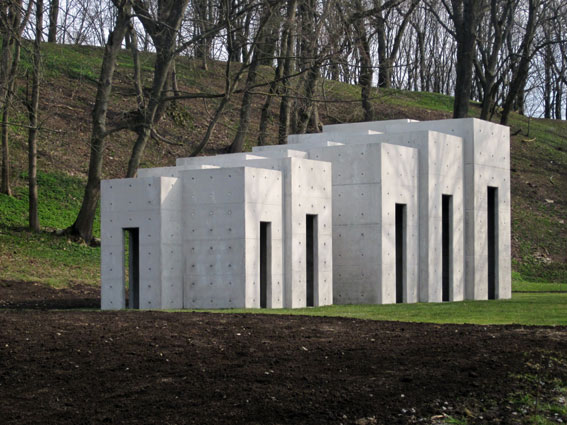
„Cromatico“ by Lukas Kühneis a sculptural  visualization of the “well tempered” chromatic  scale and produced in the frame of Tallinn 2011 European Capital of Culture and Tuned City Tallinn.

Shentelevs, Maksims (LTV)

Maksims Shentelevs is an architect, phonographer and sound artist who defines soundscape as a dense self-referent field of activity shaped by overlapping motion of objects in space. Shentelevs started field recording in 2002 focusing on sound gathering as non-intervention policy for observation of structural models in nature. These field studies became the basic material for following soundscape modeling in studio. Predominantly Shentelevs is interested
in biotopes referring to habitats of insects and small creatures. Presently he is involved in self-made acoustic and electroacoustic instruments and sound objects as tools for mutual discourse with nature. Since 2003 he has participated in several residencies and festivals in including Latvia, Estonia, Finland, Portugal, and in 2007 Shentelevs organized the “Mijatmina” festival, dedicated to soundscapes and video textures, in Riga.

www.bernurits.com

appearance at Tuned City
Turgophonia / 07.-10.07.11

Keller, Raul (EE)

Raul Keller (* 1973) is a sound, video, performance and installation artist, residing in Tallinn, Estonia. He has been performing and exhibiting from 2000, including the Netherlands, France, UK, Poland, Baltic States and Russia. Keller´s recent works are commissioned site-specific sound installations, radioart as improvisation, performance, videoart and location specific group improvisations. The latter started in 2000 as “Project Unison”, an experiment in both architectural sound / sound architecture and sound as a form of social communication, which been released on 5 CDs. Keller also performs as Paul Cole, a fictional rock artist who has released albums in 2004 and 2009. In 2009 his first solo album ‘Me tuleme kaugelt / We Come from Afar’ was released under MKDK Records label. It contains excerpts of commissioned work from 2004-2009.

www.records.mkdk.org

appearance at Tuned City
Tuned City Tallinn

Paluszewski, Mads Bech (DK)

Mads Bech Paluszewski (1977) is a danish artist and independent cultural producer living in Copenhagen, Denmark.
Educated MA in Geography and Performance Design from Roskilde University, his interests are within the realms of urban space interventionism, sound-installation and performing with sound, circuit bending,  experimental music and DJing. Since the early 2000’s he has worked as artist, musician, composer, sound technician, cultural producer, workshopfacilitator and government consultant.

www.obernkarbi.dk

appearance at Tuned City
Tuning the City – workshop / 04.-10.07.11
Tuning the City / 10.07.11

Watson, Aaron (UK)

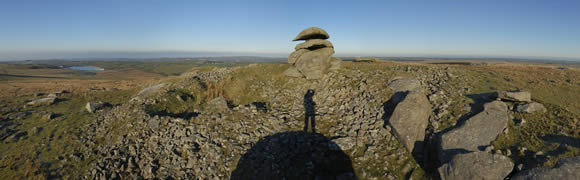
Aaron Watson is an artist and archaeologist who explores prehistoric monuments and landscapes. Since completing a PhD in 2000 his research has foregrounded multisensory experience, and in particular the archaeoacoustics of megalithic sites such as Stonehenge.
His ongoing work considers the active role of creative art and multimedia in generating new interpretations of the past. He has exhibited his painting and photography widely, including
at the World Heritage Sites of Orkney and Avebury, and is developing a series of audio-visual projects at ancient landscapes across Britain.

appearance at Tuned City
The Sound of Megalithic Monuments: from Skara Brae to Stonehenge / 09.07.11

Hörstadt (A)

Hörstadt is a laboratory for acoustics, space and society, based in the city of Linz, Austria.
The Hörstadt has its main goal a broad investigation of acoustic space as our audible living environment. It started in the year 2009 as one of the central projects in the music section of Linz 09 European Capital of Culture. Hörstadt positions the entire city as a sound-space, an acoustic space, thereby searching for new possibilities in politics, business, culture, art, education and tourism, because it focussed upon the human being as a whole, as a sounding being, as a complete person.

At Tuned City Hörstadt is represented by Anatol Bogendorfer and Florian Sedmak.

www.hoerstadt.at

appearance at Tuned City
Hörstadt Linz / 10.07.11

Q-O2 (BE)

In 2006 Q-O2 has grown from a contemporary musicgroup to a workspace for experimental contemporary music and soundart. The organisation has its own space in the centre of Brussels. Practically, Q-O2 workspace functions on four levels: by hosting artists on a working residency, by starting up and guiding projects in collaboration with other organisations, by co-producing projects and by organising concerts on its own premises. In musical terms Q-O2 explores mainly three lines of approach: acoustic and electronic improvisation and composed music as well as installations and soundart. Through its conceptual preoccupations Q-O2 finds easily points of access to other disciplines. Q-O2 provides the junction between the emergence of artistic ideas and their concrete realisation and presentation for an audience. As a workspace and laboratory Q-O2 offers artists a certain protection, and is as such primarily process-oriented. Herein Q-O2 wants to underline the necessity of research in experimental music and soundart, and to provide artists with the maximum of support for their creative endeavours: technical/production support, the opportunity for direct dialogue with other artists and necessary contacts in the field.

appearance at Tuned City
Sounds of Europe / 08.07.11