Behrendt, Frauke / Navigating Hybrid Spaces via Sound

lecture by Frauke Behrendt

This talk considers how sound can be a means of engaging with hybrid spaces – layerings of physical and digital architecture – and particularly how this has been explored in art projects. Research in Sound Studies that considers mobile technology often suggests a withdrawal from public spaces. Here, the question is how we can use sound and mobile technology to engage with urban spaces.

We use sound to navigate cities all the time, albeit often on a subconscious level. We listen out for cars before crossing the street without even looking, but might miss the silent cyclists. Many visually impaired or blind people are experts at sonic navigation, being able to tell you the shape of a street sign without touching or seeing it, for example. Sound is also used to navigate networked space – “you have new mail” alerts and computer game sounds are probably the most frequent reminder – but our Internet experiences at home remain mainly visual and textual ones. The possibilities of using sound to navigate both physical and digital spaces are still under researched. The ubiquity of mobile phones and mp3 players suggests a new auditory sensibility, and might spur research interest in non-screen engagement with hybrid space. As we increasingly use mobile devices not only to connect to one other person via call or text, but also to access the internet etc, developers slowly start to pay more attention to sonic interaction design, allowing us to move through the city while accessing digital networks without looking at a screen.

Artists have experimented with sound in hybrid spaces for some time now and this talk discusses some of these projects that have been presented at the Mobile Music Workshops over the last five years. These art works draw on a variety of traditions such as public sound art, interactive art, net.art and locative art; they can also be contextualised in the history of spatial and musical performance in public space. Each of them offers a very specific way of engaging with hybrid space via sound, offering various perspectives on the complex situation of navigating physical, social and digital context at the same time. In all projects, the interfaces between sound and space are the participants, they are “playing” the art projects with the movement of their bodies, their mobile devices. The multi-sensory experience of walking in the city, its acoustics, spaces, networks, people, traffic etc, are framed in different ways to tune the city or to tune into the city. This opens up a discussion around spatial and temporal qualities of sound in hybrid spaces, and not to forget, the imagined spaces in the listener’s head.

appearance at Tuned City
public and private soundscapes / 03.07.08
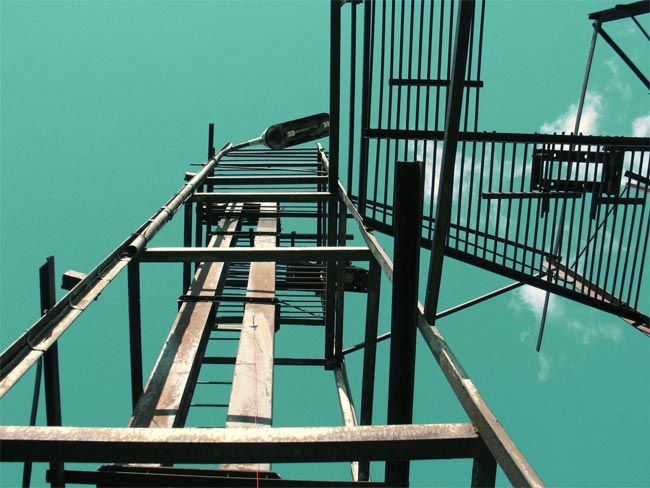
Ankersmit, Thomas / spatial perception and directional sound

reflections

presentation by Thomas Ankersmit

Thomas Ankersmit will present recent work, particularly installation pieces where sound is used to articulate and distort ideas about spatial perception and communication. He will also talk about more general experiences and phenomena that have been influential to his work, about site-specific music performances, and about recent experiments with directional sound, both in environment-type works and concert situations.

appearance at Tuned City
listening to soundspaces / 02.07.08

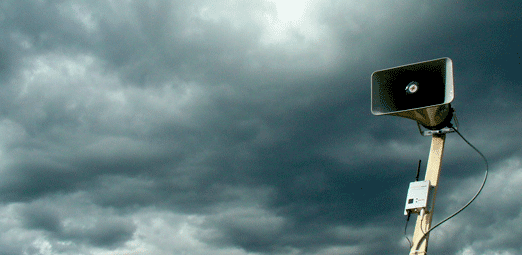
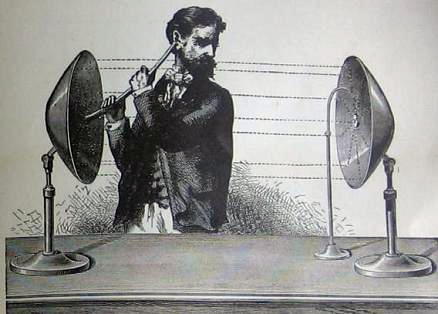
Altmann, Jürgen / acoustic weapons

altmann

lecture by Jürgen Altmann

Acoustic weapons are under research and development in a few countries. Advertised as
one type of non-lethal weapons, they are said to immediately incapacitate opponents while
avoiding permanent physical damage. Reliable information on specifications or effects is scarce, however. The present report sets out to provide basic information in several areas: effects of large-amplitude sound on humans, potential high-power sources, and propagation of strong sound.

Concerning the first area, it turns out that infrasound—prominent in journalistic articles —does not have the alleged drastic effects on humans. At audio frequencies, annoyance, discomfort and pain are the consequence of increasing sound pressure levels. Temporary worsening of hearing may turn into permanent hearing loss depending on level, frequency, duration, etc.; at very high sound levels, even one or a few short exposures can render a person partially or fully deaf. Ear protection, however, can be quite efficient in preventing these effects. Beyond hearing, some disturbance in balance, and intolerable sensations, mainly in the chest, can occur. Blast waves from explosions with their much higher overpressure at close range can damage other organs, at first the lungs, with up to lethal consequences.
For strong sound sources, sirens and whistles are the most likely sources. Powered, e.g.,
by combustion engines, these can produce tens of kilowatts of acoustic power at low frequencies, and kilowatts at high frequencies. Up to megawatt power is possible using explosions. For directed use the size of the source needs to be on the order of 1 meter, and proportionately-sized power supplies would be required.

Propagating strong sound to some distance is difficult, however. At low frequencies, diffraction provides spherical spreading of energy, preventing a directed beam. At high frequencies, where a beam is possible, non-linear processes deform sound waves to a shocked, sawtooth form, with unusually high propagation losses if the sound pressure is as high as required for marked effects on humans. Achieving sound levels that would produce aural pain, balance problems, or other profound effects seems unachievable at ranges above about 50 m for meter-size sources. Inside buildings, the situation is different, especially if resonances can be exploited.

Acoustic weapons would have much less drastic consequences than the recently banned
blinding laser weapons. On the other hand, there is a greater potential for indiscriminate effects due to beam spreading. Because in many situations acoustic weapons would not offer radically improved options for military or police, in particular if opponents use ear protection, there may be a chance for preventive limits. Since acoustic weapons could come in many forms for different applications, and because blast weapons are widely used, such limits would have to be graduated and detailed.

appearance at Tuned City
public and private soundscapes / 03.07.08
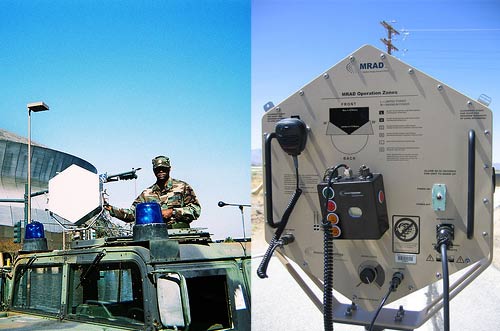
Schulte-Fortkamp, Brigitte

schulte-fortkamp

Prof. Dr. Brigitte Schulte-Fortkamp is professor in socio- and psychoacoustic, noise perception and noise effects.

MAIN RESEARCH ACTIVITIES

Assessment of transportation noise related to annoyance and quality of life. The research activities are typically embedded in regional traffic planning and environmental living assessment activities.
Another focus is on assessment and management of changing soundscapes by means of psychoacoustics, acoustic ecology and person-environment-fit approaches.
Finally, research deals with the impact of noise on sensitive groups such
as noise sensitive in people, but also with comfort related issues concerning defined acoustical environments. She has numerous publications on these topics.

Amongst many others:
she is Fellow of the Acoustical Society of America, Associated Editor for Noise in JASA, Chair of the TC Noise –ASA, USA; Chair Technical Committee Noise: Effects and Protection Germany, Product Manager NUNTIUS ACUSTICUS, Member of extended Board EAA Member, Working Group to Community Noise I INCE (International Institute of Noise Control Engineering ), USA

She was Visiting Professor amongst other laboratories at
Laboratoire d’Acoustique Musicale, Paris
Department of Environmental Psychology, Osaka University, Osaka Japan
Institute of Environmental Medicine, Toronto, Canada,
Massachusetts Institute of Technology, Boston, MA, RLE, Sensory Communication Group

http://www2.tu-berlin.de/

appearance at Tuned City
design of acoustic environments / 04.07.08

Willecke, Barbara (D)

Barbara Willecke is garden and landscape architect. 1981-83 she was trained as landscaper and studied 1987 landscape architecture in Wiesbaden. Since 1995 she has been member of the architectural association Berlin. 1994-99 co-founder of the office “freiraum.Planungsgruppe Stadt Garten Landschaft”. 2000 she founded the office barbara willecke. Since 2004 she has been consultant for Netzwerk Bauherren Support and in 2005 was appointed to Women’s Board of the planning department of the Berlin senate. 

http://www.planungfreiraum.de

appearance at Tuned City
design of acoustic environments / 04.07.08

Hepworth, Katie + Curgenven, Rob / TACIT:TACET: milan sound atlas

presentation by Katie Hepworth + Rob Curgenven

Domestic workers, street sellers, gypsies: the invisible and the expediently visible. Everyday activities and movements across Milan by these migrants are affected by tacit borders, superimposed on spaces of the city and constituted by complex interactions of fear, exclusion and belonging – evidencing larger systems of marginalisation and control in a rapidly diffuse urban panopticon. Recordings of everyday activities and public spaces around three tacet populations draw out temporal/spatial aspects of the biopolitical city – for Tuned City these will be overlaid into Alexanderplatz.

appearance at Tuned City
sound and social communication / 03.07.08

Hepworth, Katie (AUS)

Katie Hepworth is an architect, researcher and curator. The reinterpretation of and engagements with the urban space are key concerns: moving beyond just buildings, her work addresses the realms of the public and private and their personal and political manifestations. It aims to expose the latent conditions in the urban environment, exploring subtle interventions that disrupt everyday behaviours.

Her work has been exhibited in Australia and internationally. In 2005, 2006 and 2007 she co-directed the Transit Lounge, a series of experimental, multi-disciplinary collaborative residencies and projects for Australian and European artists and architects in Berlin. The Transit Lounge was a partner event of the Transmediale, and was responsible for organising a series of talks on Australian art and architecture for the German Architecture Centre (DAZ).

She is currently completing her PhD in International Studies at the University of Technology, Sydney. Focusing on Milan, her work looks at the migration, citizenship and the city, with a particular focus on security, fear and the production of invisible borders within cities. She is currently based at the Milan Polytechnic.

She is an member of political arts collective boat-people.org.

http://boat-people.org/

http://www.katiehepworth.net

http://www.transitlounge.org

appearance at Tuned City
sound and social communication / 03.07.08

Curgenven, Robert (AUS)

Curgenven, Robert (AUS)

Robert Curgenven works with harmonics, textures and resonance as articulated through space and place as well as time and the dislocation of the remote – creating a sound that explores slowly shifting layers in the fabric of fields of perception. His work with field recordings has been described by Furthernoise (UK) as “a gentle audio suspension of time… becoming an almost total transference of realities”.

He has lived for much of the past eight years in Australia’s Northern Territory and now bases his activities in Europe, working between Berlin and Milan. He has exhibited installations in Europe and Australia, performed widely solo and with many Australian and international artists including Jason Kahn, Sumugan Sivanesan, KK Null and Derek Holzer, and released several solo and collaborative CDs, including three on his own Recorded Fields label.

http://www.recordedfields.net/

appearance at Tuned City
sound and social communication / 03.07.08

Martinho Cláudia (PT/F)

martinho

Cláudia Martinho is an architect and acoustician, a member of Bureau des Mésarchitectures (with Didier Faustino and Mathieu Herbelin). She conducts research into situations and actions in public spaces as sensible interstices between the body and its environment, adopting a critical stance towards the social, geopolitical and cultural contexts. She is currently working on the project In Stimuli, an investigation into the relations between architecture, counter tactics, waves and the body.

http://www.in-stimuli.org
http://www.mesarchitecture.org

appearance at Tuned City
public and private soundscapes / 03.07.08
and
Room Tone, 18 sounds in 6 models


Schäfer, Olaf (D)

schäfer

Olaf Schäfer studied architecture and urban planning at the Universität Stuttgart. In 2004 he graduated there at the IGMA with a scientific-artistic work on audible architectural models. From 2006-2008 he joined additionally the master class of Sound Studies at the University of Arts Berlin with a focus on anthropology of sound and conception of acoustics.

Formed on a fundamental understanding for the spatial importance of atmospheres, he develops a phenomenology of sounds under their specific situational conditions. He deliberately reflects and designs the media, with whom the sound–shaped and –soaked architectural and urban spaces are being communicated.

Works emerged in this context are Tod im Schnee. Verhörte Architektur (2004), Der Klang der Urhütte (2006), Raummaschine (2007) und Metrophonie No1 [be’li:n] (2008). Currently he is working on several projects concerning the topic planning with sound in urban and architectonic space, among others in collaboration with Auditive Architektur, a research area of the Academy of Music Hanns Eisler Berlin.

http://www.metrophonie.de

appearance at Tuned City
talking sound and building space / 05.07.08


AGF (D/FIN)

agf

AGF alias Antye Greie, born 1969, is a singer, software musician, producer and e-poet. The start of her solo career was marked by the artistic exploration of digital technology. On her first solo album “Head Slash Bauch” (Orthlorng Musork 2001), she converted fragments of HTML scripts and software handbooks into a form of electronic poetry and deconstructed pop. Her poetry, which she has also converted into electronic music, pop songs, calligraphy and digital media, has also been presented as live performances and sound installations in museums, auditoria, theatres, concert halls and clubs. Her other projects include the German electronic duo Laub, the Lappetites, AGF/ DELAY (with Vladislav Delay), THE DOLLS (Vladislav Delay and Craig Armstrong) and Zavoloka / AGF.

http://www.poemproducer.com

appearance at Tuned City
sound and social communication / 03.07.08
Tuned City Messene 2018 – Listening Politics

Bulles

bulles

live-installation by Julien Clauss
Wriezener Bahnhof / 04.07. 08

Bulles is a sound performance for large outdoor spaces. Spatialized on a mobile and wireless audio device, an ambient electronic music composes a sound extent. It acts to build a space which is renewed continuously and which resounds with the environment. In here, it is especially about the texture and form of the sounds. As tiny eruptions and outdoor drones, the abstract traces and electronic sound presences which cross the space become landscape: they are animated dynamically so that they could be elements of a real environment.
The diffusion is made on a wireless and on battery powered system adapted for big distances (200mx200m).
The performance lenght depends of the power and it lasts approximately 2-3 hours.
It can be interessting to perform on space like the roof of parkhouse, a football place, a parc, a lake …
A nautical version for listener and musiciens on little boats will be created soon. The last performance were played on quadriphonic system, but till july, a fifth point hanged on helium balloon will be developped.

Clauss, Julien (F)

Julien Clauss is a French sound artist, who lives and works in Marseille. He  followed the piano course at the Suzuki Institute of Strasbourg, studied music, acoustics, fluid mechanics and material sciences.

Since 2001 Julien Clauss focuses on sculptural sound works. He has developed installations and performances which bring  into play the spatial dimension of the sound and the political dimension of spaces. Clauss seeks to engage the listener physically in the process of listening and uses the sound as a means of establishing a relationship between the physical body and his environment. His works approach notions like progress or anticipation. His esthetics of sound oscillates between micro-sound and ambient noise.  He has developed  different multi channels sound system, as well as interfaces and applications for spatializing and real time processing.

Clauss created the audio-tactile projects Pause and Stimuline with Lynn Pook. He collaborated with Locus Sonus sound lab since 2007. Between 2001 and 2007 Clauss worked as sound assistant for the french composer Pierre Henry. Furthermore, he organizes experimental electronic music events in atypical places (highway bridge, clearing, vaults, lac…) and over long durations.

A few places he has shown his work : Centre Pompidou, Paris, 2004, Musée Chagall, Nice 2007 (F), Club Transmedial, Berlin 2009 (DE), Casino, Luxembourg, 2010, (L), Mois Multi, Quebec, 2010 (CAN), Lac Erhai, Yunnan, 2010 (CHN), FullPull, Malmoe, 2010 (SWE), LAB 30, Augbsburg, 2010 (DE)
His work Stimuline won the price As Electronica 2011 with an honorary mention.

http://www.cycliq.org/

appearance at Tuned City

Bulles / 04.07.08
sound and social communication / 03.07.08
Toposone / 08.-10.07.11

van der Heide, Edwin / field of overtones

presentation by
Edwin van der Heide

Field of Overtones is a spatial sound installation on an architectural scale that is inspired by the behaviour of wind. Wind can blow something away, out of each other, towards each other or create turbulence and spirals. Wind can result in noise kind of sound but also lead to whistling tones. In Field of Overtones the behaviour of wind is projected on the development and spatial movement of sound. What happens when a sound is spatial blown out of each other in its individual elements? and what happens when individual sound elements are blown towards the same corner?

appearance at Tuned City
radio space / 05.07.08

Location Sound Films

location sound films

film installation by John Grzinich
Wriezener Bahnhof / 04.07. 08

The Location Sound Films project starts with the concept of site-specific artistic activity while integrating contemporary sound recording practices that cross the areas of ‘performance’, ‘field recording’, ‘improvisation’ and ‘documentation’. With the site being the prime focus, the artist as actor and instigator uses the means of sound to investigate the qualities of the surrounding space and his place in it. Various techniques are used to make recordings, some more clearly visible than others, depending on the type of sound captured (stereo condenser microphones or piezo transducer contact microphones). Video in this case correlates more closely with film as it is an attempt to make use of the image as non-narrative document on site-specific, location based sound activity.

This concept has been integrated into other projects such as the Riga Sound Locations, which was a four day workshop that took place at various spaces around the capitol city of Latvia. The aim of the workshop was to visit 6 different locations around the city in order to investigate site-specific sound activity related to each place. The sites included an abandoned apartment, construction site, former power station, abandoned warehouse, old military airport and a backyard. Apart from the backyard all of these locations were temporary in the sense that they either being developed or destroyed at some point in the near future. So not only were we documenting our activities we attempted to capture the transitional feeling of the spaces.

The Location Sound Films have also been utilized in both single and multi-channel installations as well as various lectures and presentations to illustrate sound recording practices in location based artistic activity. The selected films for Tuned City focus on the sonic qualities of architectural spaces and structures in both naturally occurring forms and site-specific improvisation using found objects.

Sonntag, Jan Peter E.R. / Arbeiten im raum

jp sonntag

Vortrag von Jan Peter E.R. Sonntag

Seit der Renaissance dominiert in unserer westlichen Kultur der Sehsinn und mit der Geometrisierung der Welt das Primat eines euklidischen Raumes, der selbst in der Verschriftlichung der Musik seinen Niederschlag gefunden hat. Als gegen Mitte des letzten Jahrhunderts in der Folge einer parametrischen Kompositionsauffassung sowie auch diesem entgegengesetzten Extensionsstrategien der Raum in der Musik wieder eine größere Rolle bekam, ging es meist wie in Stockhausens Kugelauditorium in Osaka 1970 oder der Akusmatik um die Richtungen aus dem der Schall über viele Lautsprecher gelenkt wird. Jan-Peter Sonntag hat seit Ende der 1980er Jahre einerseits die Räumlichkeit des Klanges als amorpher Körper, durch den man sich bewegen kann, im Verhältnis zu denkbaren Raum-Modellen interessiert sowie später Räume, die durch psychoakustisch mehrdeutige Phänomene erst im Kopf entstehen und so möglich unser visuellen Wahrnehmung doch diametral entgegen wirken. Anhand seiner frühen “raum-Arbeiten” mit hochfrequenten Sinuston-Interferrenzfeldern sowie Architekturen aus stehenden Druckwellen auf der einen Seite und den 1993 erstmalig produzierten scheinbar endlosen Volumenbewegungen wird er akustische Wahrnehmungsräume vorstellen, die sich anders konstituieren als durch Richtungen in einem metrisierten Körper, der durch seine Flächen bestimmt ist. Auch auf den eigenen Körper als akustischem Rezeptionsraum wird er eingehen, denn hören tun wir nie allein über das System der Ohren und überhaupt erst im Gehirn.

appearance at Tuned City
sonic derive / 05.07.08