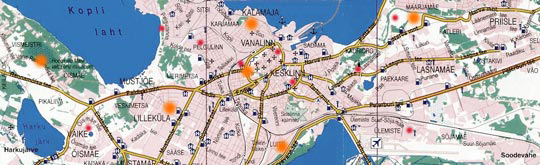
Listening through history

lecture by Mark Smith

This lecture asks – and answers – a fundamental question facing scholars of historical acoustemology: can we hear the sounds of the past?
Drawing on examples ranging from urban history to museum curatorial policy, the lecture argues that the ability to reproduce historical sounds is not tantamount to hearing listening or imbuing these sounds with the same cultural, social, or political meaning as when they were first heared. There is an important difference between the production and the consumption of sounds and, for historians, the contextualization is key to understanding the meaning of past sounds.
By surveying recent writing on the history of sound, the lecture stresses the importance of treating sound—as well as noise and silence—in plural fashion, remaining attentive to how different constituencies in the past listened.  The lecture is broadly comparative, examining the history of sound, listening, and hearing with a focus on the United States and Western Europe. It outlines how historians might reliably practice “sound history,” explains the intellectual, conceptual, and methodological dividends of contextualizing the history of sound, and ends by suggesting future areas of historical inquiry.

appearance at Tuned City
Social Acoustemologies: Hearing Contexts / 09.07.11

Hörstadt Linz – central project in the music section of Linz 09 European Capital of Culture

presentation by Anatol Bogendorfer + Florian Sedmak

Hörstadt is one of a few Linz 09 projects that maintained activity after 2009. It has had a wide range of activities since its official start in January 2009; setting up Public Centers of Calm and a museum of hearing, running a campaign against imposed noise, realizing public sound installations, publishing The Acoustic Manifesto, initiating the Linz Charta, hosting the legendary No Music Day, founding a yearly conference and publishing in various media.
Anatol Bogendorfer and Florian Sedmak, both founding members of Hörstadt will talk about past, current and future activities. Further they will speak about their experiences of trying to establish such a project within the boundaries of public expectations, local politics and the status of being European Capital of Culture.

appearance at Tuned City
Applied Sound: Case studies / 10.07.11

Sounds of Europe

image by Jez Riley French
presentation by Ann Goossens / Q-O2 and Jaume Ferrete

‘Sounds of Europe’ is a project that acknowledges and follows the increase of field recording activity in music, art and sciences in recent years. By field recording activity we mean an artistic practice working with the accidental sounds of our environment. Our aim is to draw up an overall picture of the many different ways of using field recordings, and to explore their signification and effect.

The project has been initiated by Q-O2 (workspace for experimental music and sound art/ Brussels), MTG (Music Technology Group/University Barcelona), IRZU (Institute for Sonic Arts Research/Ljubljana) and CRISAP (Creative Research in Sound Arts Practice /University London). Together with associated partners, we’ll set up activities and artistic projects which explore the sounds of the world, thereby stimulating an exchange of experiences, results, and understandings of sound and listening.

The objective of the project is to create a platform for sound oriented organizations based in Europe, and sound artists working with field recordings. The platform will be developed during this two-year project with the intention of it continuing to function afterwards. By ‘platform’ we mean a place and opportunity for collaboration, expression and exchange of ideas.
The project activities (festivals, workshops, lectures, a traveling website) aim to stimulate a collaborative creation and exploration of the European soundscape, which can contribute to an enhancement of public imagination and sensitivity to sound, and an openness to their own and others’ environments and cultures.

With the support of the Culture Programme of the European Union.

www.q-o2.be
www.mtg.upf.edu
www.crisap.org
www.irzu.org

appearance at Tuned City
Subjective Soundscapes / 08.07.11

radio aporee ::: maps & mobile listening – introduction of a spatial radio

presentation by Udo Noll

Udo Noll will present the current developments of the radio aporee ::: maps project, a collaboratively created and continuously growing sound map of the world. The project has started 4 years ago and meanwhile contains thousands of recordings from numerous urban, rural and natural environments, showing the audible complexity of our living spaces, as well as the different perceptions and artistic perspectives related to sound, space and places.
In addition, radio aporee reflects contemporary developments in mobile computing and locative media, and researches the possibilities and practices of mobile listening. The radio aporee workshop in Tallinn, April 2011, has introduced to the new project miniatures for mobiles, a platform and tool for creating space-based sound works, for listeners in motion, tuned to their actual environment. Udo Noll explains the concepts and technologies involved, and presents the results and experiences of the workshop, as well as a brief overview of recent and ongoing projects working with the new platform.

aporee.org/mfm/

appearance at Tuned City
Transduced Spatiality / 10.07.11

Listening as Critical Social Praxis and as a Practice of the Self

lecture by David Kleinberg-Levin

Listening, the art of hearing, cannot be understood merely in biological and neurophysiological terms.  It needs to be understood as a capacity, hence as a gift of nature that individuals can develop, or construct, making it a skill through social and cultural practices.  Unfortunately, our present phenomenological vocabulary is too limited and crude to articulate possible actualizations of the potentialities distinctive of this skill as a temporal process: We listen-for something in order to hear it.  And if we hear what we are listening-for, we may listen-to it in order to hear it better.  In these two sentences, the terms “listen” and  “hear” take on different meanings, depending on their role, their stage or phase, in the auditory process. What is involved in developing the ethical, social-political, and aesthetic potential inherent in our natural capacity for listening?  I will bring into our present Foucault’s late historical studies on practices of the self, which he arbitrarily limited to ancient Greece, Rome, and early Christianity, elaborating our experience with listening as a practice of the self that we of today need to engage.  Habermas worked out a discourse ethics, formulating a complex system of norms concerning freedom of speech and the rights of speech in communicative processes.  But he neglected to formulate any norms regarding the other pole, namely, what is required of listening.  I will suggest what needs to be thought to rectify this omission.  Finally, I will draw on Heidegger’s work to propose an understanding of hearing as an ontological organ, an “organ of being”.  This will be spelled out in terms of the transformation of the auditory Gestalt, presently suffering reification, from the fixity of a “Gestell” to the radically open “Geviert”, mandala of the fourfold, earth and sky interacting with one another on one axis, gods and mortals facing one another on the other axis.  Echoes and reverberations, and the architectural spaces that interact with them, play crucial roles in leading us into the ontological dimension of the auditory field.  In relation to this immeasurable dimension, our very being is put into question.

appearance at Tuned City
Social Acoustemologies: Listening / 09.07.11

With reference to the anthropology of sound

lecture by Ernst Karel

In his talk Ernst Karel traces the path of his work through the anthropology of sound, in the form of ethnographic research in South India, towards his current practice in phonography.  Along the way he describes approaches of his own and others to studying sound ethnographically and to using recorded sound as a means of generating or evoking anthropological knowledge.  Karel´s first fieldwork project had as its focus perceptions and conceptions of sound in the specific built environment of a Hindu temple in Chidambaram, Tamilnadu.  This project overlaps theoretically with the area of ‘sensorial anthropology’, in that it attempts to understand the moment of phenomenological sensory experience as itself already culturally elaborated and semiotically imbued.  His subsequent doctoral research looked more broadly at sonic practices in the urban environment of Thrissur, Kerala.  This work is connected to anthropological discourse not only on sound or sensory experience but also on notions of the social construction of space and place, by looking at the uses of electronically amplified sound as means of characterizing shared space, or in other words, of making place.  More recently, his interest has shifted from academic written work which is about sound, to work which is itself constitutively sonic.  Since Karel´s initial interest in sound as a subject of anthropological inquiry was rooted in experience as a performer of nonidiomatic improvisation and maker of abstract electroacoustic music, creating sound works that use location recordings to evoke aspects of lived experience represents a synthesis of what had been dual practices of music-making and ethnography.

appearance at Tuned City
Social Acoustemologies: Hearing Contexts / 09.07.11

Listening as action. Movements and gestures to sound and music in the everyday life of the city

lecture by Marta García Quiñones

While listening has tended to be considered as a passive and mainly mental reception process, there is an increasing need to reshape the concept in the light not only of emerging conceptions of embodied and enactive cognition, but also of new listening experiences favoured by reproduction technologies –particularly mobile listening and the ubiquitous presence of all kinds of music in public spaces. In this context, Marta García Quiñones´ lecture will make out a case for an understanding of listening as a form of action, illustrating the argumentation with everyday situations created around sound and music in different urban settings. Thus, it will deal with listeners as spontaneous participants in public sound events, and will analyze their listening attitudes as a means of social interaction not necessarily linked to traditional patterns of spectatorship. Further, she will discuss various types of physical reaction to sound and music in public and private spaces, from spontaneous gatherings to several common forms of gestural engagement. By doing so, her intention is to stress the importance of the bodily dimension of listening for a better understanding not only of experiences with sound, but also of the many sensorial dimensions of city life.

appearance at Tuned City
Subjective Soundscapes / 08.07.11

Imagine a Tuned Future

lecture by Max Dixon

London has experienced some innovation in terms of public engagement with sound in the built environment over the last decade, such as through the Mayor of London’s ‘Sounder City’ strategy. How much further could such innovation go over the next decade and beyond, in London and other cities? This presentation will review trends in lifestyles and technologies, challenges and opportunities. For example, electric and hybrid vehicles offer a once-in-a-hundred-years chance to transform the keynote sounds of cities. But safety or ‘trademark’ sounds may be added, and who will assess the mix? At the other end of the spatial scale, Liminal’s award-winning sonic crystal ‘Organ of Corti’ suggests new ways in which experiences of local spaces could be enriched. The presentation will explore ways in which ecological principles could inform fresh approaches to design and management of city soundscapes, and ways in which more people could be involved in co-creating new soundscapes.

appearance at Tuned City
Applied Sound: Case studies / 10.07.11

Favourite Sounds and Sonic Migration

presentation by Peter Cusack

The Favourite Sounds project addresses the everyday sounds of our lives. Mostly payed little attention to, they are always present and constantly informing us about our environment and the events happening around us. Occasionally everyday sounds affect us more deeply. Then they take on personal meanings and over time become essential to our understanding and memories of the places where we live.
The Favourite Sounds project started as a radio program for London’s ResonanceFM in 1998 and has continued in other world cities since. In a survey as many people as possible are asked the seemingly simple question, “What is your favourite sound of London… Beijing… Prague…, Chicago…., and why?” The responses have been fascinating, revealing the city of the ear and people’s feelings about their sound environment.
More recently the project has focused in areas of high immigration in the UK, such as Handsworth Lozells in the city of Birmingham. These areas are characterized by an incredible ethnic variety. Cultures from the world over constantly mix and change. People living there were not only asked about the sounds heard in Birmingham, but also about those remembered and appreciated from their places of origin.
This presentation summarises the favourite sounds project so far. It demonstrates the findings and explains how the project argues that ‘sonic diversity’ should be an essential component to the understanding of what makes for a positive soundscape.

appearance at Tuned City
Subjective Soundscapes / 08.07.11

presentation of architecture related soundworks

presentation by Pierre-Laurent Cassière

In this lecture Pierre-Laurent Cassière presents a selection of his work as a sound artist considering sound, acoustic fields and vibrations, as a medium relating bodies and space through dynamic relationships. His sound installations, performances and devices deal with perception limits and aim to offer very specific ways of listening. Audio-visual technologies are used as a matter to understand, reorganise and reinterpret familiar sounds anew.

For further information please see
Schizophone installation >>>
Transphere performance >>>

appearance at Tuned City
Social Acoustemologies: Listening / 09.07.11

bonn hoeren – »a hearing perspective«

presentation by Sam Auinger + Carsten Seiffarth

bonn hoeren was launched in 2010 as the new sound art project of the »Beethovenstiftung für Kunst und Kultur der Bundesstadt Bonn« (Beethoven Foundation for Art and Culture of the Federal City of Bonn). The project is an invitation to discover the city of Bonn as a lively public stage and a sounding communicative space, and to perceive it in a new way. It is closely connected to the city, its residents and visitors and their everyday inner-city life and work domains.

In the presentation bonn hoeren – »a hearing perspective« currator Carsten Seifarth will give an overview of the backgrounds and the various activities around this project. Sam Auinger will speak about his experiences as a ‘city sound artist’ in Bonn and his past 20 years as city sound researcher and artist.

appearance at Tuned City
Applied Sound: Case Studies / 10.07.11

Wandering with Voices – a phenomenological inquiry on the vocal experience of everydayness

lecture by Eduardo Abrantes

As sentient beings we are constantly immersed in a sonorous field. This field of sound is bound together with the objects, presences, events that occur to us, in us, that define identity and territory, through embodiment and beyond – somewhere between the intimate familiar other, and the strange foreign self. The uses of the voice are innumerable: you call, you are called, you express, resonate, find yourself affected, react, and even that all pervading inner voice, sometimes too loud to handle, rises, and so it goes…

From the philosophical perspective, the voice, when not completely converted into speech by speech, has been hard to deal with. On the other hand, it has found itself at home in the contemporary interdisciplinary strategies of the Humanities. From sound studies to urban design, from the performing to the visual/plastic arts, from politics to neuroscience – its numerous revolving critical takes can leave one quite out of breath.
In his recent work, Abrantes investigates a crossover between “Extended Mind Theory” (Clark & Chalmers, 1998) and “sound envelopes” or “sonorous skin ego” (Didier Anzieu, 1990), as a model for the notion of individuality in a surrounding world, where exchange is the rule. In the lecture “Wandering with Voices – a phenomenological inquiry on the vocal experience of everydayness”, Abrantes focuses on the potential of the actual voice in space and place, as a root of identity, consciousness and presence.

appearance at Tuned City
Social Acoustemologies: Listening / 09.07.11

B., Pôm Bouvier (F)

Pôm Bouvier B. is an eclectic artist: a video maker, scenographer, dancer and performer, especially influenced by her musical background. She has studied electroacoustic music for several years and her pieces have been played in several countries all over the world. Pôm Bouvier B.´s work includes various musical forms, as music for dance, installations, radiophonic création and concerts. Alone or in collaboration she works on projects that seek different kinds of public perception and listening.

www.pom2b.musicblog.fr

appearance at Tuned City
Toposone / 08.-10.07.11

City sounds concerts

by Ici-Même (Grenoble, F) and workshop participants
July 4th to 7th – 11:00 / 15:00 / 18:00
July 8th + 9th – 9:00 / 16:00 / 19:00
meeting point: tornide väljak map >>>
Please arrive 10 min. before the scheduled time

individual tours, please register early, see below!

The City Sounds Concerts are blind walks within a moment of the sound environment. Without their sight, members of the audience let themselves be led through a edgeless, slow stroll. The experience shifts perception, playing on the ambiguities between reality and fiction. The addition and subtraction of sounds act as a sensorial revealer and extender. Little by little, a sensible and subjective landscape reconfigures. City Sounds Concerts are an almost motionless journey that reaches far away destinations…

“Ladies and Gentlemen, welcome to this experience within the sounds of this neighborhood […] For your comfort, it is preferable to take off  your glasses and big earings if you have some […] A luggage facility is at your disposal, in which you can left your bags and where you will find them back after the travel […] You can totally entrust our guides, who are long-time experienced professionals […] Take a few steps aside and choose the place that suits you […] When you are ready, close your eyes, it would be the signal for us that the travel can start.”

The City Sounds Concerts are site-specific, they adapt and transform according to the environment in which they set. The actors/guides of Ici-Même compose the score of their walk with the sounds, lights, odors, densities and intensities of the city, inside and outside, empty and crowded, close and distant… The usages and habits of the city wear off, landmarks disappear and give way to a sensory and poetic experience of space.

Added sounds then slip within the real sounds, opening a fictional dimension. The City Sounds Concerts are using very simple, light and easily transportable equipment: noise-canceling headsets to transform the sensation of space and create an intimate dimension ; dictaphones and small amplifiers moving around and setting the sounds of the environment into motion, eventually moving to abstraction ; flashlights moving behind the eyelids ; small sound objects, sometimes found on the spot… all of which are designing the contours of a new and imaginary space…

Places and routes are chosen for the possibilities they offer. We have been performing them in many railway stations, their human activity and flux, their complex architecture, their quiet and hidden areas allow a great variety of contrasts. Before public performances, practice on location allow to explore the environment, to design the possible itineraries, as well as to negociate accesses, create a complicity with local users of the place. We develop an intimate relation with the place, that eventually gives way to improvisation, to being able to react to events and be taken by what happens during the walk.

[EVENT_REGIS_CATEGORY event_category_id=”002″]

appearance at Tuned City
Tuned City Tallinn / site-specific projects
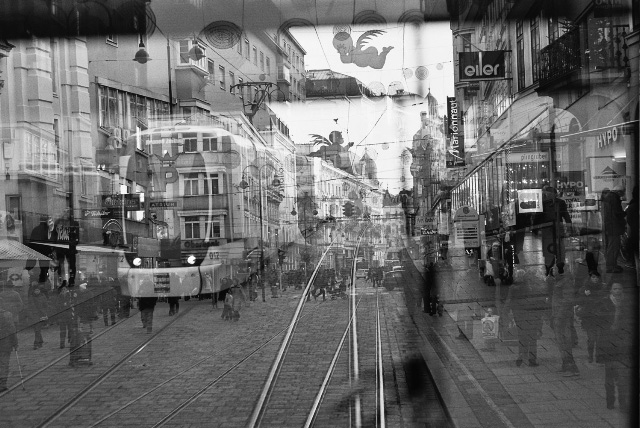
City sounds concerts

with Ici-Même (Grenoble, F)
June 28-July 3 2011, this workshop is free 

start June 28th 12:00 @ Ptarmigan – please register!

Ici-Même invites you to become a guide and performer for the City Sounds Concerts in Tallinn. You will be practicing the very specific art of guiding people with closed eyes, composing with the sounds, lights, odors and events, playing and improvising with the city for an instrument.

About ten days will be dedicated to body practice, rehearsal and writing the “score” of the blind walks; the public performances will take place three times a day during Tuned City.

Workshop contact and further informations, write to Sam / Ici-Même: pali@palimeursault.net

see also City sounds concerts – guided tours >>>

Ici-Même (F)

Founded in 1993, Ici-Même [Grenoble] is a collective of variable shape, getting together three to thirty people according to different projects. The collective’s approach is deeply rooted in the urban space, as a place and an object for experimentation. Mixing sounds, images, objects, dance and speech, the artistic practice of Ici-Même is protean and cross-medias, and cancels out the boundaries between the fields of theatre, soundart, installation, performing arts, graphic design, architecture, photography, writing, video, field sociology… The creation process develops within the urban reality of the everyday life, productions are written and conceived in the public space where they eventually take shape. All of the environment is likely to be considered a perceptive and informative source matter for creation, which can be captured, recorded and collected. If the city might be understood as a geographical compound of axes and zones, bounded and identified areas and districts, it is also traversed by flows of activity or movement of people according to a very specific temporality that matches days, seasons, actuality… unremittingly shaping and reshaping its proper landscape by filling some spaces while leaving other places hollow, uncovering folds and interstices. Through a sensitive exploration of these “human territories”, Ici-Même calls to study the many usages of the public space and puts forward an art of the experimentation.

www.icimeme.org

appearance at Tuned City
City sounds concerts / 04.-10.07.11
City sounds concerts workshop / 28.06.-03.07.11

mobile miniatures

project by Udo Noll and participants of the workshop Radio Miniatures – Radio Aporee

This project doesn’t want to add subtitles to your reality. it’s intention is to intensify and enrich the experience and perception of the world around you, while listening to it. you may think of it as a form of radio which literally surrounds you, and which may, if you like, dissolve the borders between listening and performing.

The mobile miniature project forms part of radio aporee ::: soundmap – a growing global archive of geo-tagged recordings, reflecting the complexity of our sonic environments, as well as the different perception and artistic perspectives of its many contributors, in relation to sound, space and places. Within this framework, the miniatures focus on small areas, neighborhoods, the next street corner, and extend the acoustic spectrum with voices, spoken words, language: poetry, essay, fiction, documentation – narration, in a wide sense, enters the soundscape and transforms your daily routes into a radio experience.

For Tuned City Tallinn, radio aporee founder Udo Noll has been invited to give a workshop on the theoretical and practical backgrounds of mobile miniatures. The workshop was aimed at the production of a series of space-based audio works within the Tallinn area, and resulted in several audible miniatures for mobile media experienced by listeners now and in future:

hidden sounds, Tallinn
by Patrick McGinley and Kerstin Karu
http://aporee.org/mfm/tracker.php?id=9

J X goes Lasnamae
by Audra Cepkauskaite
http://aporee.org/mfm/tracker.php?id=11

Baltijaam market encounters
collaboratively created by Aleksandra Alkoven, Jaak Sova, John Grzinich, Kerstin Karu,
Patrick McGinley, Piret Karro and Tomas Jonsson
http://aporee.org/mfm/tracker.php?id=12

inside / outside
collaboratively created by Aleksandra Alkoven, Jaak Sova, John Grzinich, Kerstin Karu,
Patrick McGinley, Piret Karro and Tomas Jonsson
http://aporee.org/mfm/tracker.php?id=8

For further information please see Radio Miniatures – Radio Aporee workshop >>>

www.aporee.org/mfm/

appearance at Tuned City
Tuned City Tallinn / site-specific projects
Form + Sound II – Exploration of space and frequency

with Lukas Kühne (URG/D)
May 9-15 2011

Goal:
The workshop Form + Sound II – Exploration of space and frequency aims at creating an acoustic environment diagnosis as a living organism. During the intensive course students will experience working together in an international and interdisciplinary team. They will scientifically and artistically  explore the relationship between the form that creates sound and the sounds that create form, in order to finally develop their own site-specific sound project presented to the public on or within the sourroundings of Lauluväljak.

Background:
Where does this travel take us? One can expect a deeper knowledge or a better perception of “space and frequency” and the roles these fundamental elements of nature play in our daily life. This is a wide and open field of research that is relatively unexplored. Assuredly, there are some surprises to discover which will prick up ones ears and eyes. The idea of “Form and Sound” is carrying out a multidisciplinary laboratory building bridges among the different arts and genders. Sound does not exist without material support: it requires sources in space in order to have some kind of form and it needs ears in order to be heard. Sound depends on the material and the form of sound sources. This workshop explores the relationship between the form that creates sound and the sounds that create form. Taking this a step further we’d get to the exciting possibility to plan installations and develop projects in various spaces, where the public can participate and become an active part of it.

Objectives:
During the course several lectures by professionals and experts of different fields will take place. Invited speakers include architects and sound engineers. By the end of the guided fieldtrips and the lecture days the students will have come to know which sort of organism is the Estonian Song Festivals Ground and the sourounding area to formulate the part of the site, they wish to work on. They will announce which materials they will work with and also where the presentation of their project would ideally take place. The project may be conducted either individually or in groups.

Expected results:
By the end of the workshop there will be an presentation, which will take place at several locations around Lauluväljak, such as the huge stage, the large park as well as at the Baltic coastline, etc.

Organiser:
Estonian Academy of Arts / www.artun.ee

Sound Map of Tallinn

a guide to the city of Tallinn from an auditory perspective
by Sound Map Tallinn group (Tallinn, EST)

The Sound Map of Tallinn is an invitation to discover the city from an auditory perspective. By mapping the results of a several months comprising research on Tanllinn´s sonic qualities, both permanent inhibitants and casual visitors are prompted to hear the city in a new way by tuning in and listening with open ears.

The map will be distributed freely during the event in July 2011.

For further information please see Sound Map of Tallinn workshop >>>

appearance at Tuned City
Sound Map of Tallinn – presentation / 08.07.11
Tuned City Tallinn / site-specific projects