Wilson, Louise K (UK)

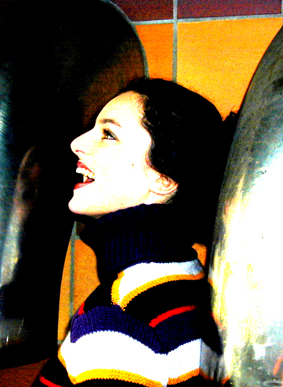
Louise K Wilson is a visual artist who makes installations, soundworks and videos. Processes of research are central to her practice and she frequently involves the participation of individuals from industry, museums, medicine and scientific research in the making of work. She has exhibited widely in North America and Europe. Recent exhibitions include Re-sounding Falkland on the Falkland Estate (Scotland 2010), I Hear Too: Live (York Minster 2009), Composure (Impressions Gallery, Bradford 2008), Post-Cinema (RMIT Project Space, Melbourne 2007); Sonic Arts Network Expo (Plymouth 2007) and the International Film Festival Rotterdam (2006). Her published writing includes an interview with Paul Virilio (CTHEORY, 1994), artist pages for “Zero Gravity – A Cultural Users Guide” (Arts Catalyst, Cornerhouse books 2005), and book chapters for “A Fearsome Heritage: Diverse Legacies of the Cold War” (Left Coast Press, 2007) and “Contemporary Archaeologies: Excavating Now” (Peter Lang, 2009).

www.lkwilson.org

appearance at Tuned City
On the Plasticity of Echoes: Cold War sites and ruined temples / 08.07.11

Kleinberg-Levin, David (US)

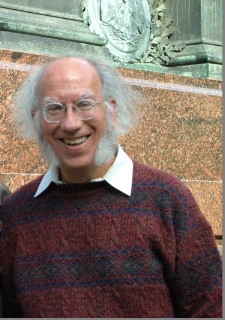
Dr. Kleinberg-Levin received a B.A. in Philosophy from Harvard University in 1961 and a Ph.D. from Columbia University in 1967.  He taught in the Humanities Department at the Massachusetts Institute of Technology (1968-1972) before joining the Department of Philosophy at Northwestern University.  Dr. Kleinberg-Levin, now Professor Emeritus, retired in 2005 after thirty-three years of teaching in the Department of Philosophy as well as in the Department of German Studies and the Jewish Studies Program at Northwestern University in Evanston, Illinois.  He is the author of numerous journal articles in critical social theory, phenomenology, ethics, and aesthetics.  His books are Reason and Evidence in Husserl’s Phenomenology  (Northwestern University Press, 1970); The Body’s Recollection of Being  (Routledge & Kegan Paul, 1985); The Opening of Vision  (Routledge, 1988); The Listening Self  (Routledge, 1989); The Philosopher’s Gaze: Modernity in the Shadow of Enlightenment  (University of California Press, 1999, reprinted by Duquesne University Press in 2001); La Carne e la Voce: In Dialogo tra Estetica ed Etica (Milano: Edizioni Mimesis, 2003) in collaboration with Mauro Carbone; Gestures of Ethical Life: Reading Hölderlin’s Question of Measure After Heidegger (Stanford University Press, 2005); and Before the Voice of Reason: Echoes of Responsibility in Merleau-Ponty’s Ecology and Levinas’s Ethics (SUNY Press, 2008).  He is also editor of Pathologies of the Modern Self  (New York University Press, 1987), Modernity and the Hegemony of Vision  (University of California Press, 1994), Sites of Vision: The Discursive Construction of Sight in the History of Philosophy (The MIT Press, 1997), and Language Beyond Postmodernism  (Northwestern University Press, 1997).  His most recent project, consummated in a forthcoming book, bears the title Redeeming Words: A Critical Theory Approach to Language, Literature, and the Promise of Happiness in a Time of Mourning.  His lifetime of research, teaching and writing has been dedicated to the hermeneutical phenomenology of moral life, the elaboration of a critical theory of Western society and culture on the basis of this phenomenology, and contributions to the critical discourses in aesthetics and the philosophy of art.  His publications in this last category include brochures for gallery exhibitions (on oil paintings, photographs, and sculptures), and critical essays on modern dance, the cinema and works of literature.  He has lectured on architecture at the McGill School of Architecture; the Graduate School of Architecture and Urban Design, Washington University, St. Louis; and at the Alvar Aalto University, in Helsinki, Finland.

appearance at Tuned City
Listening as Critacal Social Praxis and as a Practice of the Self / 09.07.11

Dixon, Max (UK)

Max Dixon is an independent consultant in town planning, noise and soundscapes, experienced in regeneration, urban design, environmental analysis and policy development, including the role of the arts in city design and management. He advised on city futures scenarios for the 21st century thematic area of Expo2000 in Hannover. From 2000 to 2009, he was responsible at the Greater London Authority for the first citywide noise strategy in the UK, the Mayor of London’s ‘Sounder City’, which was widely welcomed for its pioneering role in supporting moves from conventional, reactive noise abatement to positive soundscape design and management. Current activities include promoting integration of the aural across all disciplines concerned with design and management of space, such as through COST Action TD0804.

appearance at Tuned City
Imagine a Tuned Future / 10.07.11

Plugging the Modern Home

lecture by https://www.tunedcity.net/?page_id=1148Carlotta Darò[/intlink]

The electrification of the domestic environment is a pivotal technological change that took place during the modern age. Since 1880, in North America, networks of electric power and instant communication defined a new technological landscape through the settlement of a continuous grid of infrastructures, reshaped the layout of existing cities collapsing perception of distance and speed, and finally dramatically transformed family private habits extending private interior spaces to global scales of communication. The development of the telecommunications at the beginning of the twentieth century, allowed the expansion of the public sphere and services in order to create a broader access to commodities as well as information, and further a more democratic ideal in the field of city-planning.

How these technologies of sound transmission impacted the habits of American dwellers? Which social and cultural discourses accompanied the introduction of these modern systems? The lecture “Plugging the Modern Home” focuses on the way networks of telecommunication contributed to redefine the common imagery of the modern American home and everyday life by comparing corporative material culture with visions by modernist architects or artistic representations.

appearance at Tuned City
Transduced Spatiality / 10.07.11

SONIC POTENTIALS OF TALLINN: a case study

lecture by https://www.tunedcity.net/?page_id=1121Carlo A. Cubero[/intlink]

For the past year Carlo A. Cubero has been collaborating with students of the Social & Cultural Anthropology of Tallinn University and MoKS in producing a sonic ethnography of Tallinn. The initial questions that guided this phonographic production were grounded on drawing an analogy between the ethics and methodologies of ethnographic filmmaking and their applications to phonography. As an ethnographic filmmaker, Cubero was interested in exploring what happens when “the visual” is removed from visual anthropology.

The presentation “SONIC POTENTIALS OF TALLINN: a case study” will address some epistemological and methodological tensions that emerged in the process of producing a subject-centred ethnographic phonography that explores connections between space and sound in Tallinn. The phonography is a sonic portrait of a life long resident of Tallinn, who is visually impaired. The sonic narrative is focused on the theme of “listening” and considers how does a “Tallinner” relate to the city’s sounds. This presentation will play back excerpts of the “sonic ethnography” and consider the epistemological and methodological tensions that the production had to contend with in the putting together the piece.

appearance at Tuned City
Sounding the Local / 08.07.11

Shotgun Architecture

presentation by https://www.tunedcity.net/?page_id=1113Justin Bennett[/intlink]

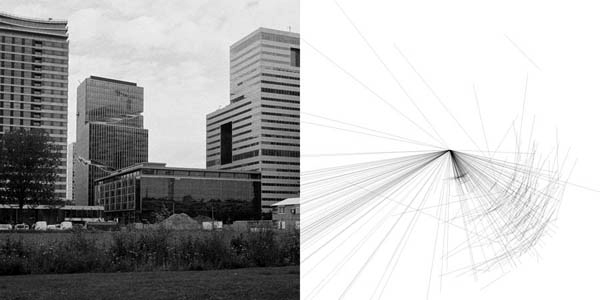
Shotgun Architecture is an ongoing project that plays with concepts of subjective measurement, translations between sound and image and above all the idea of the publicness of public space. It was started by Justin Bennett during his residency at the Virtual Museum Zuidas in Amsterdam. Bennett recorded the sound of a pistol shot in a number of semi-public open spaces in the Zuidas area. These collected acoustic signatures were processed further in two ways. On the one hand, Bennett created a sound composition which explores the resonances of the chosen places. On the other hand, he used the recordings as a kind of sonar; the stereo (and therefore 2 dimensional) sound data was analysed for spatial and spectral characteristics which were plotted against each other resulting in an visual map of the acoustic space. These maps, drawn by a computer program, resemble the visual spaces themselves in terms of scale: a larger, open space results in a wider pattern of lines. The experience of listening to an urban soundscape is difficult to describe, in words or in notation. These maps suggest a way to describe the open-ness or closed-ness of spaces, the density of reflections and reverberation, the presence of strong resonances or mechanical drones.

The Shotgun Architecture project has taken various guises up until now: a vinyl release, an installation and a film soundtrack.

appearance at Tuned City
Subjective Soundscapes / 08.07.11

Darò, Carlotta (CA)

Carlotta Darò is currently a Mellon Postdoctoral Fellow at McGill University, in the department of Art History and Communication Studies. Her work explores the impact of sound technologies, telecommunications infrastructures, and media on modern architectural and urban theories. She taught art and architectural history at the Ecole Nationale Supérieure d’Architecture Paris Malaquais and at McGill University, and worked as curator and architectural journalist. Carlotta Darò is presently preparing a book on Sound Avant-Gardes in Architecture (Presses du réel, forthcoming 2011).

appearance at Tuned City
Plugging the Modern Home / 10.07.11

Karel, Ernst (US)

Ernst Karel is a musician, recordist, and composer. His two newest CD releases, on Gruenrekorder and and/OAR, are constructed with unmanipulated location recordings edited as imageless observational cinema.  He performs and records using modular analog electronics and location recordings, including with EKG and the New England Phonographers Union.  He also does sound editing, mixing, and sound design for nonfiction film and video. Having received his PhD from the University of Chicago in 2003, he currently manages the Sensory Ethnography Lab and the Film Study Center at Harvard University, where as Lecturer on Anthropology, he co-teaches courses in media archaeology and ethnographic audio and video production.

www.ek.klingt.org

appearance at Tuned City
With reference to the anthropology of sound / 09.07.11

von Fischer, Sabine (CH)

Sabine von Fischer is an architect and writer, and currently a Ph.D. candidate in architectural history and theory at ETH Zurich. In 2004, she was awarded the Federal Art Prize in the discipline of Architecture for her installation «Sonic Barriers». From 2004 to 2008, she was editor for werk, bauen und wohnen. She has practiced and taught in Zurich and New York, lectured internationally, and published texts and essays on contemporary architecture as well
as on the topic of architectural acoustics and the relationship of sound and space.

appearance at Tuned City
Resonant Chambers, Broadcast Spheres / 10.07.11

García Quiñones, Marta (ES)

Marta García Quiñones is a PhD candidate at the Universitat de Barcelona. She is preparing
a thesis on music listening, which explores the centrality of listening to the Western musical experience, and its connection to aesthetic ideals and a certain comprehension of human subjectivity. It also advocates a new understanding of music listening as individual and social action, which would be able to account for the transformations of listening in the contemporary mediascape.
García Quiñones has published in academic journals such as “Trans. Revista Transcultural de Música”, “Lied und populäre Kultur”, and “Revista Iberoamericana de Comunicación”. In 2008 she edited the collection “La música que no se escucha. Aproximaciones a la escucha ambiental” (Orquestra del Caos, Barcelona), and is currently co-editing the volume “Ubiquitous Musics” with Anahid Kassabian and Elena Boschi (University of Liverpool. Furthermore, García Quiñones is a member of the international research network “Sound in Media Culture. Aspects of a Cultural History of Sound” (2010-2013), funded by the German Research Foundation.

appearance at Tuned City
Listening as action. Movements and gestures to
sound and music in the everyday life of the city. / 08.07.11

Cubero, Carlo A. (EE)

Carlo A. Cubero (PhD.) is an Associate Professor of Social & Cultural Anthropology at Tallinn University. His previous research has focused on themes of Caribbean tourism development, the use of audiovisual media in anthropological research, construction of Caribbean island identities, tourism, and Caribbean music. In 2007, Cubero completed a feature length ethnographic documentary called “Mangrove Music”, which has been screened in 10 international film festivals. For the past 2 years, he has been working on producing an ethnographic documentary on migrant musicians that travel continuously between Western Europe and West Africa.
Working with musicians has placed Cubero in a position to address the technical aspects of recording sound for filmmaking purposes. These initial experiences have developed into a broader interest in understanding the properties of sound and the use of sound as a means to communicate a social experience.

appearance at Tuned City
Sonic Potentials of Tallinn: a case study / 08.07.11
Sound Map of Tallinn / Workshop

Bennett, Justin (UK/NL)

Justin Bennett, (UK) is an artist working with sound and visual media. The everyday sound of our urban surroundings at every level of detail is the focus of his work where he develops the reciprocity of music and architecture, and sound and image. Bennett often works with artists from other disciplines including the performance group B M B con., theatre maker Renate Zentschnig, choreographer Eva-Cecilie Richardsen and sound artist Cilia Erens. Recent solo work has focused on urban development and public space, resulting in sound, video, animation and graphic works.
www.bmbcon.demon.nl/justin

www.bmbcon.demon.nl/justin/

appearance at Tuned City
Shotgun Architecture / 08.07.11
Tuned City Brussels: Lecture-event #1
Tuned City Messene 2018 – Listening Politics

Ratkje, Maja (NO)

Maja Ratkje is a norwegian composer of orchestral and electro-acoustic works. Her art practice is a highly diverse interconnecting project of composition, performance, installation, film, theatre and dance. Born in 1973 in Trondheim, Maja Ratkje studied composition at the Norwegian State Academy of Music in Oslo. She co-founded the group Spunk – an all-female improvisation quartet – during her study, and is a member of Agrare, a performance trio consisting of the noise duo Fe-mail and the Swedish dancer Lotta Melin. Ratkje is also active as a soloist, her first album “Voice” was published in 2002. She collaborates artistically with Jaap Blonk, Joëlle Léandre, Ikue Mori, Zeena Parkins and Stephen O’Malley. Her compositions are performed worldwide by artists such as Klangforum Wien, Oslo Sinfonietta, The Norwegian Radio Orchestra, Fretwork, TM+, Cikada and Vertavo string quartets, Quatuor Renoir, Ticom, crashEnsemble, Pearls for Swine Experience, Torben Snekkestad, Marianne Beate Kielland, Frode Haltli, POING and many more.

[lang_ee]Maja Ratkje on orkestri- ja elektroakustiliste teoste helilooja. Tema loominguline tegevusväli on väga mitmekesine, sidudes omavahel kompositsiooni, performance’it, installatsiooni, filmi, teatrit ja tantsu. Maja Ratkje on sündinud 1973. aastal Trondheimis, õppinud kompositsiooni Oslos, Norra riiklikus muusikaakadeemias. Muusikaõpingute ajal asutas ta koos kaaslastega naiste improvisatsioonikvarteti Spunk. Praegu on ta performance’i trio Agrare liige, mis koosneb noise‘i duost Fe-mail ja Rootsi tantsijast Lotta Melinist. Samuti on Ratkje aktiivne sooloartist. Tema esimene album “Voice” nägi ilmavalgust 2002. aastal. Loominguliselt teeb ta koostööd veel Jaap Blonki, Joëlle Léandre, Ikue Mori, Zeena Parkinsi ja Stephen O’Malleyga. Tema muusikakompositsioone on esitanud üle maailma sellised esitajad nagu Klangforum Wien, Oslo Sinfonietta, Norra raadio sümfooniaorkester, Fretwork, TM+, Cikada ja Vertavo keelpillikvartetid, Quatuor Renoir, Ticom, CrashEnsemble, Pearls for Swine Experience, Torben Snekkestad, Marianne Beate Kielland, Frode Haltli, POING ja paljud teised.[/lang_ee]

www.ratkje.no

appearance at Tuned City[lang_ee]Tuned City programmis[/lang_ee]
Speaking with Spaces / 10.07.11[lang_ee]Kõnelused ruumiga / 10.07.11[/lang_ee]
projects

stadtgespräch

Tuesday 3. May 2011, 19:00
Kommunale Galerie Berlin, Hohenzollerndamm 176, 10713 Berlin
www.kommunalegalerie-berlin.de

Why city sound (= acoustic living space) is getting more and more in focus today might have to do with the fact that our ‘space sense’ is related to the ‘listening sense’…

introduction/moderation:
Prof. Sam AuingerGastprofessor Sound Studies UdK Berlin

talk with:
Lena Kleinheinz architect, (magma architecture/Berlin)
Carsten Stabenow, (tuned city/Berlin)
Yukio King Urban Soundplaner/Education Department „Ableton“
Thomas Kusitzky Dozent, Auditive Architektur

Unsworn Industries (SE)

Unsworn Industries is an interaction design and innovation studio based in Malmö, Sweden.

We are interaction designers. We bend technology to accommodate human needs, desires and behaviour. We make things, systems and services. We help companies and organisations with strategy, concept development, design and production. We teach students and professionals new skills and perspectives. Fresh eyes and dirty hands!

Unsworn Industries has gained an international reputation as pioneering designers, artists and educators. You might have met our work at a Tokyo flagship store, in the streets of Bogotá, at a design conference in Boston, or in galleries in Paris, Brösarp or New York.

www.unsworn.org

appearance at Tuned City
Metaphone installation / 07.-10.07.11

Metaphone

installation by Unsworn Industries
public space

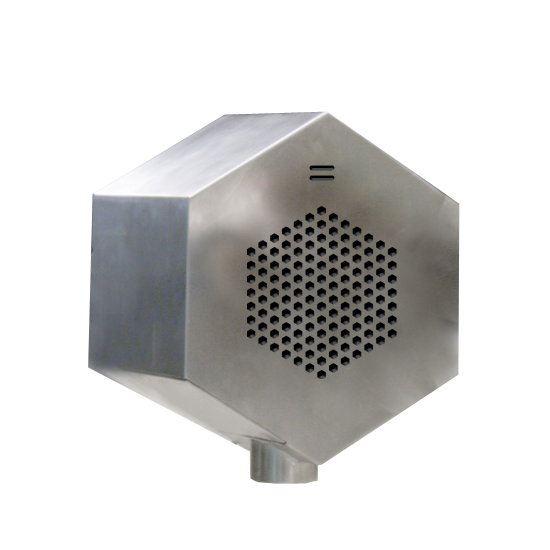
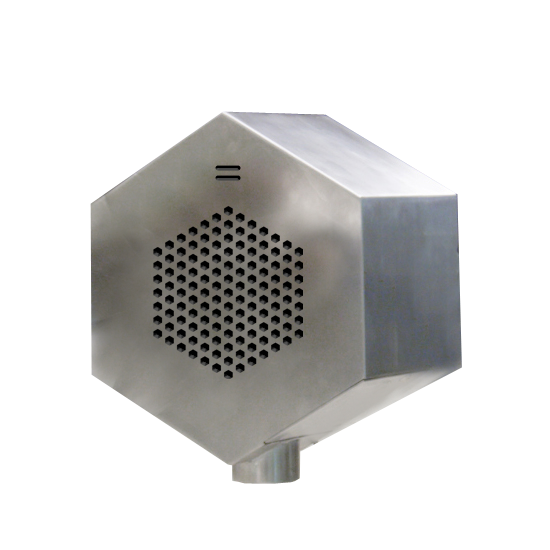
A Metaphone is a service that allows people to conduct phone calls through the air of a third location. The world’s first Metaphone will be installed in Tallinn in July 2011.
Each Metaphone installation consists of two stainless steel speakerphones facing each other a couple of feet apart, each equipped with a directed microphone and a speaker. After you have called a Metaphone’s phone number you input the phone number to the person you would like to talk to. The Metaphone calls up the other person and when he or she answers, your conversation is carried out through the air in between the speakerphones. In this process the acoustic ambience of this third intermediate location is added to the conversation and the conversation seeps out into the local soundscape. Metaphones literally breath fresh air into ordinarily wire bound phone calls.

Metaphone Tallinn is part of Unsworn Telecom – a series of products and services for beautiful and surprising telecommunications. They are sculptural landmarks as well as interfaces to practical and poetic functionality that cater to unexpected and idiosyncratic telecommunication needs.

appearance at Tuned City
Transduced Spatiality / 10.07.11
Tuned City Tallinn / installations

Schizophone

installation by Pierre-Laurent Cassière

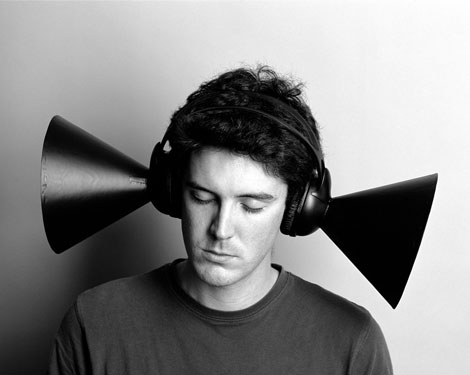
Schizophone is the first prototype of the Disorientation Headphones Project initiated in 2006. It proposes acoustic prosthesis altering one’s listening habits, revealing how our ears are continuously used not only as communication devices but also as orientation tools. The two cones focus on sounds coming from each side of the listener. By both, amplifying sounds and splitting perception of the left and the right ear, the Schizophone creates a strange stereophonic effect on the soundscape and reveals soft sounds usually unheard. The user modifies its attitude and relationship to space through an unusual way of moving and specific listening postures.

appearance at Tuned City[lang_ee]appearance at Tuned City[/lang_ee]
Tuned City Tallinn / installations

Cassière, Pierre-Laurent (F)

Pierre-Laurent Cassière considers sound, acoustic fields and vibrations, as a medium relating bodies and space through dynamic relationships. Out of a musical approach, his sound installations, performances or devices deal with perception limits and aim to offer very specific ways of listening. In his creative game, theoretically and practically related to art history and media archeology, audio-visual technologies become a matter to understand, reorganise and reinterpret. Along with his sound research, Cassière develops expanded cinema installations in which the deconstruction of cinematic systems and their placement in-situ offer abstract and poetical experiences based on noise and light motion.

After studies in the Villa Arson national art school, Nice, France, and time spent in the Icelandic Academy of the Arts’ sound studio, Reykjavik, he graduated in 2005 obtaining a Master in fine Arts. Guest student in the Kunstochschule für Medien (KHM) sound studio the next year he graduated from a Master 2 in contemporary art theory between Liege and Brussels Universities with a research on social potential of sound art practices.

Since 2006, his work had been exhibited in several art institutions such as SMAK, Gent, Belgium, TENT, Rotterdam, the Nederlands, Thurn & Taxis Palace, Bregenz, Austria, Palais de Tokyo and Musée d’Art Moderne de la Ville de Paris, France, Paco das Artes, São Paulo, Brazil, or the Württembergischer Kunstverein, Stuttgart, Germany. He also took part to different film or media art festivals such as WRO Biennale, Wroclaw, Poland, the Darklight Film Festival, Dublin, Ireland, the IFFR Rotterdam, the Netherlands, or more recently to Ososphère, Strasbourg, France or Microwave, Hong Kong, China.

http://pierrelaurentcassiere.com

appearance at Tuned City
presentation of architecture related soundworks / 09.07.11
Transphere performance / 08.-10.07.11
Schizophone installation / 04.-10.07.11

Cromatico

permanent installation by Lukas Kühne
Tallinn Song Festival Grounds, Narva mnt. 95, Tallinn, Harju

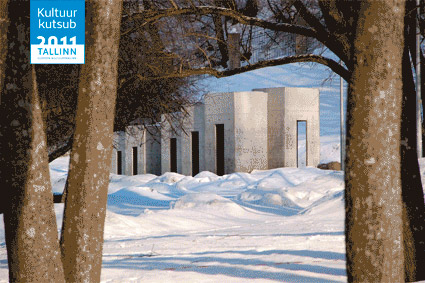
A common subject in visual arts and in music is nature and the dimension of space. Cromatico is a  visualization of the chromatic – or »well tempered« – musical scale, which nearly all Western classic and popular compositions from the last 300 years have followed. This sensual and didactic sculpture invites the visitor on the journey through the 12 halftones of the octave from »F« to »E«, allowing them to enter, touch and play the artwork in order to better understand space in relation to the frequencies contained within its volumes.
The external shape of Cromatico reflects its internal function, creating a visual sensation of the chromatic scale cast in 30 cubic meters of reinforced concrete. Set against our everyday habit to sing, read and use this musical system are physical spaces of the various frequencies. Deeper frequencies require proportionally greater volumes of space than higher ones. The measurements of the sculpture’s chambers are scaled in proportion to the body of the visitor, and their heights increase from the highest »E« (or 164 Hz) tone at 2.21 meters to the lowest »F« (or 88 Hz) note, which stands 4.04 meters high.


Made possible with the support by SA Tallinna lauluva?ljak, Nordecon Betoon OU?, AS Kunda Nordic Tsement, HC Betoon AS, German Embassy Tallinn and many more…

[lang_ee]
permanent installation by Lukas Kühne
Tallinna lauluväljak, Narva mnt. 95, Tallinn, Harju

„Cromatico“ visualiseerib skulptuurina „hästi tempereeritud“ kromaatilist musikaalset skaalat, mida pea kõik klassikalised ja popmuusika kompositsioonid on viimase 300 aasta jooksul kasutanud.

Meeleline ja didaktiline skulptuur hõlmab retke läbi oktaavi kaheteistkümne noodi fa-st mi-ni füüsilises ruumis. Sisenedes kunstiteosesse lauldes, avastab publik ruumi läbi selle sageduste.

Made possible with the support of SA Tallinna lauluväljak, Nordecon Betoon OÜ, AS Kunda Nordic Tsement, HC Betoon AS, German Embassy Tallinn.

[/lang_ee]

appearance at Tuned City[lang_ee]appearance at Tuned City[/lang_ee]
Tuned City Tallinn / installations