ok, maybe later…
Category: projects
done
Thanks for your purchase, we will send out the book directly.
about
Tuned City is an artistic research project and a festival trying to understand city by the means of sound.
Tuned City is researching the relation between sound and space and presents artistic work and theoretical positions derived from critical preoccupations with sound in the context of urban and architectonic situations with particular emphasis on original approaches to the role of ’sound’ and ‘listening’. During the previous edition in Berlin (2008), Tallinn (2011), Brussels (2013) and Ancient Messene (2018) Tuned City developed a series of formats with focused on lively site specific experience of theoretical questions in a mix of scientific lectures and demonstrations, artistic presentations and performances and location based installations.
Nevertheless, Tuned City should not be understood as the attempt to „tune“ the city in terms of improvement, it should be more seen in the sense of „tuning into the city“ as a different way of understanding city by the means of sound.
put your ear on the wall
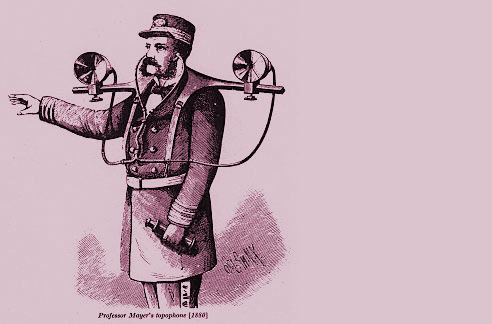
tuned city panel at clubtransmediale 2010 with John Grzinich [US/EE] Sam Auinger [AT/DE] Derek Holzer [US/DE] and Carsten Stabenow [DE]
During the initial tuned city event in Berlin in the summer of 2008, almost 100 artists, architects and thinkers gathered together in a variety of locations around the city to discuss issues of sound and architecture. The panel will introduce general ideas that mark the field of research and present recent planning developed by tuned city for ISEA 2010 (in collaboration with the KHM Cologne) and for the European Cultural Capital Tallinn in 2011.
5 february 2010 / 7 pm / .HBC Karl-Liebknecht-Strasse 9 / 10178 Berlin-Mitte
http://www.clubtransmediale.de
opening of the permanent installation by mark bain
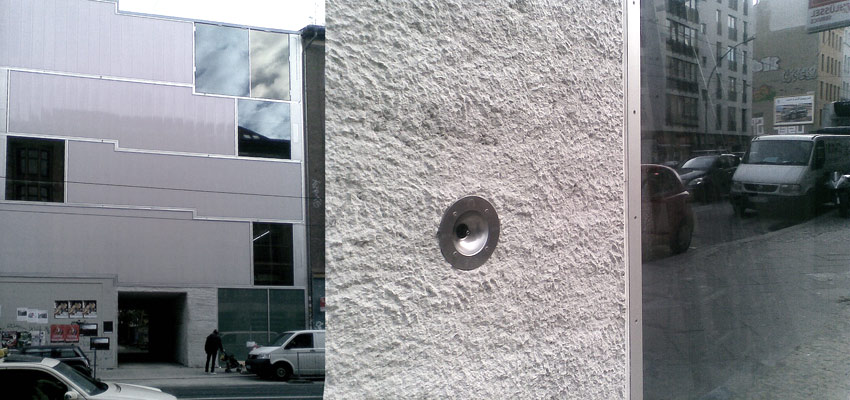
The Installation BUG by Mark Bain in cooperation with Arno Brandlhuber is finally realised and running.
Via a headphone jack you can plug in and listen to the well received building. Mark Bain implemented a system of geodata and seismic sensors in the infrastructure of the building as well as in the concrete as the building was raised. These hyper-sensitive instruments capture all mechanic and acoustic micro sensations happening in and around the building, like the wind passing by the façade, foot steps on the stairs, raindrops on the roof and termic material expansion.
The installation will be official opened on the 22nd of january 2010, 9:30 P.M. with a performance by Mark Bain.
In collaboration with the gallery Koch Oberhuber Wolff
echelon teufelsberg
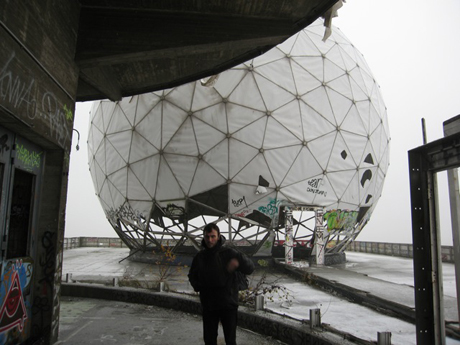
Performance recomendation:
11. December 2009 / ausland Berlin
An acousmatic composition by Thomas Ankersmit and Valerio Tricoli, based on location recordings inside the main radar-dome of the abandoned Teufelsberg espionage facility.
The Teufelsberg is an artificial hill built from the rubble of war-damaged Berlin after the Second World War. It is the highest point in the city. The NSA, the US National Security Agency, built one of its largest listening stations on top of the hill, rumored to be part of the global ECHELON intelligence gathering network, and capable of intercepting radio transmissions deep into the Soviet Union. The base has been abandoned since the early 1990’s. (Recorded by Paul Paulun.)
UM festival Lissabon

noise – or the artificial concept of silence
lecture about some ideas around noise at the UM festival in Lisbon.
Conversation 1 with Emanuel Pimenta and Carsten Stabenow.
“From this Position”: The construction of landscape and the interrelations between sound, image, architecture and space.
18 – 19.30h
12 November 2009
FBAUL, Auditorium, Faculdade de Belas-Artes da Universidade de Lisboa,
Largo da Academia Nacional de Belas-Artes. €3
tuned city presentation at KHM, Cologne
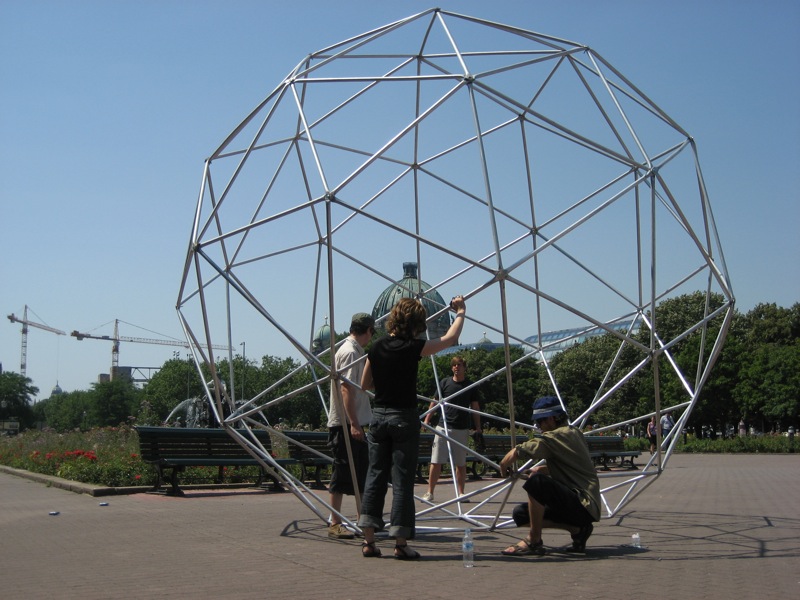
Derek Holzer will present selected topics and documents from Tuned City, and introduce his TUNED CITY COLOGNE workshop to take place over the next several months at KHM.
Monday 19 October 19.00-20.00
Klanglabor, Filzengraben 8-10, Hinterhof links
Kunsthochschule für Medien Köln, Cologne, Germany
tuned city cologne workshop
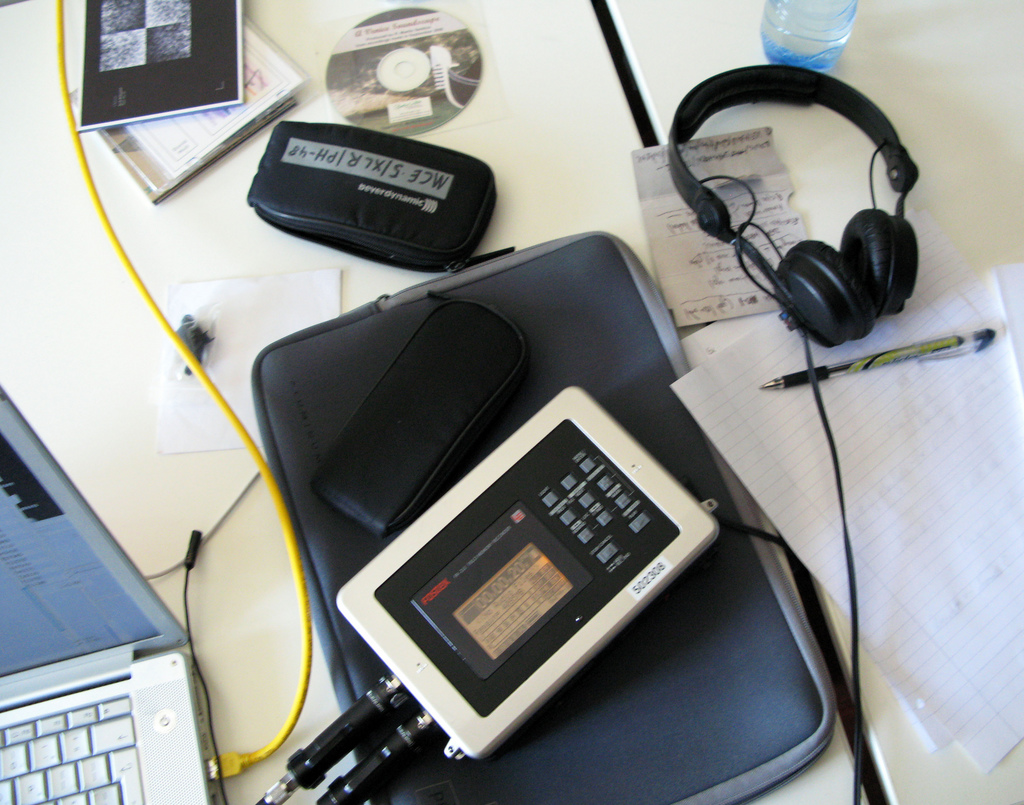
This workshop lead by Derek Holzer – envisioned as a starting point towards the creation of a long term project aimed at ISEA 2010 – aims at investigating the interrelation of sound, architecture and urban space in the city of Cologne.
More info here.
part I:
Tuesday 20 October & Wednesday 21 October 10.00-17.00
Klanglabor, Filzengraben 8-10, Hinterhof links
Kunsthochschule für Medien Köln, Cologne, Germany
tuned city grafic design
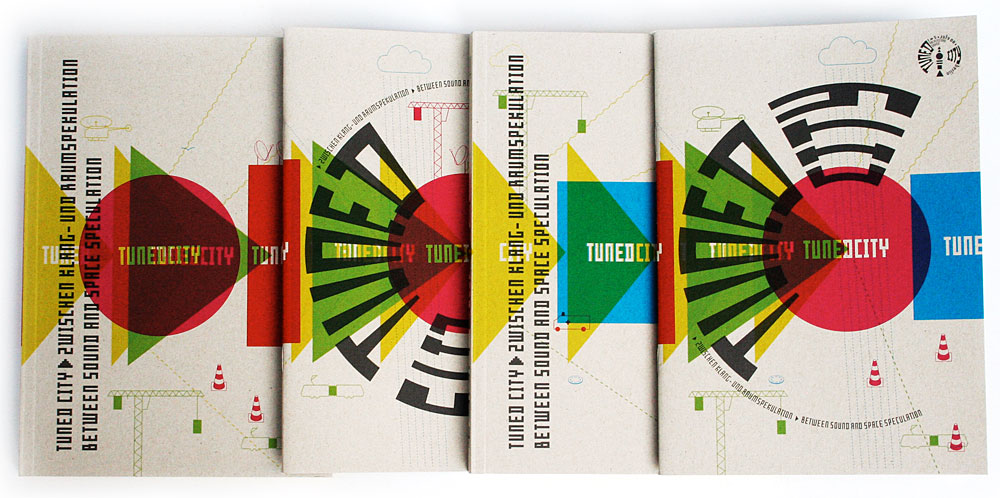
The tuned city poster series was selected for 100 Best Posters 2008 and the Gestalten Verlag Berlin just published the poster series in the book “Regular – Grafic Design Today” as well the publishing house victio:ary, Hong Kong in “Flashback”.
The tunedcity book missed the nomination for the “nicest german books 2008” by the Stiftung Buchkunst just closely and is listed under “50 also very nice books”.
tuned city at european cultural capital 2011 in tallinn
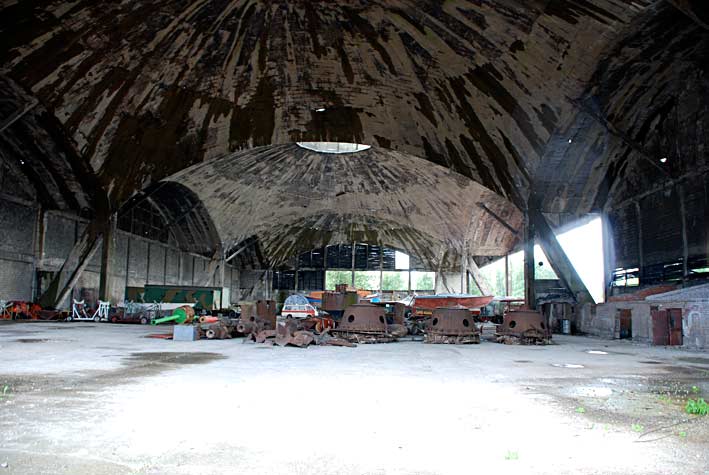
We are working right now on a tuned city edition for Tallinn 2011 (European Capital of Culture 2011). Tallinn Sound City 2011 is a bigger project within that frame we are going to develop a symposium with strong local connection. A strong focus will be – like for the tuned city event in Berlin 2008 – on demonstrations and presentations in situ in order to illustrate the correlations between sound and architecture.
singuhr salon 1/09: Klang – Raum – Öffentlichkeit
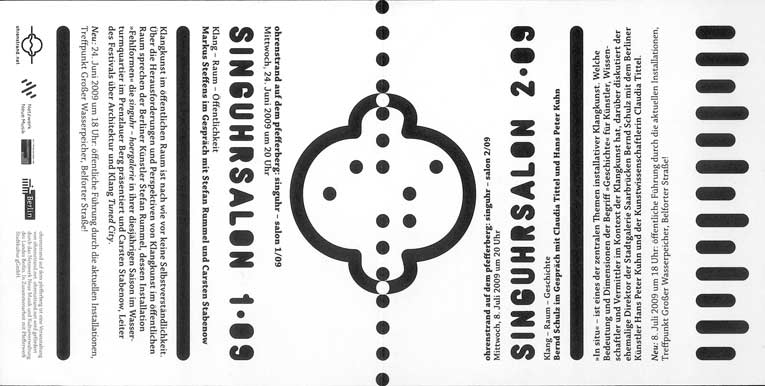
soundart in public space – salon talk with Stefan Rummel (sound artist Berlin), Carsten Stabenow (tuned city) and Markus Steffens (singuhr, Berlin)
Mi 24.06.09 um 20 h
ohrenstrand auf dem Pfefferberg: singuhr – salons
Pfefferberg Haus 13, Schönhauser Allee 176, 10119 Berlin
OASE 78 – Immersed / Sound and Architecture
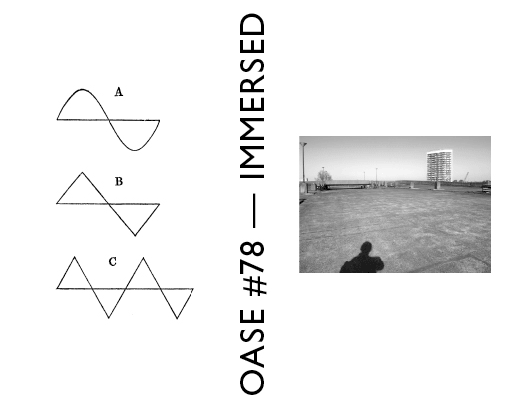
Raviv Ganchrow and Julia Kursell just edited an issue of the dutch architecture publication OASE.
Under the title Immersed, OASE 78 addresses questions around space and sound. This issue presents a reflection on the spatial aspects of sound alongside an examination of the transformative and temporal dimensions of space.
Authors: Jean-François Augoyard, Barry Blesser, & Linda-Ruth Salter, Charles Curtis, Douglas Kahn, Brandon LaBelle, Armin Schaefer, Sven Sterken, Emily Thompson
Editors: Pnina Avidar, Raviv Ganchrow, Julia Kursell
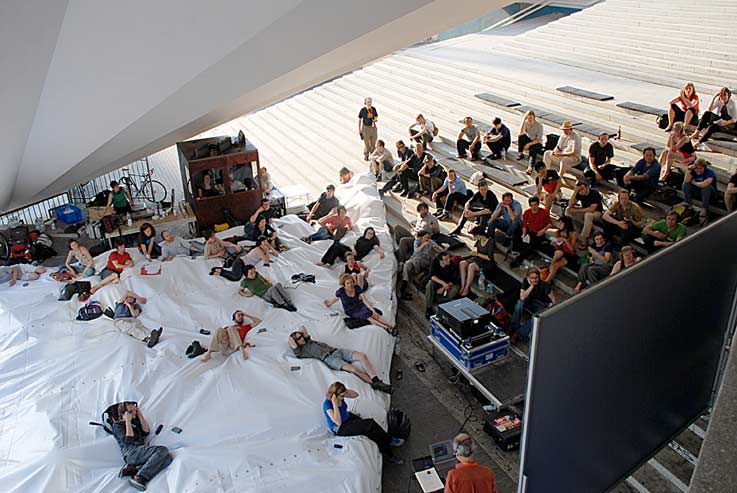
tunedcity audio documentation 01.-05. June 2008
Digimag 39 – Il suono come arte
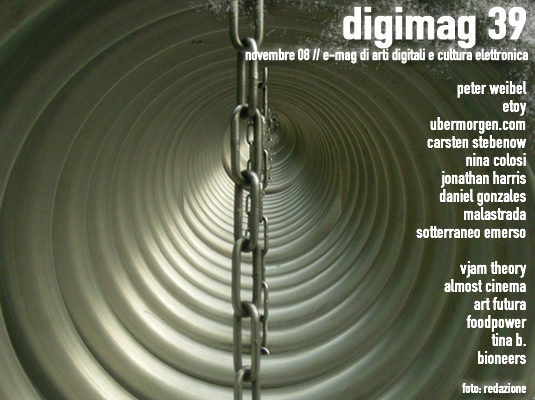
interview with carsten stabenow for the italian magazine digicult about tuned city and the history of the festival, about soundart and social aspects of artistic work in general.
an english version of this interview can be found here.
tuned city book reviews
The Wire #296, October 2008:
Tuned City – Between Sound and Space Speculation
Doris Kleinen/Anne Kockelkorn/Gesine Pagels/Carsten Stabenow (Editors)
Kook Books Pbk EUR 25
Published to coincide with a conference of the same name held in Berlin last July, Tuned City explores the impact of sound on our urban environment. This collection of 12 essays and interviews pulls together contributions by sound artists, architects, media theorists and even a neurologist, offering an overall picture of the multifarious relations between sound and architectural space.
Opening up new and refreshing perspectives, the book features several contributions form architects who actively engage with sound. These include Doris Kleilein and Anne Kockelkorn, whose essay “Disconnection” explains why architecture is ‘disconnected’ from sound and noise, noting that at the most it is required to combat them. The authors go on to argue, quote rightly, that sound artists show a similar lack of interest in architecture: using recording and playback equipment, they create acoustic spaces that exist by virtue of the performance, relegating actual built space to the background. Other architects attempt to bridge the gap between built space and sound: Pascal Amphoux and Gr?goire Chelkoff from Cresson, the French Sound Space and Urban Environment Research Centre, present a typology of sonic effects occurring in urban areas, outlining the relationship between these effects–which range from reverberation to immersion or attraction–and architectural space. This typology provides a standardized vocabulary that can be used by psychologists, sociologists or architects dealing with sound, while also reconfiguring our perception of the urban environment. Architectural theorist Susanne Hauser likewise examines the social impact of urban soundscapes, arguing that the functional, unaesthetic structures making up the major part of today’s agglomerations are designed to attract neither the eye not the ear. She suggests that this sensory deprivation may well be responsible for the retreat of city dwellers into their own private spaces via technologies such as the iPod, which allows users to select their audio environment. In his writings, the philosopher Peter Sloterdijk has discussed such strategies of selective participation, which can lead the individual to experience the rest of the world as a poison, or at best as a meaningless backdrop.
As its subtitle suggests, Tuned City also leaves room for some thought-provoking speculation. Architect Arno Brandlhuber evokes the possibility of modifying the sound of one’s living room by adding echo or adjusting the volume. Elsewhere, musician and sound artist Thomas Ankersmit points out that buildings reflect sound but never dialogue with it. Even more intriguingly, architect and sound artist Raviv Ganchrow considers the possibility of a dialogue between the building and the user, in which the architecture is perceived not as a finished product, but as a system that is only complete when it is listened to as well as looked at. At a time when sound is becoming increasingly controllable, directional and ‘material’, these ideas open up new perspectives for architecture that are not as utopian as they may appear.
Sound engineer Barry Blesser’s essay on aural spatiality comes across as simplistic and self-evident alongside the exhaustive typology developed by the Cresson team, while an article or two charting the theoretical underpinnings and historical background of the arguments put forward in these contributions would not have gone amiss. These are minor quibbles, however; as an indicator of sound’s undeniable capacity to influence architectural practice and a plea for greater openmindedness on the part of architects, Tuned City makes for essential reading.
Rahma Khazam, The Wire #296, October 2008
———
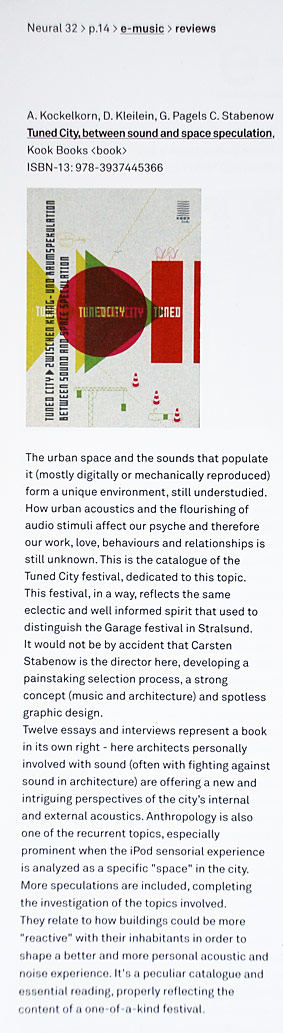
neural #32, January 2009:
[…] It’s a peculiar catalogue and essential reading, properly reflecting the content of a one-of-a-kind festival. […]
Alessandro Ludovico, neural #32
tuned city at dis-patch festival belgrade
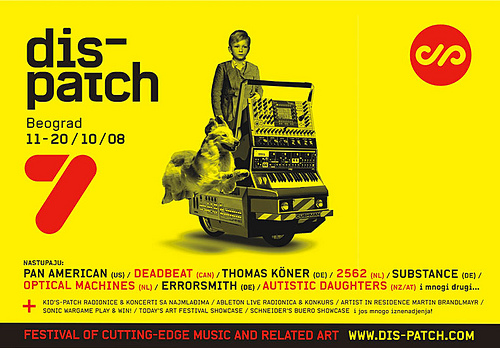
12 october, TUNED CITY is invited with a project presentation to the dis-patch festival in Belgrade
tuned city at full pull festival malmö
6 september, TUNED CITY is invited to the full pull festival in Malmö. (Projectpresentation, discussion, performances by Mark Bain and Julien Clauss.