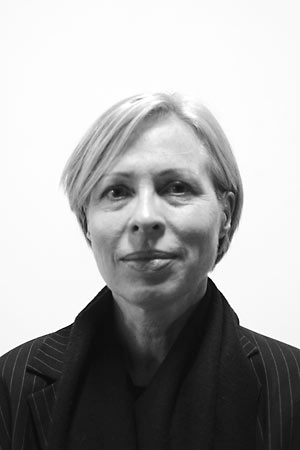
Schulkowsky, Robyn (US)

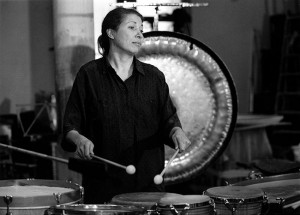
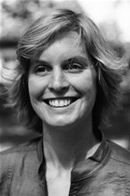
Percussionist Robyn Schulkowsky is a world-renowned experimental music performer and composer engaged in continuous exploration of new sound dimensions and development of new and unusual instruments. She has premiered and recorded some of the most important percussion works of the 20th and 21st centuries, working with composers such as Karlheinz Stockhausen, Kevin Volans, John Cage, Morton Feldman, and Iannis Xenakis, presenting their works throughout the former Soviet Union, Africa, South America, Asia, and at major European music festivals.

http://spaceandfrequency.de

appearance at
Brussels / Space and Frequency – Rhythm Lab_Performance / 28. June 2013
Brussels / Space and Frequency – Rhythm Lab / 27–28. June 2013

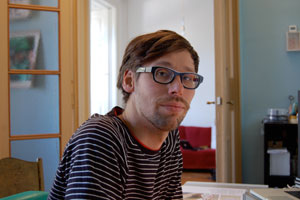
Stabenow, Carsten (D)

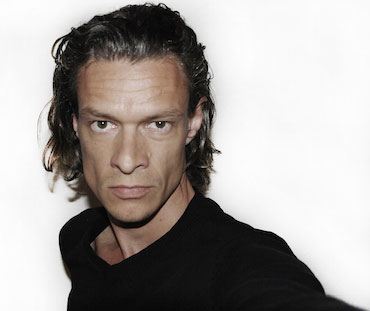
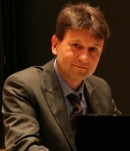
Carsten Stabenow arbeitet als freier Kurator, Produzent, Kommunikationsdesigner und Künstler an der Schnittstelle künstlerischer Produktion und Vermittlung. Er studierte Kommunikationsdesign und Interdisciplinary Studies an der Kunsthochschule Berlin Weissensee und ist Initiator diverser Festivals, Formate und Initiativen im Kontext Neue Medien, art+science und Klangkunst. Er gründete 1997 das Medienkunstfestival garage, ist Initiator und künstlerischer Leiter von tuned city sowie Gründer von DOCK-Berlin – Produktions-Backbone im Grenzbereich Kunst, Medien und Wissenschaft. Als Mitglied von Staalplaat Soundsystem (2001-2010) und solo realisiert er international Projekte und Klanginstallationen.

http://carstenstabenow.de

Team & Kontakt


TC office in Berlin:
Tuned City
Kastanienallee 73
10435 Berlin
T: +49 (0)30 44052612 / F: +49 (0)30 44357415
tc@tunedcity.de

office of our Partner in Brussels:
Q-O2

Koolmijnenkaai 30-34
B-1080 Brussels
T: +32 (0)2 245 48 24 / F: +32 (0)2 245 48 24
info@q-o2.be

artistic direction:
Carsten Stabenow

program:
Julia Eckhardt (Q-O2), Carsten Stabenow (tuned city), Raviv Ganchrow

production:
Julia Eckhardt (Q-O2), Ann Goossens (Q-O2)

communication & press:
Eveline Heylen, Rik Hegewald

technical coordination:
Ludo Engels, Jeroen Vandesande, Roel Heremans

graphic design (print):
Maaike Beuten (garage64)

printing:
Newgoff (Ghent)

Tuned City Brussels is made possible with the support of:
Vlaams Minister voor Brusselse Aangelegenheden, Vlaamse Gemeenschapscommissie, Goethe-Institut Brussels, Stad Brussel – Ville de Bruxelles, Dienst cultuur Gemeente Sint Gillis – Service and Polish Institute – Service

Tuned City Brussels is realised in cooperation with:
Sint Lucas ArchitectuurErasmus Hogeschool RITS/Radio, Sint Lukas Transmedia, La Cambre (ENSAV) option Espace Urbain a.pass, Citizenne, BNA-BBOT, Kaaitheater, Beursschouwburg, Ateliers Claus, WIELS, STUK

thanks to our additional hosts:
Faculté Universitaire Saint-Louis, Station Brussel-Noord / Gare Bruxelles-Nord, Rivoli Gallery, Begraafplaats van Elsene, Toogenblik, Black Buddah, GC De Linde

thanks for input, thoughts, discussions, engagement and help to:
Dieter van Dam, Aernoudt Jacobs, Els Viaene, Mira Sanders, Annelies De Smet, Raymond Balau, Cédric Noël, Johan Vandermaelen, Anton De Coster, Caroline Claus, Roeland Dudal, Flavien Gillié, Guy De Bièvre, Tom Goris, Olivier Bastin, Hans Eelens and many more generous helpers, supporters, text editors Joanna Bailie & Henri van de Leemput, all the participants and the whole team.

Gansterer, Nikolaus (AT)

Nikolaus Gansterer lives and works in Vienna and Berlin. He studied Transmedia art at the University of Applied Arts in Vienna and completed his post-academic studies at the Jan van Eyck Academy at Maastricht in The Netherlands. He is cofounder of the Institute for transacoustic Research and currently lecturer at the Institute for Transmedia Art in the University of Applied Arts in Vienna. He is internationally active in performances, exhibitions and lectures.

As an artist, Nikolaus Gansterer is deeply interested in the links between drawing, thinking and action. In his visual work, he focuses on mapping processes emerging out of cultural and scientific networks, unfolding their immanent structures of interconnectedness. By rejecting a strict differentiation of these two areas, and through a consequent recombination of methods and settings from both fields, he arrives at distinct lines of connection and division, questioning the imaginary threshold between nature and culture, art and philosophy. Nikolaus Gansterer’s fascination with the complex character of diagrammatic figures has led to his book Drawing a Hypothesis (Springer Wien/New York, 2011) on the ontology of shapes of visualizations and on the development of the diagrammatic view and its use in contemporary art, science and theory.

Some recent exhibitions and presentations of his work include Living and Working in Vienna II, Kunsthalle, Vienna; Sonar Festival, CCCB, Barcelona; Moving Patterns, ACF, New York; Trichtlinnburg, Salzburger Kunstverein/ JVE Maastricht/ CCA Tallinn; Architecture of Interaction, Chisenhale Gallery, London; Hard Rock Walzer, Villa Manin, Udine; Potential Dialogues, RCM Art Museum, Nanjing; Wrong time, Wrong place, Tent, Rotterdam; The Stone Road, KHEX, Vienna and at Argos, Brussels; Structures, Transmediale, Bethanien, Berlin; Sound Escpaes, Space Gallery, London; Mifan, AnniArt Gallery, Beijing; Story behold. Story be told at the Kunsthistorisches Museum, Vienna and Graphology, M HKA in Antwerp.

http://www.gansterer.org

im Programm von Tuned City
Tuned City Brussels: Lecture-event #2 – Artist presentations

LIGNA (D)

Established in 1997, LIGNA is a group comprising the media theorists, radio, theatre and performance artists Ole Frahm, Michael Hueners and Torsten Michaelsen.
In shows, performative interventions and installations, they explore the potential for action on the part of collectives that form diffuse and temporary associations. The preferred venue for their interventions is the increasingly controlled public domain, for which they devised the radio ballet genre: a choreography of forbidden and excluded gestures is broadcast on the radio; the listeners bring them back en masse and in uncontrollable fashion. Wählt die Signale – Ein Radiokonzert für 144 Mobiltelefone (i.e. Dial the Signals – A Radio Concert for 144 Mobile Phones), on the other hand, engages the radio listeners in a collective twelve-hour music composition, while a play entitled Der Neue Mensch (i.e. The New Man) exhorts the audience to take over the stage in a complex gestural interaction and to question the theatre as a place of representation.
The group’s works have won many international prizes.

im Programm von Tuned City
Tuned City Brussels: Lecture-event #2 – Artist presentations

Fink, Christoph (BE)

Christoph Fink calls his journeys by various means, by bicycle, train, aeroplane or by foot, ‚movements‘. The in-between, the experiences between the point of departure and the destination of these journeys are of more interest than their objective. Experiences in the countryside, in the city, in nature are witnessed by installations composed of photographs, drawings, diagrams and sculptures. As results of these ‚movements‘, they form an inventory based on measurements and figures and they simultaneously formulate questions concerning the dimensions of time, space and the relationship of humans to their environment.

im Programm von Tuned City
Tuned City Brussels: Lecture-event #2 – Artist presentations

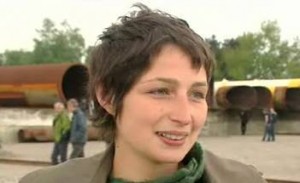
Gigante, Roberta (BE)

Roberta Gigante’s works in public space whilst integrating in the existing situation, with focus on sound. At the moment she realizes two commissions in the Ghent harbor: OrganOOn (2010) and Use me, Grindbakken in 2012 and two public parks. For TC she’s working on a proposal about ‚passages‘, the trajectory between the ground floor and the underground, the being in transit between urbans dimensions.

In her research she explores the relation between public space, image and sound. She is interested in places that have characteristic of ambiguous social identification. Places where create meaning is continually possible, where the work of art can be incrusted – a revitalisator- a meeting of identities. She becomes interested in the resonant frequency of the different spaces and objects and how sound behaves in image. Roberta Gigante born in 1986 is italian artist, she actually lives and works in Belgium since 2009. After having her BA in Visual and performing arts at Univeristy IUAV in Venice 2009, where she followed the courses of many contemporary thinkers, she had a Master in Urban Space in La Cambre Ecole Superiere des arts visuels in Brussels in 2011. In her practice sound as a medium opened up many possibilities. Following these explorations the urban space as a place of common living became her focus. Intriguing the regarding one with the question of how art can modify our reality by creating an amplification of every day life.

im Programm von Tuned City
Brussels / Closer / 29. June 2013
Brussels / Lecture-event #2 – Artist presentations

van Sonsbeeck, Sarah (NL)

She is known as an architect of anti-sound and master of disconnection. Sarah van Sonsbeeck portrays silence, and makes us aware of its lack.* In her work Sarah van Sonsbeeck (Amsterdam, 1976) concentrates on defining and appropriating space. In 2008 she wrote a letter to her neighbours asking them to pay 80 % of her rent since their noise pollution took up 80 % of her living space. Since then she has occupied herself with the meaning of sound, or the absence thereof. (* Quote: Nicola Bozzi, MetropolisM #1 2012)

im Programm von Tuned City
Tuned City Brussels: Lecture-event #2 – Artist presentations

Kubisch, Christina (D)


photo by r. yau

Christina Kubisch belongs to the first generation of sound artists. Trained as a composer, she has artistically developed such techniques as magnetic induction to realize her installations. Since 1986 she has added light as an artistic element to her work with sound. Christina Kubisch’s work displays an artistic development which is often described as the “synthesis of arts” – the discovery of acoustic space and the dimension of time in the visual arts on the one hand, and a redefinition of relationships between material and form on the other.

http://www.christinakubisch.de

im Programm von Tuned City
Brussels / Electrical Walks … / 28. June 2013
Brussels / Lecture-event #2 – Artist presentations

projekte

TC Brussels 2013!

Tuned City Brussels – co-organised by Q-O2, workspace for experimental music and sound art is starting in collaboration with Sint Lucas ArchitectuurErasmus Hogeschool RITS/Radio, Sint Lukas Transmedia, a.pass and La Cambre (ENSAV) option Espace Urbain, with a series of lecture-events, artistic presentations, mini-residencies, university projects and workshops over the first half year. (see PRE-EVENTS) Those will be followed by an international four day festival from June 27th-30th mixing a conference with artistic  realisations such as concerts, walks, installations and interventions in situ. Looking forward to see you in Brussels!

[lang_nl]

Tuned City Brussels – georganiseerd samen met Q-O2, werkplaats voor experimentele muziek en klankkunst – start in samenwerking met Sint Lucas Architectuur, Erasmus Hogeschool RITS/Radio, Sint Lukas Transmedia, a.pass en La Cambre (ENSAV) optie Espace Urbain, met een reeks lezing-evenementen, artistieke presentaties, mini-residenties, universiteitsprojecten en workshops in de eerste helft van 2013. (ga naar PRE-EVENTS) Dit wordt gevolgd door een internationaal vierdaags festival van 27 tot 30 juni dat conferenties mengt met artistieke realisaties zoals concerten, wandelingen, installaties en interventies in situ.

[/lang_nl]
[lang_fr]

Tuned City Brussels – co-organisé par Q-O2, laboratoire de musique expérimentale et d’art sonore, en collaboration avec Sint Lucas Architectuur, Erasmus Hogeschool RITS/RadioSint Lukas Transmediaa.pass et La Cambre (ENSAV) option Espace urbain, propose une série de conférences, d’interventions d’artistes, de mini-résidences, de projets universitaires et d’ateliers durant tout le premier semestre 2013 (>>> PRE-EVENTS), lesquels seront suivis par un festival de quatre jours – du 27 au 30 juin –, qui mêlera conférences, réalisations artistiques ou encore concerts, ballades, installations et interventions in situ.

[/lang_fr]

Wilson, Ariane (D)

(Architecte DPLG, École Nationale Supérieure d’Architecture Paris Val de Seine; MA Art History, Courtauld Institute, London; MA History, Cambridge University)
ist seit Oktober 2007 Wissenschaftliche Mitarbeiterin am Lehr- und Forschungsgebiet Architekturtheorie der RWTH Aachen. Ihre Hauptaufgabe umfasst die Lehre im Bachelor- und Diplom-Studium. Ihre Forschungsschwerpunkte sind die Rolle des Klangs in Stadt und Architektur, das Verhältnis von Analyse zu Entwurf, sowie phänomenologische Fragen der Architektur. Sie weist eine vielschichtige Publikations- und Forschungstätigkeit vor, u.a. für den National Trust, das Ministerium für Bau- und Wohnungswesen, die Wüstenrotstiftung und verschiedene Architekturzeitschriften.

im Programm von Tuned City
Tuned City Brussels: Lecture-event #1/ 12.02.2013

Kollaborationen / Pre-Events

COLLABORATIONS

Art schools
Working with Brussels art schools has been particularly important in the context of Tuned City Brussels. Sint Lucas Architectuur (“Resonances of a blind spot”), Erasmus Hogeschool RITS/Radio (sound atelier), Sint Lukas Transmedia (“Inner/Outer”) and La Cambre (ENSAV) option Espace Urbain (“Inouïr Space Exploration”) worked in parallel threads on semester projects in the first half of 2013. Four public workshops in relation to the festival topics were led by external tutors.
Q-O2 hosted two international workshop groups from the Masters of Artistic Research program (MAR) from the Royal Academy of Art (KABK), The Hague, Netherlands (led by Raviv Ganchrow and Gabriel Paiuk) and The Sound Art Class from The Braunschweig University of Art (HBK), Germany (led by Carsten Stabenow) working on the topics ‚Modes of Listening‘ and ‚Interpretation of Noise‘.
Results of the semester projects and the workshops will be shown at Galerie Rivoli.

Student presentations at Galerie Rivoli >>> map
June 27, 14:00 > 18:00h, June 29, 12:00 > 19:00h

Citizenne
Citizenne is building an open and learning Brussels in collaboration with other organisations, groups and communities. A place where residents feel connected and involved. Citizenne organises, among others, courses, debates, workshops and trips, very much with the locals and their daily lives in mind. Their activities are there for them and by them. Citizenne creates conditions and opportunities for locals to carry out their own projects and do their own thing. During Tuned City Brussels, Citizenne invites you to come and explore the festival in group, with a word of explanation from the artists and organisers along the way.

Group Visit, June 29, 13:30 > 17:00
Tickets: €5 (reduction: €2,5). Info and reservations: 02/203 08 00 – info@citizenne.be – www.citizenne.be

BESSST (Brussels, silence and tradition)
bessst is a community of practice of people who want to make the quiet side of Brussels accessible to as many residents and visitors as possible. We want to bring back wonder, pause and simplicity in the daily grind. bessst strives to raise the quality of life of city dwellers and all those who visit Brussels by showing them the way towards quiet places and practices. And by offering projects that purposefully create space to enjoy peace and quiet in the city. www.bessst.be

BNA-BBOT
BNA-BBOT encourages a large number of people to record their conversations about life in Brussels. The objective is to keep these sound recordings in a useful sound library with a view to distributing these in the broadest sense possible. BNA-BBOT has made technical recording equipment available for this purpose, receives and collects testimonies that are subsequently archived and organised in a trilingual database. This is available online from www.bna-bbot.be and currently contains more than 1,800 testimonies that date from 1999 to date.

PRE-EVENTS

Tuned City Brussels: Lecture-event #1
12/02/2013 – 19:00 – WIELS – free entrance

Carsten Stabenow, founder of Tuned City, will briefly introduce the project and will give an outlook on the plans for Brussels. Dr. Lamberto Tronchin, Professor in Environmental Physics from the University of Bologna, recognised internationally as a leading authority on the subject of sound and acoustics and a pianist himself, will open the evening with a lecture about one of the most inspiring thinkers of sound and space in the 17th century, Athanasius Kircher. The Belgian architect and urban planner Luc Deleu, questions with his utopian projects the role of architecture and urbanism in the modern age, their position and duty in a global society and opens with his visions new perspectives of thinking architecture. Ariane Wilson, architect and art historian at the RWTH Aachen focussed her research on the role of sound in city and architecture and will give an overview about the current developments in that field.
A performance by Justin Bennett, who focusses in his work on the relationship between architecture and sound, will play with the elasticity of the concept of ’space‘.

http://www.wiels.org/en/events/470/TUNED-CITY-BRUSSELS-

[lang_nl]

Tuned City Brussels: Lecture-event #1
12/02/2013 – 19:00 – WIELS – free entrance

Op 12 februari zal de stichter van Tuned City, Carsten Stabenow, het project kort inleiden en vooruitblikken op de plannen voor Brussel. Dr. Lamberto Tronchin, professor in omgevingsfysica aan de Universiteit van Bologna, internationaal erkend als een autoriteit op het vlak van klank en akoestiek en zelf pianist, opent de avond met een lezing over een van de meest inspirerende denkers over klank en ruimte in de 17e eeuw, Athanasius Kircher. Belgisch architect en stadsontwikkelaar Luc Deleu, stelt met zijn utopische projecten de rol van architectuur en verstedelijking in het moderne tijdperk en hun positie en plicht in een globale samenleving in vraag en opent met zijn visies nieuwe perspectieven voor het architecturaal denken. Ariane Wilson, architecte en kunsthistorica aan de RWTH Aaken focust in haar onderzoek op de rol van klank in de stad en in architectuur en geeft een overzicht van de actuele ontwikkelingen op dat gebied.

Een performance van Justin Bennett, die zich toelegt op de relatie architectuur/geluid, zal spelen met de rekbaarheid van het begrip ‚ruimte‘.

http://www.wiels.org/nl/events/470/TUNED-CITY-BRUSSELS-

[/lang_nl]
[lang_fr]

Tuned City Brussels: Lecture-event #1
12/02/2013 – 19:00 – WIELS – Entrée gratuite

Carsten Stabenow, le fondateur de Tuned City, introduira brièvement le projet et partagera une vision des plans pour Bruxelles. Le Dr. Lamberto Tronchin, Professeur en Physique Environnementale à l’Université de Bologne est internationalement reconnu en tant qu’autorité sur le sujet du son et de l’acoustique, également lui-même pianiste, il ouvrira l’évènement par une conférence sur l’un des penseurs les plus inspirants du son et de l’espace au dix-septième siècle, Athanasius Kircher. L’architecte et urbaniste belge, Luc Deleu, questionne par ses projets utopiques le rôle de l’architecture et de l’urbanisme à l’ère moderne, leurs positions et responsabilités dans une société globale et ouvre par sa vision de nouvelles perspectives à la pensée architecturale. Ariane Wilson, architecte et historienne à la RWTH Aachen, concentre ses recherches sur le rôle du son dans la ville et l’architecture et proposera une présentation des développements actuels en ce domaine.

Une performance de Justin Bennett, qui se concentre sur le lien entre son et architecture, jouera avec l’élasticité du concept d“espace‘.

http://www.wiels.org/fr/events/470/TUNED-CITY-BRUSSELS-

[/lang_fr]


photo © John Grzinich

Tuned City at Artefact
20/02/2013 – 19:00 + 20:30 – STUK – Leuven
During Artefact Festival 2013, Felicity Ford (UK), Peter Cusack (UK) and Pascal Amphoux (CRESSON) (FR) present their different views on the relation between city and sound, preceded by sound walks through Leuven. Two walks start at STUK’s ticket office at 19:00, the lectures and presentations start at 20:30 in STUK Labozaal.

[lang_nl]
Tuned City op Artefact
20/02/2013 – 19:00 + 20:30 – STUK – Leuven

Tijdens Artefact festival komen Felicity Ford (UK), Peter Cusack (UK) en Pascal Amphoux (CRESSON) (FR) hun verschillende kijk op de relatie stad en klank voorstellen, voorafgegaan door klankwandelingen in Leuven. Er starten 2 wandelingen om 19u00 aan het STUKonthaal. De lezingen en presentaties starten om 20u30 in de Soetezaal.

http://www.artefact-festival.be/2013/programma/detail/60593

[/lang_nl]

[lang_fr]
Tuned City au Artefact
20/02/2013 – 19:00 + 20:30 – STUK – Leuven

Au cours du festival Artefact, Felicity Ford (UK), Peter Cusack (UK) et Pascal Amphoux (CRESSON) (FR) viendront présenter leurs différentes visions sur la relation entre la ville et le son. Avant cela, des promenades sonores sont organisées à Louvain. Deux promenades débutent à 19 heures devant l’accueil du centre d’arts STUK. Les lectures et les présentations débutent à 20h30 dans la Soetezaal.

http://www.artefact-festival.be/2013/programma/detail/60593

[/lang_fr]
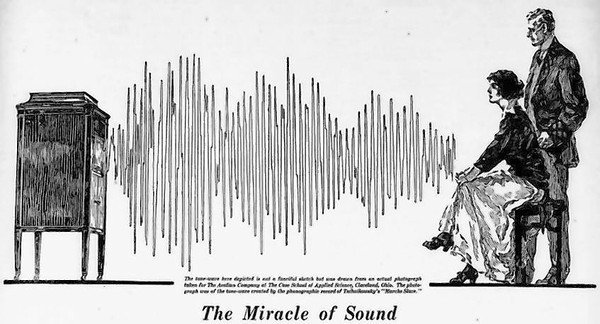
Tuned City Brussels: Lecture-event #2 – Artist presentations
23/03/2013 – 14:00 – La Cambre/Auditorium – free entrance

Ligna (D), Christina Kubisch (D), Felicity Ford (UK) + Valeria Merlini (IT/D), Roberta Gigante (BE), Nikolaus Gansterer (AT), Christoph Fink (BE), Udo Noll (D) and Will Schrimshaw (UK).

[lang_nl]
Lezing-evenement #2 stelt het werk van negen kunstenaars voor, die werken met geluid, publieke ruimte, architectuur en de stad. De ruimte en haar geluid kunnen als een artistiek onderwerp of werkterrein worden beschouwd, zowel in een fysieke zin als in termen van symbolische en metaforische associaties. Artistieke presentaties zullen deze verschillende betekenislagen opentrekken, inzicht in werkmethodes geven en specifieke benaderingen van geluid en stad verkennen.
[/lang_nl]
[lang_fr]
Désolé, cet article est seulement disponible en Nederlands et English.

Tuned City Brussels: workshops
25 – 28/03/2013 – various locations

A collaborative workshop week together with Sint Lucas ArchitectuurErasmus Hogeschool RITS/Radio, Sint Lukas Transmedia, a.pass, okno and La Cambre (ENSAV) option Espace Urbain and l’Escaut.
Closing presentations on march 28th, Q-O2, Koomijnenkaai 30-34, 1080 Brussels, 18:00.

Workshop-Beschreibungen liegen nur in Englisch und Niederländisch vor.

[lang_nl]

Listening to Brussels from within and without
Felicity Ford (UK) + Valeria Merlini (IT/D)
25 – 28 March 2013, Kaaistudios

Felicity Ford en Valeria Merlini nodigen u uit om de sonoriteit van de stad te verkennen. Samen maken we een radio-uitzending om luisteraars die de stad niet kennen een idee van haar auditieve karakter te geven. Deze workshops vormen de basis voor Tuned City in juni, met een hulde aan de klankidentiteit van Brussel in aanloop naar het festival. De eerste reeks workshops in maart vormen de basis voor de productie van een radio-uitzending voor framework:afield.

Het thema van deze radio-uitzending wordt Luisteren naar Brussel van binnen en van buiten, want we luisteren zowel in binnen- als in buitenruimtes. We hebben daarbij oor voor individuele en collectieve ervaringen, en voor de verschillen tussen hoe de bewoners en de bezoekers de stad horen.

Electromagnetic movements
Christina Kubisch (D)
25 – 28 March 2013, okno

De deelnemers krijgen een speciaal ontworpen, draadloze koptelefoon mee, die de anders verborgen, elektromagnetische velden in de stad hoorbaar maken. Deze geluiden zijn heel gevarieerd: ritmische structuren, gebrom, dikke, multifonische lagen, enz. De deelnemers maken begeleide en/of individuele stadswandelingen en verkennen het terrein. Ze maken een kaart van het afgelegde traject en bespreken de klanken en de plaatsen vanwaar ze afkomstig zijn. De deelnemers geven samen met mij vorm aan een praktisch werk over deze ervaringen. Dit kan een visueel of een akoestisch werk zijn. Dit alles resulteert in een voorstelling voor het publiek, in een openbare ruimte, gebaseerd op een elektromagnetische mapping van Brussel.

slow listening – speed interpretation models
Nikolaus Gansterer (AT), Mira Sanders (BE), Annelies De Smet (BE), Leslie Burm (BE)
25 – 27 March 2013, Sint-Lucas Architectuur
‘slow listening – speed interpretation models’ is een modelleerworkshop om specifieke manieren van luisteren aan te leren en ons meer bewust te worden van de vele mogelijkheden van vormgeving. Tijdens de workshop maken we persoonlijke interpretatiemodellen, die door anderen op oneindig veel manieren kunnen worden geïnterpreteerd. De methode is gebaseerd op het werk van John Cage dat staat voor “slow listening” en ons concrete mechanismen aanreikt voor (her)interpretatie. Het geheel is een speelterrein tussen (stedelijke) ruimte en klank. Het doel is om ons concrete, gemodelleerde omzettingen van deze aanpak voor te stellen.

The Tone of Prime Unity
Will Schrimshaw (UK)
25 – 28 March 2013, Sint-Lukas Transmedia

Deze workshop verkent de subliminale invloed van de akoestische ruimte op de stadsbewoners. De deelnemers verkennen de stad als ging het om een materiële beoefening van een ideologie. We vormen een ambulant voetgangerslaboratorium, waarbij we open instrumenten en methodologieën bouwen en gebruiken om de frequenties waarop de stad in onze geest binnendringt, in kaart te brengen. Deze workshop buigt zich specifiek over het bestaan van een internationale, fundamentele eenheidstoon (‘tone of prime unity’), gesuggereerd door R. Murray Schafer:

”In the Indian anahata and in the Western Music of the Spheres, man has constantly sought some prime unity, some central sound against which all other vibrations may be measured […] It is, however, only in the electronic age that international tonal centers have been achieved; in countries operating on an alternating current of 60 cycles, it is this sound which now provides the resonant frequency, for it will be heard (together with its harmonics) in the operation of all electrical devices from lights and amplifers and generators.” (1994, 98-9)

Schafers fundamentele eenheidstoon verwijst naar een collectief, sonisch onbewustzijn, bepaald door de akoestische indrukken van de elektriciteit. Schafer interpreteert dit optimistisch als de basis van een gemeenschap van luisterende personen, die gebonden zijn door grondtonen, bepaald door de “elektrische revolutie” (Schafer: 1994, 89-99). De workshop begint met een ambigue interpretatie van Schafers ontdekking van de fundamentele eenheidstoon, die wordt begrepen als een voorbeeld van de grote invloed van de akoestische ruimte en haar vermogen om subliminaal te informeren en individualiteit te geven.

Tijdens de workshop doen we een beroep op de volgende methodes: Onderzoek te voet: een heterogene, ongedisciplineerde praktijk, die de filosofie en het gebruik van de computer combineert in een zoektocht, te voet, naar een concrete epidemiologie van concepten.
Archeoakoestiek: de decodering en de studie van akoestische gebeurtenissen en uitdrukkingen, die op fysieke artefacten ingeprent zijn.

[/lang_nl]

[lang_fr]

Désolé, cet article est seulement disponible en Nederlands et Englisch.

[/lang_fr]


download the first flyer >>>
Tuned City Brüssel 2013

“Just as noise is what we make of certain sounds. the meanings we assign to noise are no less consequential than the meanings we assign to other sounds. Noise may be unwanted or incomprehensible sound; it is never insignificant sound.” Hillel Schwartz in “Making Noise”, Zone Books 2012
“Obviously we need to be able to rest from sound just as we do from visual stimulation, we need aural as well as visual privacy, but silencing our public environment is the acoustic equivalent of painting it black. Certainly just as our eyes are for seeing, our ears are for hearing.”  Max Neuhaus “Sound Design” In Zeitgleich: the Symposium, the Seminar, the Exhibition. Vienna: Triton, 1994.


Brussels proves to be a very dense multi-layered city characterised by abrupt shifts in urban structure, architecture and the social environment. This patchwork provides an urban modality that resists a general grasp of the city while providing room for individualised appropriations. The abundance of juxtapositions in the every-day surroundings create a productive resonance with its passersby in a manner where the city manifests as a vibrant, open-ended, multiplicity. How can one grasp the nature of these relational oscillations and what modes of resonance give shape to the particular Brussels vibe?
Over the course of the four day festival, Tuned City Brussels probes such urban frequencies through concerts, walks, installations and interventions in situ while at the same time focusing the theoretical framework around three core notions: ‚Relational Noise‘, ‚Situational Listening‘ and ‚Operative Ambience‘. A different theme will be explored each day in a corresponding ‚zone‘ in the city, towards which the festival relocates.
The project has had a long preparation phase in exchange with locals and organisations (see PRE-EVENTS). Several lectures, artistic presentations, residencies and workshops have been leading up to this four day festival. Particularly important was the collaboration with the art schools  Sint Lucas ArchitectuurErasmus Hogeschool RITS/Radio, Sint Lukas Transmedia, a.pass and La Cambre (ENSAV) option Espace Urbain.

The first Tuned City project was realised in Berlin in 2008, with subsequent editions in Tallinn and Nürnberg. For the current edition Q-O2 workspace for experimental music and sound art has invited Tuned City to collaboratively research the context of Brussels.

[lang_nl]

Brussel is een gelaagde stad die opvalt door abrupte verschuivingen in de stedelijke structuur, de architectuur en het sociale weefsel. Dit lappendeken maakt het soms moeilijk om impressies van de stad onder één noemer te vangen. Ondanks dit karakter – of net daardoor – biedt Brussel ruimte om de stad op een persoonlijke manier eigen te maken. Alerte voorbijgangers merken dan ook beslist haar uitbundige alledaagse omgeving als een rijke bron van leven, openheid en afwisseling met een dito geluid op. Te weten komen hoe men de aard van dit klankbeeld kan vatten en uit welke componenten het bestaat vormt de uitdaging voor Tuned City Brussels.
In de loop van een vierdaags festival onderzoekt Tuned City Brussels via concerten, wandelingen, installaties en locatiegebonden interventies in de artistieke praktijk hoe Brussel klinkt. Een bijpassend theoretisch kader ontvouwt zich langs de drie kernbegrippen ‚Relational Noise‘, ‚Situational Listening‘ en ‚Operative Ambience‘. Elke dag wordt een ander thema verkend in een corresponderende ‘zone’ in de stad waarnaar het festival zich verplaatst.
Het project kende een lange voorbereidingsfase boordevol interactie met lokale bewoners en organisaties. Verschillende lezingen, artistieke presentaties, residenties en workshops gingen aan het initiatief vooraf. In dit kader was de samenwerking met de kunsthogescholen Sint Lucas ArchitectuurErasmus Hogeschool RITS/Radio, Sint Lukas Transmedia, a.pass and La Cambre /Espace Urbain bijzonder belangrijk.
Het eerste Tuned City project werd gerealiseerd in Berlijn in 2008. Daarna volgden edities in Tallinn en Nürnberg. Voor de huidige editie nodigde Q-O2, werkplaats voor experimentele muziek en klankkunst, Tuned City uit om de context van Brussel gezamenlijk te onderzoeken.

[/lang_nl]
[lang_fr]

Bruxelles s’avère être une ville très dense et aux couches multiples, qui se caractérise par des changements abrupts dans la structure urbaine, l’architecture et l’environnement social. Ce patchwork offre une modalité urbaine qui résiste aux impressions généralisantes de la ville tout en fournissant de l’espace pour des appropriations individualisées. L’abondance des juxtapositions dans les environnements de tous les jours crée une résonance productive avec le passant de sorte que la ville se manifeste comme une multiplicité vibrante et sans fin. Comment saisir la nature de ces oscillations relationnelles et quels modes de résonance façonnent la vibration particulière de Bruxelles?
Au fil des quatre journées du festival, Tuned City Brussels sondera de telles fréquences citadines au travers de concerts, de promenades, d’installations et d’interventions sur place tout en s’intéressant simultanément au cadre théorique qui s’articule autour de trois notions de base: “le Bruit Relationnel”, “l’Écoute Situationnelle” et “l’Ambiance Opérative”. Un thème différent sera exploré chaque jour dans une ‚zone‘ correspondante de la ville, vers laquelle le festival se déplacera.
Le projet a connu une longue phase de préparation en interaction avec des riverains et des organisations locales. Bon nombre de lectures, de présentations artistiques, de séjours sur place et d’ateliers de travail ont précédé ce festival de quatre jours. Notons tout particulièrement la collaboration avec les écoles artistiques Sint Lucas ArchitectuurErasmus Hogeschool RITS/Radio, Sint Lukas Transmedia, a.pass et La Cambre /Espace Urbain.

Le premier projet Tuned City fut réalisé à Berlin en 2008, avec des éditions ultérieures à Tallinn et Nürnberg. Pour la présente édition, Q-O2 laboratoire de musique expérimentale et d’art sonore a invité Tuned City pour étudier conjointement le contexte de Bruxelles.

[/lang_fr]

tuned city brussels is made possible with the support of:
Vlaamse Minister bevoegd voor Brussel
Vlaamse Gemeenschapscommissie
Goethe-Institut Brussels
Stad Brussel | Ville de Bruxelles
Dienst cultuur van Sint-Gillis | Service de la Culture de Saint-Gilles
Polish Institute | Cultural Service of the Embassy
of the Republic of Poland

tuned city brussels is realised in cooperation with
Sint-Lucas Architectuur
Erasmus Hogeschool Rits | Radio
Sint-Lukas | Transmedia
La Cambre, ensav | Espace Urbain
a.pass
Citizenne
Bessst (Brussel, erfgoed en stilte)
Bna-bbot
Kaaitheater
Beursschouwburg
Ateliers Claus
Wiels
Stuk

projekte

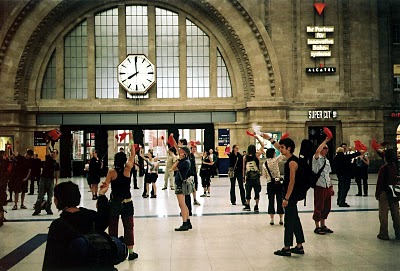
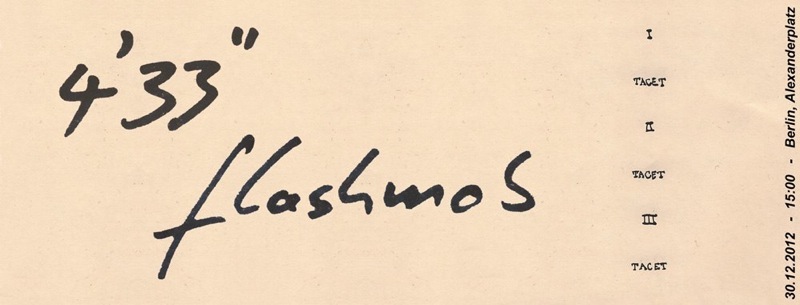
4’33“ flashmob

30. Dezember 2012  15:00
Berlin, Alexanderplatz    (Treffpunkt: Weltzeituhr)
initiiert von Florian Tuercke (D)
Bitte mitmachen!!

über den Flashmob
2012 war das Jahr von John Cages hundertstem Geburtstag. Die musikalischen und philosophischen Errungenschaften dieses herausragenden Komponisten wurden in diesem Jahr rund um die Welt mit Festivals, Performances, Ausstellungen und Publikationen gefeiert. Der 4’33“ flashmob soll einen würdigen Abschluss des John Cage Jahres bilden und lädt ein zur Teilnahme! Weitere Informationen und Anweisungen hier: http://floriantuercke.net/news.html

über 4’33“
Die Komposition wurde 1952 von Davis Tudor (Piano) uraufgeführt. Obwohl sie oft als „vier Minuten dreiunddreißig Sekunden Stille“ bezeichnet wird, hat die Komposition wenig mit Stille zu tun. Vielmehr setzt sich der musikalische Inhalt aus all den Geräuschen zusammen, die auftreten, während ein Musiker (oder ein Orchester) nicht spielt.

projekte

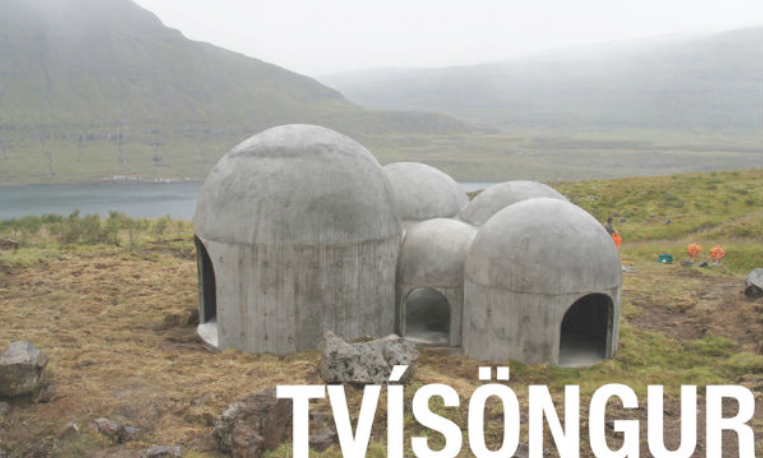
Opening Tvísöngur by Lukas Kühne

Tvísöngur” von Lukas Kühne Eröffnung
5. September 2012 / 17.00 / am Berghang über der Stadt Seydisfjördur / Ost-Island

“Tvísöngur” ist eine Betonkonstruktion – 5 sphärische Raumvolumen in Höhen zwischen 2 und 4 Metern auf einer Grundfläche von mehr als 30qm. Jede Kuppel besizt ihre eignene Resonanzfrequenz die mit der traditionellen Isländischen 5-Ton-Hamonie korrspondiert und diese Töne auf natürliche Weise verstärkt. Read further in english >>>

projekte

Im Archipel at KOW Berlin

Arno Brandlhuber Im Archipel
featuring BUG by Mark Bain
produziert von Tuned City 2008

08.09.2012 – 21.10.2012 / Eröffnung 7. September 2012, 20:00 / KOW Berlin / Brunnenstrasse 9, D-10119 Berlin

Brandlhuber ist eine der interessantesten Stimmen im derzeitigen Stadtplanungsdiskurs. Seine Zusammenarbeit mit Mark Bain für Tuned City 2008 resultierte in einer permanenten Installation, welche mit Hilfe von seismischen Sensoren das Gebäude akustisch transparent machte.
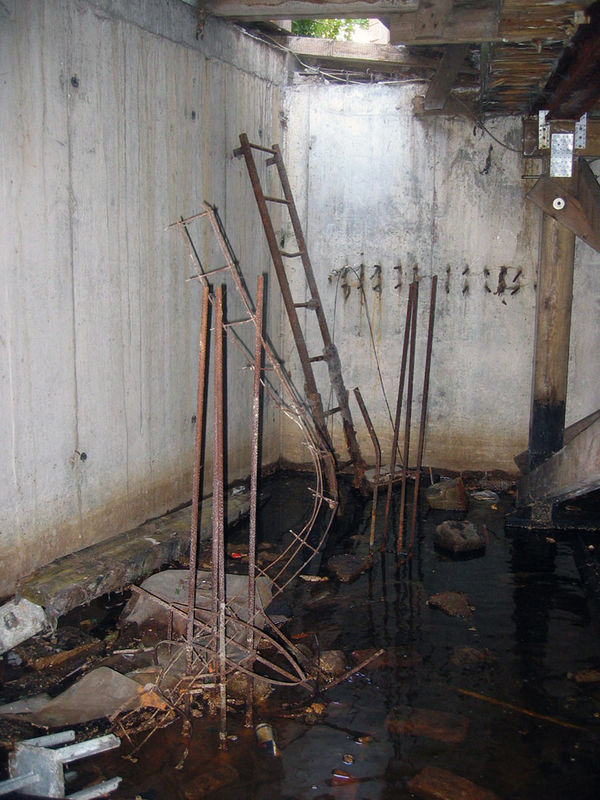
Im Rahmen der aktuellen Personalausstellung werden die Klänge diese funktionalen Organismus und seines direkten sozialen Umfeldes in die Kellerräume zurückgespielt, welche geflutet in den Urzustand der Investruine von 2008 zurückverwandelt werden.

Aus der Ausstellungsbeschreibung:Die Gestaltung sozialer Beziehungen durch Gebautes (= Architektur und Stadtplanung) hat einen eindeutigen Trend: Homogenisierung. Städtischer Lebensraum, der einmal gemeinsam geteilt wurde oder der sich künftig hätte teilen lassen, wird heute in sozialdarwinistische Nischen zergliedert. Auf klar nach Einkommensklassen gestaffelten Stadtinseln versammelt sich seinesgleichen mit seinesgleichen. In  Berlin, wo urbane Heterogenität einmal kennzeichnend war (und sogar Wahrzeichen wurde), zeigt sich die Reorganisation von Stadt besonders deutlich als gezielte Umverteilung der Teilnahme am gesellschaftlichen Leben: Das Zentrum der Hauptstadt besetzt eine betuchte Klientel rings um neue Prestigewohnanlagen und treibt alle, die nicht mehr mitbieten können oder wollen, in Aussenbezirke. Soziale Archipele entstehen, neue Städte in der Stadt, sie alle ähnlich homogen organisiert: hier die Hartz IV-Empfänger, da eine Künstlerszene, woanders ein Migrantenviertel.

Continue Reading „Im Archipel at KOW Berlin“

projekte

radio aporee ::: MariborMaps

30. 08. 2012 / 20:00 / KIBLA, Ulica kneza Koclja 9 / Maribor, Slovenien
Udo Noll (Berlin/Köln) und Patrick McGinley (Tartu/Estonia) sprechen mit Carsten Stabenow (Berlin) über das MariborMaps Projekt.

radio aporee ist eine Plattform für die künstlerische Untersuchung von Konzepten und Praktiken in Bezug auf Klang, Ort und ihren räumlichen Bedingungen. Die Begriffe Peripherie und Resonanz bilden dabei die Orientierungspunkte sowohl in einem klang/räumlichen Sinn als auch bezogen auf soziale und kommunikative Gegebenheiten. Peripherie kann räumliche als auch qualitative Differenzierung bedeuten, eine Bewegung weg von einem Zentrum hin zu den Rändern. Gleichzeitig bildet jede bewusste Wahrnehmung Peripherien, deren Zentrum das wahrnehmende Ich nicht verlassen kann. Resonanz bildet zwei Pole: antwortet ein Ort oder ein Gegenüber auf unsere Anwesenheit und Ansprache, oder bleibt es stumm? Treten wir in eine anregende Wechselbeziehung mit der umgebenden Welt oder bleibt der Zugang verschlossen? Field recordings als Mittel und Methode der Annäherung an Orte und Situationen können als kommunikative Beziehung verstanden werden: der aufgezeichnete Klang ist im besten Fall eine Antwort auf die Fragen, die unsere Suche und Annäherung im Grunde darstellt. Resonanz ist darin der Glücksfall eines In-Kontakt-Seins mit Raum und Welt. Das bewusste Hören wird dabei verstanden als Schlüssel und Zugang zu einer intensivierten Wahrnehmung und Erfahrung der uns umgebenden Welt.

http://aporee.org/maribor


AS WE SPEAK ist ein Projekt des Goethe-Instituts im Rahmen der Europäischen Kulturhauptstadt „MARIBOR 2012“
http://www.aswespeak.eu